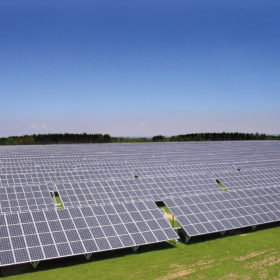
Fraunhofer ISE reveals Spain may host 5 GW module factory
The vertically integrated factory is expected to be located near Sevilla, in southern Spain. The factory will be owned and operated by the newly created company Greenland Gigafactory.

Chinese PV Industry Brief: First quarter brought 5.5 GW of new solar, Zhonghuan Semiconductor acquires stake in Maxeon
Solar demand grew around 40%, year-on-year, during the first three months of 2021 and wafer producer Zhonghuan Semiconductor has raised its holding in Singaporean solar manufacturer Maxeon to become its second-largest shareholder after Total.
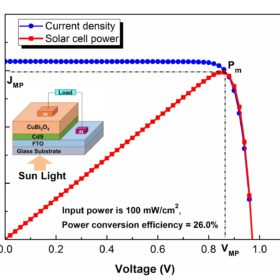
Heterojunction design for 26%-efficient copper bismuth oxide thin-film solar cell
Researchers in Bangladesh have simulated a solar cell based on a copper bismuth oxide material, used as an absorber, with n-type cadmium sulfide (CdS) utilized as a buffer layer. In the experiment, the device achieved an efficiency of 26.0%, an open-circuit voltage of 0.97 V, a short-circuit current density of 31.61 milliampere per square centimeter, and a fill factor of 84.58%.

First Solar claims lowest module degradation rate in the industry
The US cadmium telluride thin-film module maker said its Series 6 CuRe panels are able to retain 92% of its performance at the end of the 30-year warranty. The improved stability of the product was achieved by eliminating copper and placing Group V elements such as antimony or arsenic onto the tellurium crystal sites.

Chinese PV Industry Brief: Xinte wants to increase polysilicon capacity to 100,000 metric tons
Xinte unveiled a $197 million plan to raise its polysilicon production capacity to 100,000 metric tons per year in Xinjiang. Longi signed a strategic cooperation agreement with oil and gas giant Sinopec to jointly develop hydrogen and renewable energies.
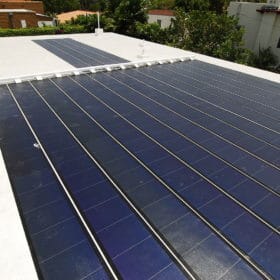
Amorphous silicon solar cells still niche market
In the second interview of a series, Arvind Shah, a professor at École polytechnique fédérale de Lausanne, told pv magazine about the challenges facing amorphous silicon cells. He said the tech could be used in some window applications and greenhouses, but not in rooftop projects, as the stabilized efficiency of these cells is too low.

I’ve got solar over my skin
Researchers in Japan have built a PV-powered device to measure volumetric variations in blood circulation. The system, which is just a few microns thick, was built with an organic solar module, a polymer light-emitting diode (PLED), and an organic photodetector.

5N Plus enters space solar cell business with acquisition of Azur Space
The purchase price should range between €73 million and €79 million. Azur Space produces triple-junction space solar cells with an average efficiency of up to 30% and is planning to develop ultra-thin solar cells with up to 35%.
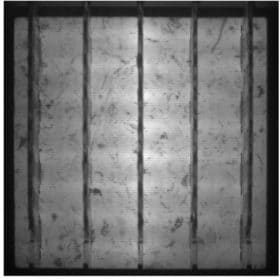
Low outdoor degradation for 20.76%-efficient solar cells made of UMG silicon
Spanish manufacturer Aurinka has tested the degradation rate of its 20.76%-efficient solar cells made of 100% upgraded metallurgical grade (UMG) silicon and has found it shows the same values as conventional polysilicon. The company is currently building a UMG factory in northern Spain.

Debate on alleged forced labor in Chinese PV industry heats up in the Netherlands
Three Dutch political parties have brought the forced labor issue to Parliament and have asked the Minister for Foreign Trade and Development Cooperation, Sigrid Kaad, to report on the matter.
