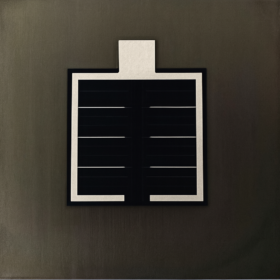
Perovskite-silicon tandem solar cell with steric complementary design achieves 32.3% efficiency
Researchers in China developed a monolithic perovskite-silicon tandem solar cell using a steric-complementary interface design, achieving a certified efficiency of 32.12% and enhanced long-term stability. This strategy optimizes molecular fit in the perovskite lattice, improving both charge transport and device longevity.
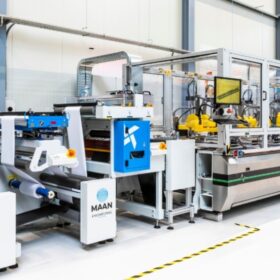
TNO offers mass customization line for integrated PV applications
The Dutch research institute’s highly automated research line offers customized, flexible solar semi-finished PV products to partners developing integrated PV applications.
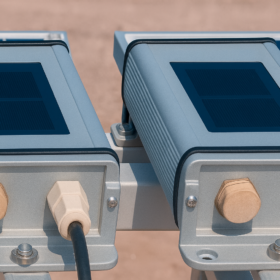
How the world’s sunniest region tackles solar module soiling, cleaning
Researchers studying PV panels in Chile’s hyper-arid Atacama Desert found that cemented soiling can cause annual energy losses of up to 9.8%. Their combined field and laboratory work shows that dry cleaning leaves residue that accelerates future cementation, making wet cleaning the more effective long-term strategy despite higher costs and scarce water.
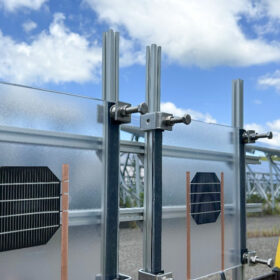
Perovskite solar testing field commissioned in Japan
Kanazawa University has begun long-term outdoor testing of tandem perovskite solar cells in collaboration with Toshiba. The research project aligns with Japan’s broader push to scale perovskite PV technologies toward large deployment by 2040.
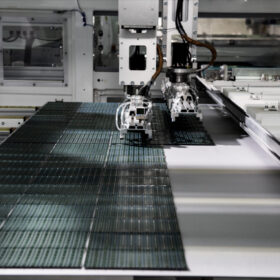
Chinese PV Industry Brief: Aiko, Skyworth PV plan 5 GW back-contact solar module factory in Guangxi
The two companies will invest approximately CNY 2 billion ($282.8 million) in the new facility, which will host two production lines, each with a capacity of 2.5 GW. The project has already passed environmental review.
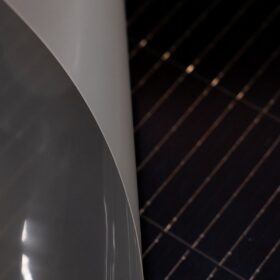
Endurans Solar launches transparent backsheet for utility-scale bifacial modules
The U.S. based manufacturer has completed certification of its latest adhesive-free, fluorine-free backsheet.

Chinese researchers build 31.71%-efficient perovskite-silicon tandem solar cell based on new interfacial engineering
The two-terminal perovskite–silicon tandem solar cell was fabricated through a chemical polishing method that selectively removes residual lead(II)iodide from the perorvskite film in the top cell. This targeted interfacial engineering improved uniformity and stability, enabling a certified 31.71% efficiency and enhanced long-term performance.
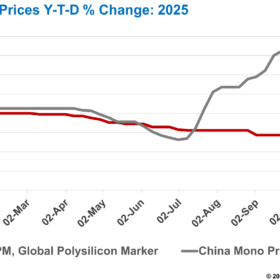
OPIS Global Polysilicon Marker holds firm as trade barriers continue driving fragmentation
In a new weekly update for pv magazine, OPIS, a Dow Jones company, provides a quick look at the main price trends in the global PV industry.

Fraunhofer ISE achieves 30.6% efficiency for perovskite-silicon tandem based on industry-standard bottom TOPCon cell
Researchers at Fraunhofer ISE have developed a perovskite-silicon tandem solar cell using a TOPCon bottom cell with standard textured front surfaces. Their results show that TOPCon bottom cells can perform comparably to heterojunction cells in tandem devices in terms of shunt resistivity, supporting scalable, cost-effective industrial production.
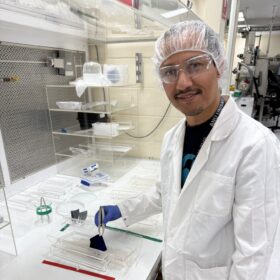
Antimony vs. phosphorous doping in solar wafer manufacturing
An international research team comprising scientists from Chinese module manufacturer Longi has investigated the resistivity distribution of antimony- and phosphorous-doped wafers used in solar cell manufacturing and have found that they offer comparable mechanical strenght. However, their work also showed that antimony-doped wafers have a more uniform resistivity, with a slight increase near the tail end.
