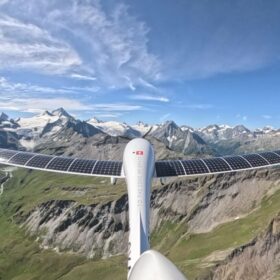
SolarStratos reaches 8,224 m height
Swiss pilot Raphaël Domjan flew the SolarStratos solar-powered aircraft to 8,224 meters on Aug. 10, setting a personal record but falling short of the 9,235-meter world mark held by Solar Impulse.
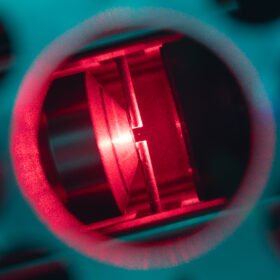
Perovskite-silicon tandem solar cell relying on silica nanospheres achieves 33.15% efficiency
Researchers in China have improved interface engineering in perovskite-silicon solar cells by using industrially textured silicon. The result is a highly efficienct tandem device that also showed remarkable stability.

Indoor perovskite solar cell built with triple passivation strategy achieves 37.6% efficiency
An international research team has constructed an indoor perovksite PV device by using a triple passivation treatment to reduce crystal defects in the perovskite film. The cell achieved remarkable efficiency and was also able to retain 92% of its initial performance after 3,200 h.

New research shows cast mono wafers are still far from commercial maturity
A Chinese research team has investigated impurity and defect levels in solar cells based on mono cast wafers and have found that around 30% of the devices present an “excessive” reduction in power conversion efficiency. The scientists concluded that cast monocrystalline silicon will unlikely capture a meaningful market share in the near future.

Abandoned US nuclear site to host 16,000 MT polysilicon plant
Highland Materials will build a 16,000 metric ton (MT) solar-grade polysilicon plant on a former US nuclear project site, under a long-term lease with Pivotal Manufacturing.
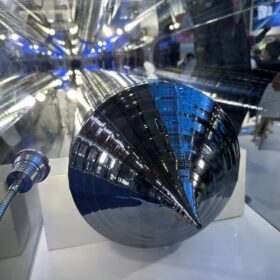
Is China’s $7 billion plan to reduce polysilicon overcapacity feasible?
OPIS, Wood Mackenzie, and Bernreuter Research have spoken with pv magazine about China’s alleged $7 billion plan to reduce polysilicon oversupply and restore a sustainable pricing environment for the PV supply chain, but opinions remain divided on its feasibility and effectiveness.
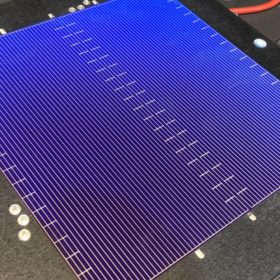
New research warns of unexpected UV-induced degradation in TOPCon solar cells from invisible light
Researchers from UNSW have found that invisible light accelerates UV-induced degradation in TOPCon solar cells, producing the same degradation effects as visible light but at a much faster rate. This can lead to significant open-circuit voltage losses and reduce cell efficiency.
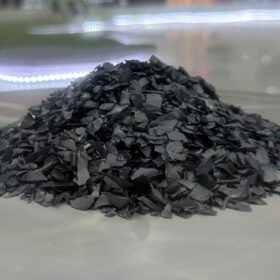
Chinese PV Industry Brief: Government targets energy use at polysilicon plants
China’s Ministry of Industry and Information Technology (MIIT) has launched a 2025 inspection program targeting energy consumption at 41 major polysilicon producers to curb output.
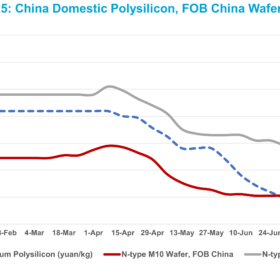
China wafer, polysilicon prices climb 33% since early July
In a new weekly update for pv magazine, OPIS, a Dow Jones company, provides a quick look at the main price trends in the global PV industry.
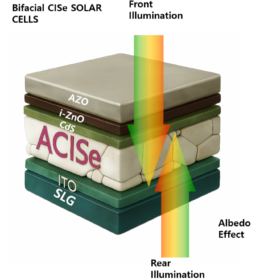
Scientists build bifacial CIS solar cell with record efficiency, power density
Researchers in South Korea have demonstrated a lower temperature process for bifacial copper, indium, selenium (CuInSe₂) solar cells with a rear-side efficiency of 8.44% and 15.30% on the front. The device has been developed for applications in tandem solar cells.
