
Chinese PV Industry Brief: GCL begins work on new polysilicon factory, GoodWe listed on Shanghai exchange
Polysilicon maker GCL-Poly has started construction of a factory with an annual production capacity of 54,000 MT as Chinese inverter manufacturer Goodwe launched an IPO on the Shanghai stock market.
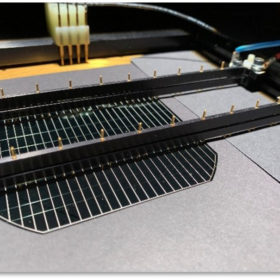
Modular systems to produce perovskite-silicon cells on six-inch wafers
Researchers in Germany are scaling up efforts to bring perovskite-silicon tandem solar cell technology into industrial scale production. The scientists say manufacturing cells of that kind is possible on widely-available six-inch silicon wafers and modular systems are being designed to do so at scale.
New manufacturing technique for antimony sulfide-selenide PV cells
Chinese researchers have discovered a new hydrothermal method for the direct deposition of antimony sulfide-selenide films. They used ethylenediaminetetraacetic acid to regulate the reaction system, giving the film a flat, compact surface morphology. It has an efficiency of 10.5%, an open-circuit voltage of 664 mV, a short-circuit current of 23.8 mA cm−2, and a fill factor of 66.3%.
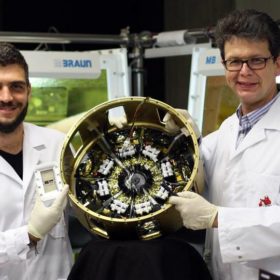
Perovskites in space
Scientists led by the Technical University of Munich have packed a variety of perovskite and organic solar cells onto a rocket, and sent it into orbit 240 kilometers above the planet’s surface. Their results demonstrate strong potential for such technologies to power satellites and even deep space missions.

Chinese PV Industry Brief: 350 MW wind-solar project, 200 MW of floating PV
Longyuan has revealed plans to build a 350 MW hybrid wind-solar plant in Shandong province. China Resources, meanwhile, said it will build 200 MW of floating solar in Hubei province.
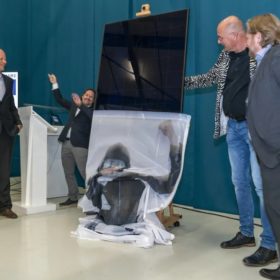
Zebra IBC cell with 24% efficiency moves to large-scale production
Netherlands based manufacturer Energyra this week introduced a new back contact module, which it has developed in partnership with Dutch research institute TNO and Germany’s ISC Konstanz. A prototype module was unveiled yesterday in a small presentation at Energyra’s factory in Zaandam, Netherlands. The company is targeting large-scale manufacturing by the end of 2020.
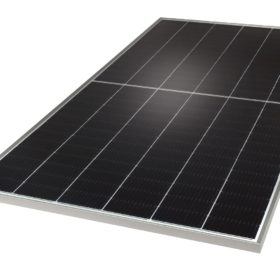
Hanwha Q Cells to offer its most powerful panels in Europe
The South Korean PV manufacturers is bringing its three most powerful solar panels to Europe. All of them are based on its Q.antum Duo Z tech, which reduces the gaps between cells and drives up module efficiency by 4% in relative terms.
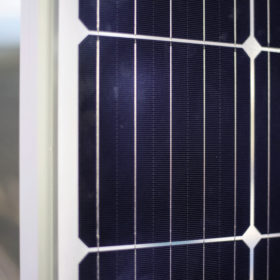
Inverted pyramid-based PERC solar cell with 21.4% efficiency
A Chinese research group has developed a PERC cell on a commercial 180-μm-thick monocrystalline silicon wafer with a standard size of 156 × 156 mm2. The cell has an open-circuit voltage (VOC) of 0.677 V, a short short-circuit current (ISC) of 9.63 A, and a fill factor of 80.30%.
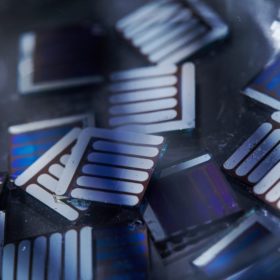
South Korea bets on tandem solar technologies
The South Korean government has released a new roadmap to support R&D activities in the solar sector. The document indicates the country’s solar manufacturing industry may be encouraged to opt for high-efficiency and expensive panels based on tandem solar cells.
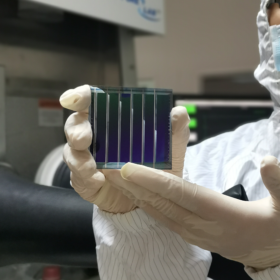
Organic solar module with 14.4% efficiency
Scientists in China have developed an organic module with an area of 18 cm2 based on a non-fullerene acceptor called DTY6. The device has a certified efficiency of 13.98%, but when a non-halogen solvent was used, it even reached 16.1%.
