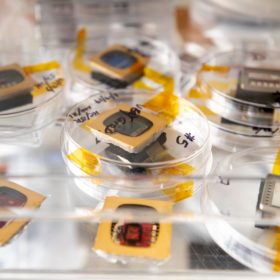
Gauging non-fullerene acceptors for organic PV
U.S. scientists are trying to understand how non-fullerene small-molecule acceptors (NAFs) increase the efficiency of organic PV devices. They claim that methoxy groups embedded in the acceptors could facilitate an efficiency increase of approximately 6%.
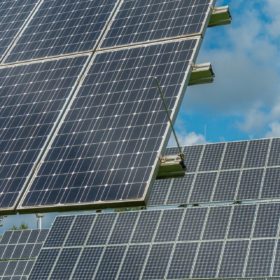
‘You can’t go wrong with solar’
2.5 MW of solar is being deployed at three project sites in Papua New Guinea, with commercial operations likely to begin within nine months. The installations will provide power in the island province of New Ireland at lower prices, while also improving access to electricity.
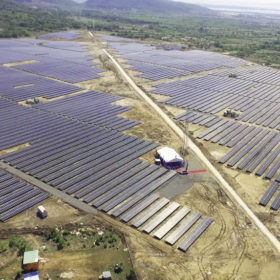
Vietnam to stop licensing large-scale solar projects
In a newly published policy document, Hanoi has urged regional governments and the country’s state-run utility, EVN, to suspend authorizations for new solar parks until further notice. Around 8.93 GW of utility-scale solar capacity is already approved for development in Vietnam, according to the Ministry of Industry and Trade.
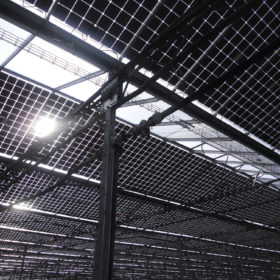
New thermodynamic formula to calculate bifacial gains
An American research team developed the new formula by applying to bifacial cells the Shockley-Queisser triangle, which is used to calculate the maximum theoretical efficiency of a monofacial solar cell using a single p-n junction technology. According to the group’s findings, the triangle can help to clarify the deeper physical principles of the bifacial technology.
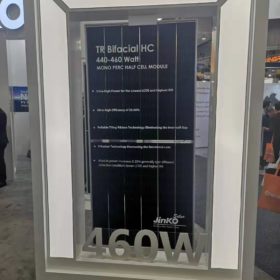
Jinko aims for 10 GW of Tiger module production capacity by 2021
The Chinese manufacturer’s roadmap for its new module technology includes plans to raise panel output to 500 W. The Tiger modules are said to be fully compatible with the company’s existing module encapsulation processes and equipment.

Poland’s auction for 1 MW-plus renewables projects concludes with lowest bid of $0.04248/kWh
Wind took the largest share of the awarded capacity, according to the preliminary results, but newly introduced limitations for such projects helped solar to take a significant portion of the allocated power for the first time in a Polish energy auction, with the highest bid coming in at $0.0608/kWh.

Maximizing the potential of PV irrigation in Spain’s ‘Sea of Plastic’
Spanish researchers have developed an analytical model to optimize the operation of PV water pumping systems. They say simultaneously irrigating different parts of a farm could help minimize costs and maximize energy use. The model was tested on an olive farm divided into four zones in the Spanish province of Almería.
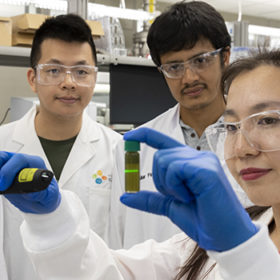
Tungsten disulfide helps organic solar cell reach 17% efficiency
Researchers from Saudi Arabia’s King Abdullah University of Science and Technology claim to have developed a highly performant organic PV cell using tungsten disulfide flakes a few atoms thick. The stability of the device, however, is still to be evaluated.
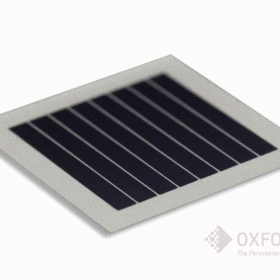
Oxbridge scientists seek to explain electron dynamics in perovskite cells
Researchers from the two prestigious U.K. universities are analyzing spatiotemporal charge-carrier dynamics in the perovskite materials used for solar applications. They have discovered the carriers propagate ballistically over 150nm within 20fs of photon absorption.

New app helps charge Tesla EVs when electricity is greener and cheaper
With its app already present in Belgium and the Netherlands, start-up Jedlix is introducing smart charging in France. The solution enables Tesla drivers to optimize their charging strategy.
