
PV-powered refrigerated tank for milk storage
The autonomous system is designed for small companies that produce milk, juice, beverages, or food products, it and can reach four degrees Celsius in three hours with an external temperature of 30 degrees.
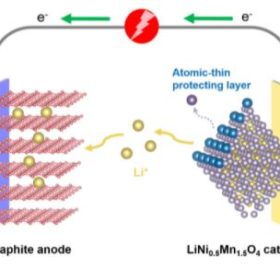
Australian researchers promise lifespan boost for lithium-ion batteries
Researchers from The University of Queensland have developed a new nanotechnology that purportedly more than doubles the lifespan of high-voltage lithium-ion batteries, paving the way for higher density and lower-cost energy storage solutions.
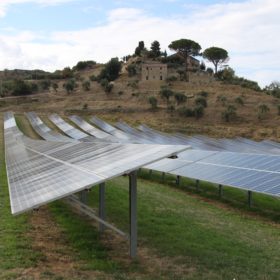
Quantifying loss-mitigating effects of PV warranty insurance
German consultancy VDE Renewables and global reinsurer Munich Re have outlined an approach to quantify the impact of risk mitigation measures applied to PV projects, as well as the advantages that may be derived by relying on an insurance solution. Risk mitigation expert Ulrike Jahn has spoken with pv magazine on how the new approach was shaped and what kind of performance issues should be taken into account by PV asset owners.
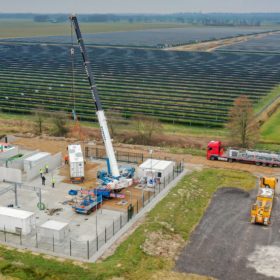
Hydrogen production at Dutch solar park
Alliander and Groenleven have completed construction on the Netherlands’ first green hydrogen production facility. It is connected to a 50MW solar park and is expected to generate hydrogen from June.
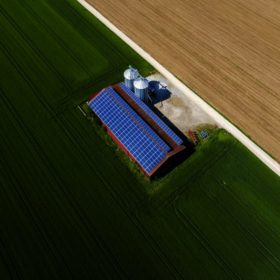
Italy offers €1.5 billion of rebates for PV in agricultural buildings
The Italian government hopes to deploy 375MW of PV capacity via a new rebate scheme. The funds will be provided through the post-Covid recovery plan.

Cathode formation issue could drive improvements in battery resiliency
Researchers at the Argonne National Laboratory have discovered a degenerative effect in the creation of cathode materials for sodium-ion batteries that could have significant impacts on the performance of sodium-ion batteries.
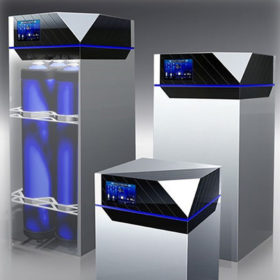
Toyota develops new module to store, transport hydrogen
Japanese automaker Toyota has used its hydrogen tank tech in a new module to expand hydrogen storage to railways, shipping facilities, cargo ports, and fuel cell generators. Its 70MPa tank has a storage capacity of 2.7 kg to 18.7 kg and a tank mass ranging from 43.0 kg to 243.8 kg, depending on the size.
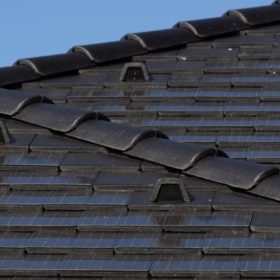
Hungarian start-up launches solar tile with output of 167W per m²
Developed by Hungarian manufacturer Terràn, the Generon solar tile is based on concrete support and weighs is in at 5.7kg.
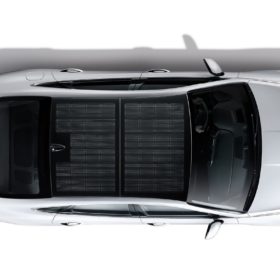
Hyundai Sonata hybrid is equipped with a solar roof
The 205W PV array adds nearly 1,000 miles of range each year and helps prevent battery discharge events that are responsible for four out of every ten roadside emergency breakdowns.
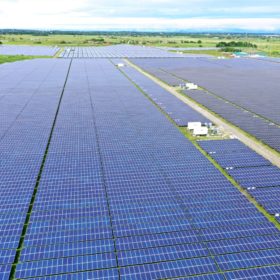
Philippines sets ceiling price of $0.069/kWh for upcoming renewables auction
The ceiling price for PV was the lowest among the four renewable energy technologies eligible to compete in the procurement exercise.
