Toyota develops new module to store, transport hydrogen

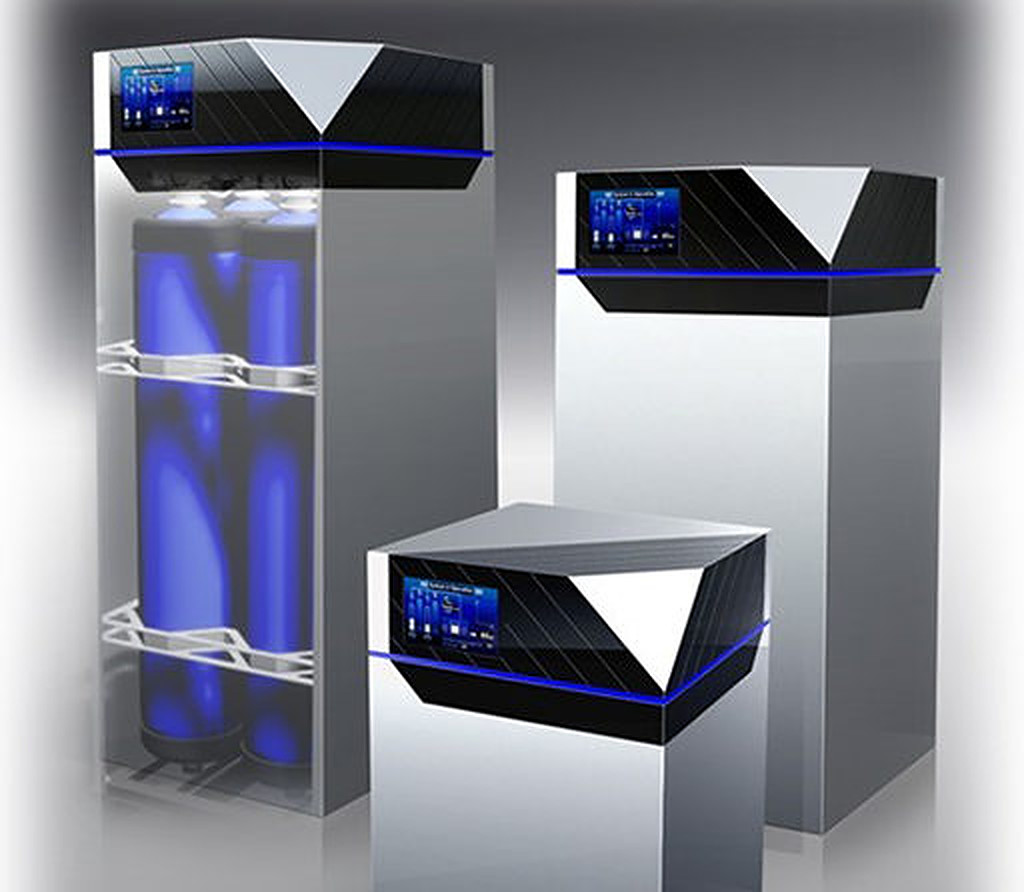
Japanese automaker Toyota Motor has developed a hydrogen storage module that uses its resin high-pressure hydrogen tank technology for fuel cell vehicles.
The company said the storage module will enable the use of the tank to store hydrogen in applications other than automobiles.
“The 70 megapascals (MPa) resin high-pressure hydrogen tank developed for automobiles is now the subject of numerous requests from those who would like to use it in railways, shipping, and port cargo handling, as well as fuel cell generators,” it said. “Toyota developed this hydrogen storage module as a way to answer these demands and expand the use of hydrogen.”
It also added that the resin high-pressure hydrogen was already tested in its Mirai fuel cell vehicle and safety devices such as hydrogen detectors and automatic shut-off switches. Depending on the size, these tanks have a storage capacity of 2.7 kg to 18.7 kg and a tank mass ranging from 43.0 kg to 243.8 kg
The module unit, according to the manufacturer, embeds safety-assured tanks and is equipped with several safety devices that automatically monitor the module operation status.
“As storing and transporting hydrogen more safely and efficiently can be done through high-capacity hydrogen loads, it is possible to use hydrogen-based energy in a range of locations where hydrogen filling is difficult, such as ports or mountain areas,” it explained. “Toyota will be working on connecting with new business partners and carrying out verification testing with the idea of expanding hydrogen use even further.”
Toyota demonstrated its first hydrogen tank for automobiles in 2001 and is one of the most active carmakers now developing technologies for fuel cell vehicles. It has produced the vehicle-mounted 70 MPa tanks since 2008, and more than 20,000 were produced for the first generation of Mirai vehicles.
This content is protected by copyright and may not be reused. If you want to cooperate with us and would like to reuse some of our content, please contact: [email protected].

Please login to comment

[…] Toyota Motor Corporation […]
[…] Toyota and its subsidiary, Woven Planet, have developed a portable hydrogen cartridge. “This cartridge design will facilitate the everyday transport and supply of hydrogen energy to power a broad range of daily life applications in and outside of the home,” wrote Woven Planet. The two companies will conduct proof of concept trials in various places, including Woven City, a human-centered smart city currently under construction in Japan’s Susono City, Shizuoka Prefecture. The cartridge, 400 mm in length and 180 mm in diameter, weighs around 5 kg. “Woven City will explore and test an array of energy applications using hydrogen cartridges including mobility, household applications, and many future possibilities we have yet to imagine,” the company said. […]

Couldn’t get a safer storage liquid than Water H2O , with all the so called “ Technology “ and millions of dollars invested in vehicles since the dawn of the internal combustion engine surly they could have invented a safe way to split water atoms into hydrogen and oxygen and use both as both are highly explosive and clean burning , the only drawback is the people YOU AND ME will get it FREE

70 Mpa is about 3.5x the pressure of a filled scuba tank. Ever seen what happens when one of those blows with just air? Search on Youtube – there’s lot of videos. It’s also about 700x atmospheric pressure – so 1 litre of tank volume is going to hold 700 litres of hydrogen, and it will disperse quickly – which means it will easily mix with oxygen and form an explosive mixture if there is a big leak. It also has a wider range of mix ratio that is explosive, from 18 to 59%, and will combust at 4% to 80% ratios. This is a wider range than other gas fuels like propane or butane which will only burn at about 2% to 10% and explode in a smaller range within that.
There have already been several serious hydrogen fuel station explosions and accidents, which when they exploded caused a lot of damage to surrounding buildings and cars, to the point that Toyota and Hyundai stopped selling hydrogen cars in Norway after a 2019 accident.
Hydrogen has its place in industry and for stationary power applications, especially for greening the production of ammonia and fertilizer, steel and other industrial processes that need a lot of heat or can spare the space for safe storage of hydrogen with a big enough buffer around storage facilities, but using it for vehicles is inefficient and dangerous and even using it for stationary power storage has a big round trip cost in terms of efficiency (about 30 to 50%, ie, you only get to to 50% of your electrical energy back using hydrogen as a means of storage) though that may be still worthwhile if a cheap enough way of storing power can be found. High pressure storage tanks doesn’t sound like it though.

We need to promote hydrogen technology. Plasma Kinetics has developed a means of storing hydrogen on a special CD disc. With this system they use a laser to inbed the hydrogen and also release it.
Both systems have great promise and will allow us to transition to a cleaner non-carbon fuel.

BASEEFA ,cenelec should come out standards for production, storage, delivery of hydrogen.
A little spark somewhere in the line will create explosion.
A third party auditor of safety is required in case the hydrogen hype is turned to reality.
Gullible investors in renewable hydrogen should be careful as a vaporwire is getting created.
The investment can go bust.

Without a doubt one of the BEST sources of energy even if it is an incredibly hazardous element to contain/store. Nuclear energy is no different in that aspect.

Almost as dangerous as petrol!

Why not low pressure ammonia with conversion to hydrogen on the vehicle?

The compressor needed to reach these pressures is energy-hungry, noisy, and expensive. The parasitic energy needed to compress hydrogen like this is a significant fraction of the chemical energy embodied in the hydrogen itself. Cylinders don’t pack efficiently – will each unit need to be individually filled and emptied? Consider the system and infrastructure, rather than just the storage component.

No lessons learnt from the Hindenburg disasaster !!

One lesson that does not appear to be learned from Hindenburg is that many more lives would have been lost were it not for the fact that the hydrogen, being lighter than air caused the fire to float upwards and spared many passenger from being burnt on the ground. Compare this to kerosene that spreads over the ground before igniting & causing dreadful injuries & deaths.

petrol is highly flammable, the lithium-ion batteries used in BEVs are highly flammable, hydrogen is highly flammable, who cares? everything is flammable and we dont live in a perfect world, also hydrogen disperses faster then it can ignite since its lighter than helium.
[…] “Japanese automaker Toyota has used its hydrogen tank tech in a new module to expand hydrogen storage to railways, shipping facilities, cargo ports, and fuel cell generators. Its 70MPa tank has a storage capacity of 2.7 kg to 18.7 kg and a tank mass ranging from 43.0 kg to 243.8 kg, depending on the size.” https://www.pv-magazine.com/2022/03/28/toyota-develops-new-module-to-store-transport-hydrogen/ […]
[…] 원 문 보 기 […]
[…] 日本丰田集团(Toyota Group)旗下丰田通商株式会社已同意收购SB Energy公司——作为软银集团旗下的日本可再生能源开发商——85%的股权。 […]