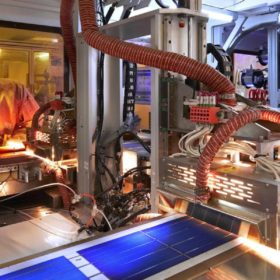
Chinese PV Industry Brief: Trina starts building silicon-to-module factory, Jolywood opens TOPCon cell plant
Trina Solar has started building a silicon-to-module production base in Qinghai province, while Jolywood said it is now producing new TOPCon solar cells in Shanxi province. Tongwei, meanwhile, said it believes that its net profit soared in the first half.
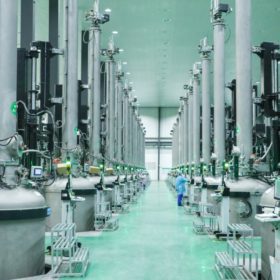
Chinese PV Industry Brief: JinkoSolar commissions 20 GW n-type ingot fab in Qinghai Province
In other news, DAH Solar announced a 5 GW TOPCon solar module factory in Anhui province and Tongwei further raised the prices of its solar cells.
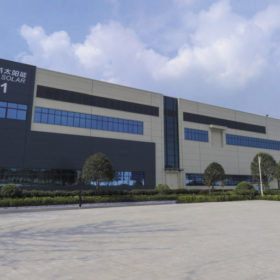
Chinese PV Industry Brief: Big polysilicon deal, new 10 GW solar cell factory
JA Solar has revealed plans to build a 10 GW cell factory in Jiangsu province, while Shuangliang Eco-Energy has agreed to buy 222,5000 metric tons (MT) of polysilicon from Tongwei.

Chinese PV Industry Brief: Almaden secures glass order from Trina Solar
Almaden and Trina Solar have signed a long-term solar glass supply deal, while Growatt has revealed plans to list shares in Hong Kong. PV glassmaker Xinyi, meanwhile, has issued a gloomy profit outlook for the first half of 2022.

Chinese PV Industry Brief: Polysilicon prices hit high of $41.80/kg
Average polysilicon prices ranged from CNY 273 ($40.82)/kg to CNY 280/kg this week, according to an industry association in China.
Chinese PV Industry Brief: China’s solar cell capacity exceeds 361 GW
Tongwei has also secured another massive polysilicon order and Golden Glass has invested in more heterojunction solar cell capacity. Furthermore, China’s National Energy Administration (NEA) said 23.7 GW of new solar was deployed in China in the first five months of the year.
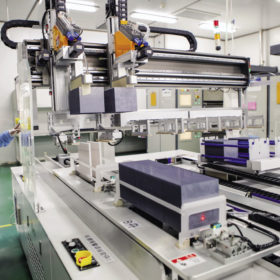
Chinese PV Industry Brief: LDK to invest in 600 MW HJT solar cell factory as price of polysilicon soars
A Chinese metals industry group said the price of polysilicon is rising, just as Comtec Solar revealed that it is gearing up to sell off its shuttered wafer factories in Shanghai. Flat Glass, meanwhile, has announced plans to expand solar glass production capacity.
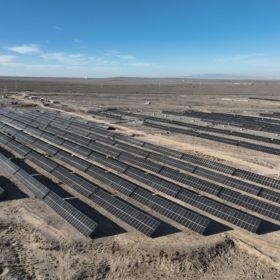
Chinese PV Industry Brief: China’s NEA predicts 108 GW of solar in 2022
The Chinese government says the nation is on track to install 108 GW of PV this year. Huaneng says it will build a new 10 GW module factory, while Akcome has revealed plans to increase its heterojunction panel capacity by 6 GW.

Chinese PV Industry Brief: China’s cumulative PV capacity tops 322 GW
In other news, Zhonghuan Semiconductor announced it will begin selling 210 mm n-type wafers and the local government in Zhejiang Province said it wants to deploy another 12.4 GW of new PV by 2024.
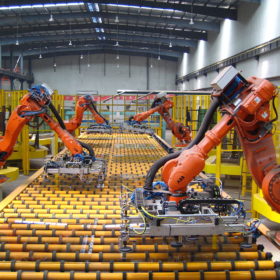
Alliaverre to produce solar glass in France
Alliaverre wants to move a 600 MW solar glass plant to Amiens, France, to reduce European customer delivery times, as it faces rising shipping prices and manufacturing constraints in Asia.
