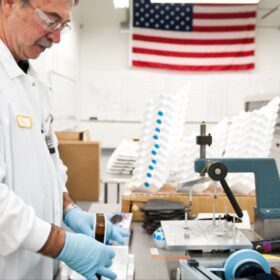
Suniva buys production equipment to restart idled factory
Suniva has ordered equipment for thermal process steps annealing, diffusion and anti-reflective coating and passivation (PECVD) from Germany’s Centrotherm, as it proceeds with plans to expand high-efficiency monocrystalline silicon solar cell production in Norcross, Georgia.
Weekend Read: Europe’s subsidy conundrum
On Nov. 6, the European Solar PV Industry Alliance (ESIA) published a recommendation paper in which it set out how its members envisage a European support scheme to foster the development of European solar. What chance does it have of actually achieving its goals? Götz Fischbeck delivers an assessment.

Weekend Read: Connecting HJT
The application of busbarless cell interconnection approaches could unlock the potential of heterojunction (HJT) technology, primarily by reducing the historically high silver usage of negatively-doped, “n-type” cell technology. As HJT manufacturing increases, a wave of applications may very well be on the horizon.

The solar module surplus: EUPD Research considers Europe’s warehouse woes
As solar module prices continue to drop to record lows, amid global oversupply, questions are being asked about how much inventory is sitting in European warehouses and when normal levels will return. With numerous estimates and assumptions swirling, EUPD Research’s Markus A.W. Hoehner and Ali Arfa have looked closely at the numbers in an attempt to provide a transparent view of the issue.
The overproduction conundrum
Solar manufacturing capacity has been ramping up so quickly that even impressive installation growth cannot keep pace. Molly Morgan, senior research analyst at UK-based research firm Exawatt, explores the relationship between PV supply and demand and assesses the likelihood of overproduction.

Commercial perovskites imminent
Andries Wantenaar, a solar analyst at Rethink Energy, explains why he sees a bright future for perovskite PV cells, with technological advancements and major R&D investment paving the way for revolutionary change.
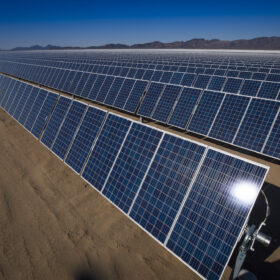
Will New Delhi hear the call from solar developers?
Falling solar equipment prices, bulk module orders, and an expansion in domestic solar manufacturing capacity are driving a solar boom in India. The government can add further impetus if it tweaks domestic content rules.

Recipe for expansion
After years of debate, the Indian government made domestic manufacturing a central feature of renewables policy in 2021. The pivot came as the government sought economic growth and self-sufficiency following a border conflict with China. Vinay Rustagi, managing director of Bridge to India, says that trade barriers, subsidies, lower taxes, and demand growth have created the perfect recipe for expansion.

A survival guide for solar SMEs
As solar manufacturing moves toward technological convergence, and rampant production capacity expansion continues, standing out from the crowd is just one of the strategies small- and medium-sized enterprises (SMEs) will have to use to survive, according to InfoLink’s Amy Fang.

Deployment trumps manufacturing in EU priorities
A lack of clear policy support, raw material dependency, and higher production costs are inhibiting the localization of European solar manufacturing, despite strong demand.
