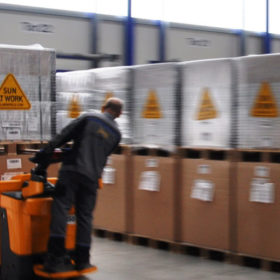
Investor search for Solarworld failed, module factory to be auctioned-off
The manufacturer’s insolvency administrator has declared the investor search over. By March at the latest, all production equipment at the German module factory in Freiberg, as well as the buildings themselves, should come under the hammer.
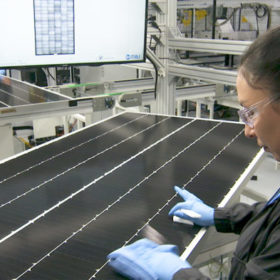
SunPower officially producing P-Series at former SolarWorld factory in the U.S.
The largest shingled solar cell production facility in the Western Hemisphere at 220 MW, marking the first of a group of massive factories expected to go on-line this year.
Silver price to rise 7% this year
According to the Silver Institute, demand for the precious metal in the solar industry will remain stable up to 2022, despite recent changes in China’s PV policy.
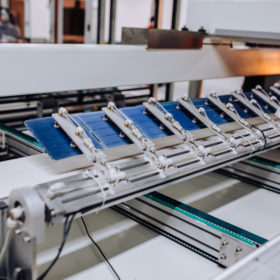
Kness Group commissions module factory in Ukraine
The panel fab, with a production capacity of 200 MW, is in Vinnytsia, central Ukraine. The factory’s capacity is expected to double by the end of the year.

“There are four or five key issues in project quality control, most of them before installing the first module”
PI Berlin plans to open a headquarters in Spain next year. pv magazine has spoken with Senior Consultant Asier Ukar about market expectations, the most recurrent quality failures in Spain, risks, certification and protectionism. “After 10 years, we return to Spain with much enthusiasm,” he told us.
Canadian Solar revenue down but profits up in Q3 results
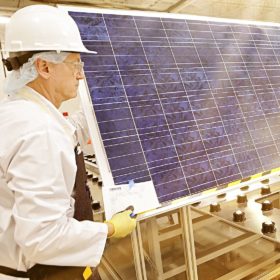
The Chinese-Canadian solar manufacturer shipped 1.59 GW of panels in the latest quarter. Despite a 15.8% turnover decline, operating result and net profit both grew significantly. Capacity expansion plans for 2019 are now said to be under review.
Taiwan’s URE handed $335 million syndicated loan
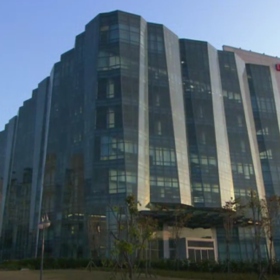
The Taiwanese solar manufacturer secured the funds from a consortium of banks formed by First Bank, Taiwan Cooperative Bank, Mega International Commercial Bank and CTBC Bank.
URE gets $90m financial backing from Taiwanese government
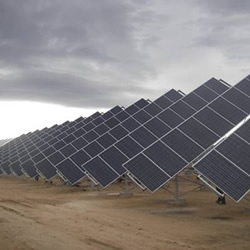
Taipei will invest in the company through its National Development Fund and government-run glass manufacturer Yao Hwa Glass Co. Ltd.
Solar manufacturing in the Arab region remains difficult, IRENA says
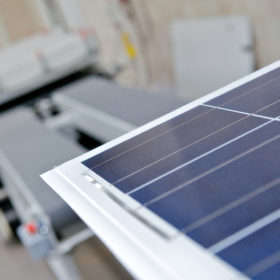
In a study on the potential for local manufacturing of renewable energy equipment in the Arab region, IRENA has assessed how three pilot Arab countries – Lebanon, Jordan and the UAE – where development of clean energy is currently strong, may host PV, CSP and wind energy industries. In all of them, however, there are currently few chances of seeing a rising solar and renewable energy manufacturing industry, due to a series of challenges, such as, among others, the lack of a qualified workforce, and favorable regulatory settings.

Becquerel winners submit resolution for revival of solar industry to the EU
At the EU PVSEC in Brussels this week, prominent representatives of the solar industry joined an appeal to rebuild a major European PV production line along the entire value chain. They called on the EU Commission and member states to introduce eco-labels and recycling criteria for solar modules, to stimulate PV expansion and align research policy with the revival of the solar industry.
