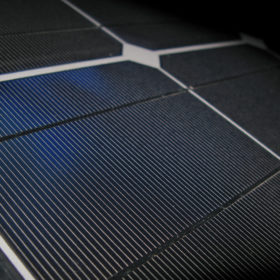
Kenyan utility launches tender for PV panel factory
The electricity company wants a solar module fab at its Tana Power Station in Murang’a county. The factory would have an initial annual production capacity of 10 MW.

German module maker increases production capacity
Soluxtec is almost trebling output capacity at its 200 MW fab in the Eifel region. The Luxembourg-owned manufacturer says it wants production capacity of 550 MW for monocrystalline PERC modules and special formats this year.

Casting light on backsheet degradation
A U.S. research team has discovered that backsheets are most affected by cracking and degradation on inner layers, as such areas tend to become more rigid. The scientists have also discovered that degradation is accelerated by chemicals descending from the solar cells’ EVA encapsulant to the backsheets themselves.
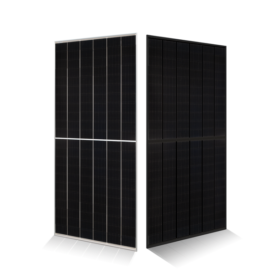
Jinko Solar launches new all-black module
The new n-type panels, which offer 405 W of power output and an efficiency rate of 21.22%, are designed for the residential PV segment.
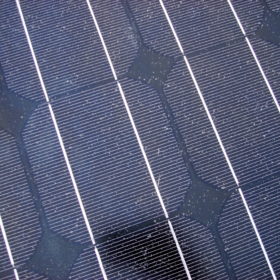
A new PV emulator to evaluate the I-V profile of solar panels
The device is based on a state-feedback adaptive control system in a real-time controller. According to its developers, it can achieve good dynamic response and boasts better bandwidth than current commercial alternatives.
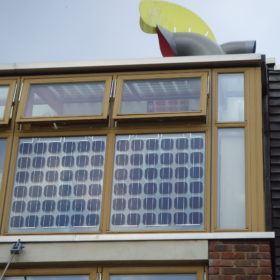
MIT researchers say PV innovations should be deployed in niche markets first
Solar module manufacturers should begin testing new technologies in higher-value niche markets, say scientists at the U.S. institution. For example, bringing perovskite technology directly to the mainstream market remains prohibitive in terms of initial investment but segments such as building-integrated PV or microelectronics devices may offer better routes to commercial maturity.
Getting the right module temperature with thermography
Researchers from Hungary have analyzed the thermal behavior of different types of PV module via thermography, and claim to have shown that theoretical models are insufficient to measure the maximum, minimum, and average temperatures of the panels. According to their analysis, glass-glass modules without frame showed the highest temperatures, while the lowest temperatures were measured for polycrystalline glass-backsheet panels with frame.
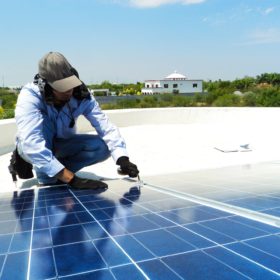
A new technique to get the right angular-tilt
UK scientists are proposing a new approach to calculating the optimum angular-tilt of PV panels for a planar surface at a particular site. In their view, the new technique may unlock innovative yield optimization methods for the installation of PV systems.

The best way to predict the I-V profile of PV panels
A study has considered the best mathematical models for predicting solar module performance under varying conditions.

South Korean government reassures domestic PV industry
The country’s Ministry of Trade, Industry and Energy (MOTIE) has provided new market share figures for the domestic PV sector that contradict recent media claims that Chinese manufacturers have been aggressively ramping up their local presence at the expense of Korean module makers. The government has also confirmed plans to prioritize PV projects made with low-carbon, high-efficiency modules.
