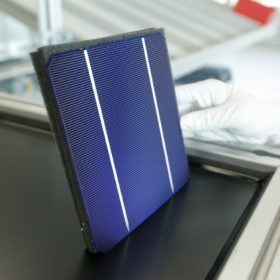
Foil method for PID test misleading if only one side of bifacial module is stressed
Results from PID stress tests can be misleading when bifacial PV modules are PID-stressed from just one side using the foil method in IEC TS 62804, according to a new study by Belgian researchers. An unintended electric field arises between the non-stressed side of the cell and the grounded interior of the climate chamber, which may have the undesired effect of causing additional PID stress.

Techno-economic analysis of PV-powered golf carts
Danish researchers have shown that adding 250 W solar panels to all of the buggies in a 50-cart fleet is a profitable investment. With an upfront investment of around €75,000, annual benefits of around €15,000 are possible, they claim.
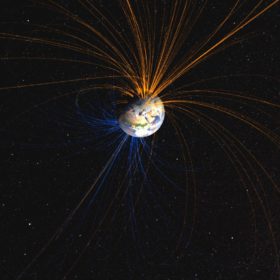
Shielding PV against Earth’s magnetic field
Researchers in Kenya are seeking to reduce the influence of the Geomagnetic field on PV panel performance by replacing aluminum module frames with a steel cage. They have specified they have been unable to quantify costs related to the solution, and that more research is needed.
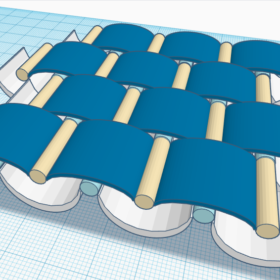
Parabolic bifacial module with active cooling system
Scientists in Morocco have designed a new bifacial module with a cooling system, based on bifacial parabolic solar cells that are connected to each other via tubes for panel cooling. They are now patenting the tech, but have yet to manufacture an initial prototype.
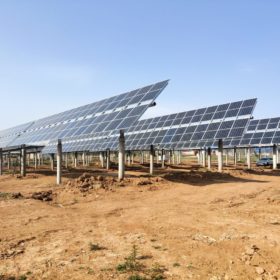
Trina Solar launches TrinaPro Mega ultra-high-power PV solution
As the solar industry starts to embrace ultra-high-efficiency modules, the Chinese PV heavyweight has unveiled TrinaPro Mega, the first integrated solar system in the world that incorporates 500 W+ modules.

US module shipments spiked in quantity, plunged in price amid pandemic
Manufacturers shipped about 2.05 GW of PV modules in March, before plummeting to 1.24 GW in April. But while shipments slowed, the cost per watt peak reached a record low.
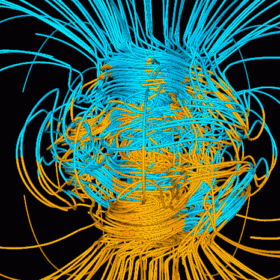
Earth’s magnetic field affecting PV panel performance
Researchers in Kenya say the geomagnetic field could reduce solar panel conversion efficiency 0.21% between the equator and a 50-degree latitude. Their analysis showed the complex magnetic field can determine increases in module fill factor and falls in maximum power.

First Solar backs carbon pricing for wholesale electricity
First Solar has backed carbon pricing in comments submitted to the U.S. Federal Energy Regulatory Commission. The company also co-founded a global policy institute to support carbon pricing as a “cost-effective, equitable and politically viable climate solution.”
Game theory for solar module manufacturing
Researchers in Iran have applied the Stackelberg leadership model to determine whether the creation of a closed-loop solar module supply chain – including panel refurbishing – is feasible. According to their findings, a similar supply chain may only be set up with public subsidies, which would ensure that costs for R&D, module production, and recycling are distributed between the government and all the chain’s players.

Longi and DuPont expand collaboration on product innovation
The companies aim to jointly develop higher quality and more competitive cells and modules that will in turn ensure the viability of PV power plants.
