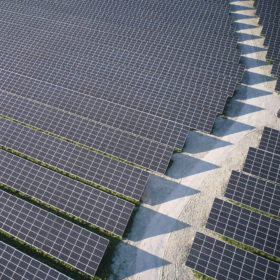
Weekend read: A game of risk
The rising popularity of “baseload” power purchase agreements (PPAs) has posed questions to solar electricity suppliers in the German market. How can projects that do not generate at night, and with wide seasonal output variation, effectively supply constant power to consumers? More importantly, who shoulders the price risk?
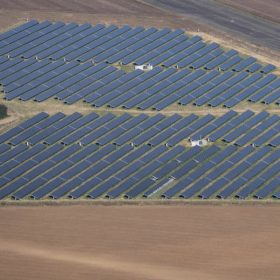
Why do solar power plants work inefficiently?
When choosing a solar power plant, individuals and businesses pay the most attention to its power – after all, this will determine how much electricity will be produced. Other equipment, systems and sensors that allow monitoring and analysis of the operation of the power plant are often underestimated. But they shouldn’t be: the solar power plant will be used for several decades, so various failures and poor-quality monitoring can have a significant impact on the efficiency of electricity production.
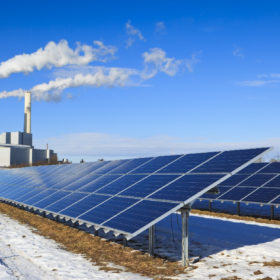
Solar power costs continued to fall in 2021, despite rising panel prices
The average global price of solar kilowatt-hours fell 13% on 2020’s prices, as around two-thirds of the renewables capacity installed last year was cheaper than the lowest-cost fossil fuel alternative.
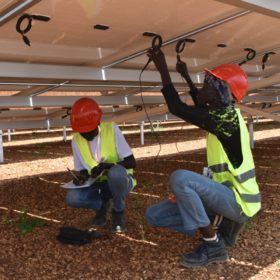
South Sudan set for grid solar
Kampala-based developer Aptech Africa says it plans to build a 12 MWp solar plant in Juba.
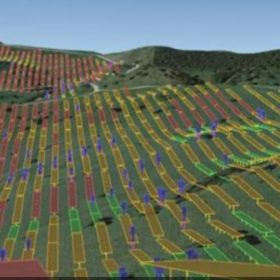
New tool for PV plant design on terrains with complex orography
Spanish engineering company Sener has developed a software that analyzes different combinations of panels, trackers or tables, inverters and storage systems, as well as construction costs, depending on the market situation at any given time and the client’s preferences.
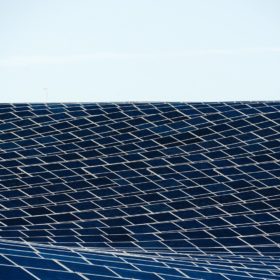
Italy allocates 710 MW of solar in seventh renewables auction
In the procurement exercise, the Italian authorities selected 49 solar projects with a capacity of less than 10 MW and 11 solar parks ranging in size from 13.2 MW to 92.4 MW. The lowest bid came in at €0.06263/kWh and was offered for a 5.9 MW solar project located in the province of Perugia, in the Italian central region of Umbria.
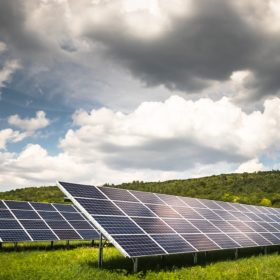
South Korea’s largest PV plant goes online
South Korean energy producer South-East Power has started operating a 150 MW solar plant in South Jeolla province. The project was partly backed by crowdfunding among local residents.

Covid-19 outbreak at PV plant construction site in Portugal
A total of 6 Covid-19 positives have just been detected among workers at the Solara4 plant, located in the Portuguese Algarve. According to information obtained by pv magazine, work at the facility has been partially stopped.
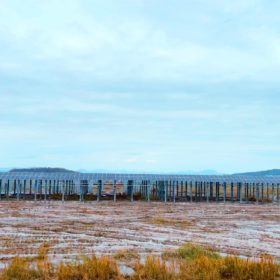
Tidal flats in eastern China to host 300 MW of solar
Developers have already connected 3 MW of capacity in what is purportedly destined to be the world’s largest PV array on a coastal tidal flat. The project, which is particularly challenging due to tidal fluctuations, will feature PV components designed to cope with salt and water damage.

Tanzania buys solar power from small independent power producers
Three solar plants totaling 15.4 MW will sell power to Tanesco under a PPA. The projects are being developed under new rules enabling independent power producers to participate in the country’s energy market.
