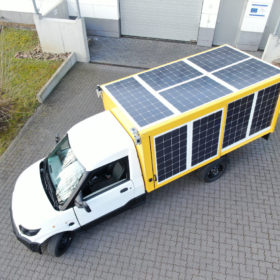
Vehicle-integrated PV for light commercial vehicles
A German consortium is building a light commercial truck prototype powered by 10 PV modules featuring Meyer Burger’s heterojunction cells. Initial estimates suggest that the panels could cover more than 25% of a vehicle’s total annual driving distance, and researcher Robby Peibst told pv magazine that the vehicle-integrated photovoltaic market could hit 5 GW by 2030.

Unsubsidized solar for underground zinc-lead mine in Namibia
Canadian mining company Trevali will buy power from a solar plant located near its Rosh Pinah mine under a 15-year power purchase agreement.
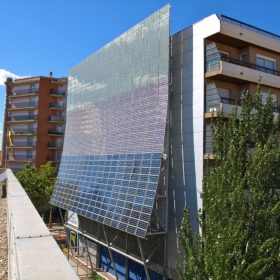
PCM-based passive cooling for BIPV systems
Indian scientists tested four kinds of phase change materials (PCMs) for solar module cooling in building-integrated photovoltaics. The PCMs were encapsulated with the PV system and the building envelopes and were also found to be beneficial to the thermal comfort inside the buildings.
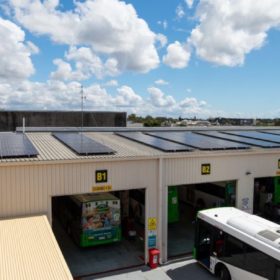
PV-powered ‘megawall’ to charge electric bus fleet
Australian public transport operator Transdev will use a “green mobility megawall” comprising 250 solar modules and 10 Tesla Powerwall units to charge two new electric buses in Brisbane.
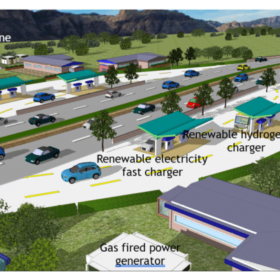
Solar powers novel green hydrogen fuel technology
A homegrown technology developed by the University of Newcastle and Southern Green Gas has seen the development of a novel green hydrogen fuel and carbon-neutral green methane. The fuel was demonstrated in Hyundai’s Nexo hydrogen fuel cell SUV in Sydney.
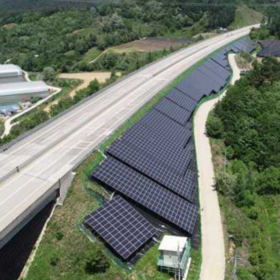
South Korea wants to build large-scale PV along highways
The new plan comes on top of a scheme launched in late March to deploy solar using railway infrastructure. The Korean government expects private developers will build solar plants on the highways’ idle sites for a combined capacity of 243 MW by 2025.
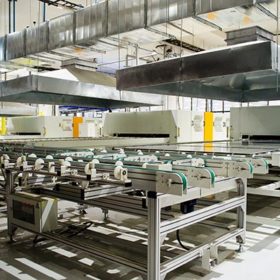
Tata Power Solar expands cell, module capacity
Tata Power Solar, a PV manufacturer and EPC contractor, has added new lines to its factory in Bangalore, India. It is widening its product range to include half-cell and bifacial mono PERC panels.

Saudi Arabia’s second PV tender draws world record low bid of $0.0104/kWh
The record low price was offered for the 600 MW Al Shuaiba PV IP project, which competed in the second round of the country’s procurement scheme for renewable energies.
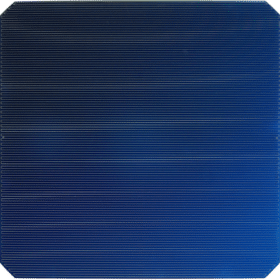
P-type TOPCon solar cell with 21.2% efficiency
Fraunhofer ISE scientists have identified the best metallization pastes to help reduce contact resistivity and contact recombination in p-type TOPCon solar cells. They applied a silicon nitride layer through plasma-enhanced chemical vapor deposition onto both sides of a cell.

India extends manufacturing incentive program to solar modules
A national production-linked incentive scheme introduced to encourage domestic manufacturing will now encompass solar. The PV policy will reportedly offer increased rewards for the production of more efficient panels and for Indian content–although it is not clear how.
