
Switzerland renews support for renewables
The Swiss government has decided to extend its incentives for renewable energy projects, while also adjusting them to promote greater competitiveness. In addition, it plans to replace feed-in tariffs for large-scale solar installations with a new auction mechanism.
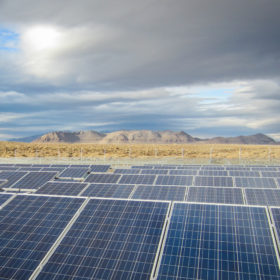
Covid-19 halting European PPA market – Part V
In a recent conversation with pv magazine, Luca Pedretti – the COO of Swiss software developer Pexapark – said that a new mindset is now required for solar and wind PPAs. The market has not completely stalled, he argued, noting that prices have already started to stabilize.
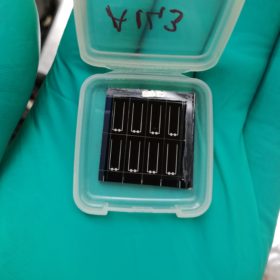
New process for kesterite solar cells with 10% efficiency
German scientists have developed a new process for the formation of a phase pure kesterite Cu2ZnSnSe4 (CZTSe), which they claim can improve the material homogeneity and suppress the well-known issue of tin losses. The new technique is based on stacked elemental and alloyed precursors with a Zn/Cu-Sn/Zn precursor structure.
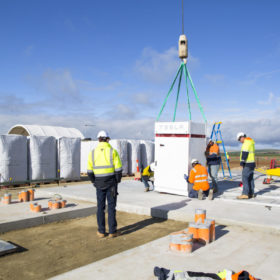
Australia to host 600 MW battery
French renewable energy developer Neoen plans to develop a massive battery storage system near the Australian city of Geelong that will dwarf its largest project to date, the 100MW/129MWh Tesla big battery in South Australia.

Mali exempts solar from VAT, import duties
The move represents a step forward in the implementation of the National Action Plan for Renewable Energy (Paner), through which the West African nation aims to install 1.42 GW of renewable energy by 2030.
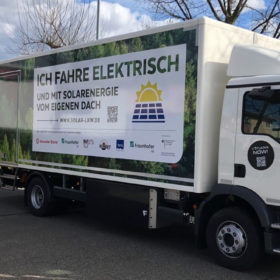
Fraunhofer ISE tests vehicle-integrated PV in commercial trucks
Two Fraunhofer institutes and four industrial players are working together to develop a concept that will facilitate the use of vehicle-integrated solar modules in electric vehicles and trucks. The three-year “Lade PV” project will also focus on PV components and manufacturing processes.

Maldives tenders 21 MW of PV
Via a new tender, the archipelago’s finance ministry is seeking proposals for an 11 MW floating PV system and a 10 MW ground-mounted solar plant.
Using ultrasonic irradiation to separate backsheets in PV waste
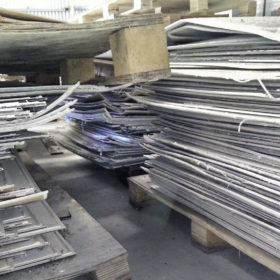
Chinese researchers have used an industrial-grade, 720 W ultrasonic cleaner – with a frequency rating of 28 Khz and 1,000 W of heating power – to separate backsheets from end-of-life PV modules. They’ve concluded that an ultrasonic power of 720 W is ideal for the separation process.

Global solar EPC market dominated by US, German, Indian contractors
Although the Wiki-Solar website ranking only provides a snapshot of PV project engineering, procurement and construction contracts outside of China, it is nevertheless a useful indicator of the changing global solar market landscape. Of the top 11 companies, four are based in India, three in Germany, and two in the United States. But last year’s largest contractor, U.S.-based First Solar, might lose its leading position this year, as it has largely discontinued its EPC activities.
Waves, wind & floating PV
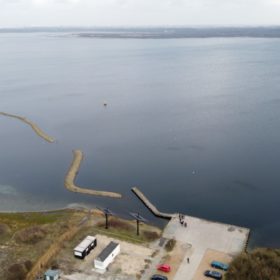
Dutch research center TNO is setting up a test facility for floating PV plants in Oostvoornse, where it will analyze the impact of wind and waves on floating structures and module yield. TNO Senior Project Manager Jan Kroon told pv magazine that it will assess module damage and the impact of waves on light absorption. It has already found that the ratio between wave-height and wave-length is a key factor in mismatch losses, while noting that optimizers and micro-inverters on panels could mitigate losses.
