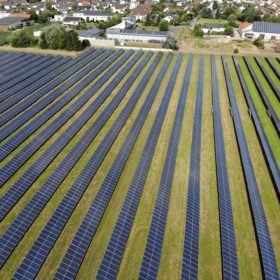
France added 176 MW of solar in first three months of the year
Quarterly new additions were 15% lower than in the October-to-December window. The France Territoire Solaire thinktank said the lower volumes could be explained by the initial impact of the coronavirus crisis.
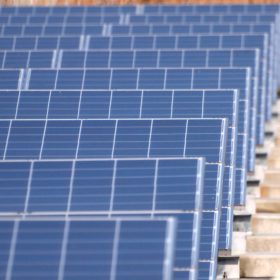
Romania’s largest gas provider set to embrace renewables
Romgaz is reportedly planning to invest in solar, wind, geothermal and biogas power projects by tendering for consultants.

A pressure-assisted technique to increase perovskite solar cell efficiency
Researchers in the United States claim to have significantly increased the efficiency of a perovskite solar cell by applying a range of pressures to the device. According to them, pressure-assisted processes such as lamination, cold welding and rolling/roll-to-roll processing can be used to improve interfacial surface contacts in perovskite cells.
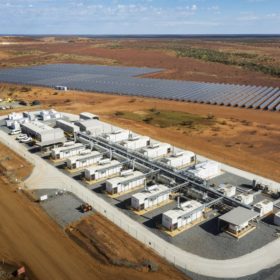
56 MW hybrid wind-solar plant powers up at Australian gold mine
The unique solar, wind, and battery project has been completed at Gold Fields’ Agnew Gold Mine, marking Australia’s largest hybrid microgrid of its kind.
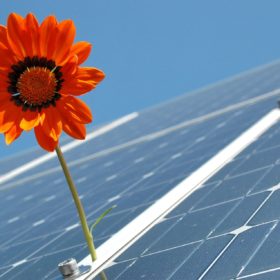
New method for life cycle assessment of PV technologies
Researchers in Australia have conducted a ‘cradle to grave’ life cycle assessment (LCA) of the four most widely used PV technologies. The academics say that cadmium telluride solar modules have the lowest life cycle impact, followed by amorphous, multi and monocrystalline silicon products.
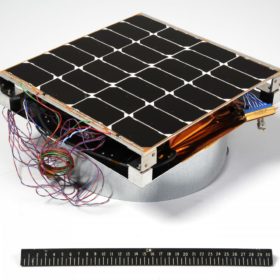
A PV antenna for solar power beaming from space to Earth
Researchers from the U.S. Naval Research Laboratory have launched first orbital experiment with space-based solar power. They have sent into space a 12-inch square tile photovoltaic module that is expected to test the viability of space-based solar power systems converting sunlight to microwaves outside the atmosphere.

Sunny regions could see one-cent solar within a decade
The solar learning curve usually applied to panel costs has been extrapolated to the larger, non-module element of the price of solar electricity generated by big projects, leading one commentator to predict new solar projects could be cheaper than legacy fossil fuel plants within 10-15 years in certain markets.
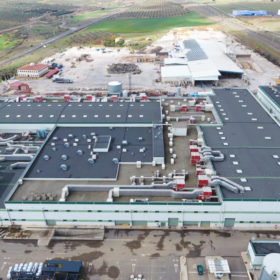
Solar grade silicon production comes back to Spain
Rivas-Vaciamadrid-based company Aurinka is planning to start UMG silicon manufacturing in Puertollano, Castile-La Mancha, this year. The company says its patented low-carbon production process offers low enough manufacturing costs to compete with Asian rivals.
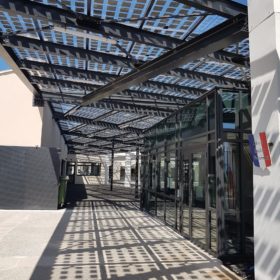
BIPV solar modules with varying transparency
German panel maker Sonnenstromfabrik has developed a glass-glass monocrystalline PV module in three versions offering different levels of transparency. The company says the transparency feature makes the panels suitable for verandas, pergolas, awnings, carports, swimming pools, halls and facades. Their power output varies from 160 W to 280 W, while their efficiency ranges from 9.5% to 16.7%.

Myanmar launches 1 GW solar tender
The country’s Ministry of Electricity and Energy is seeking proposals for 30 large-scale solar plants. The selected developers will be awarded 20-year power purchase agreements.
