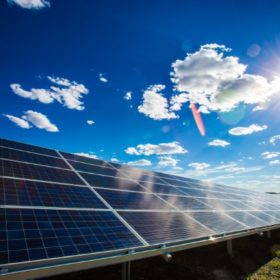
Big solar projects move forward in Chile
Mainstream Renewable Power is developing the $934 million Huemul wind and PV project, the second phase of the $1.8 billion Andes Renovables renewable energy platform, which is expected to have a total capacity of 1.3 GW when completed. A third phase is currently in the financing stage.
Light and shade of 500 W plus solar panels – part IV
In the fourth and final article of a series, pv magazine editor Pilar Sánchez Molina analyzes with industry experts challenges and opportunities created by new panels with power output exceeding 500 W.

Machine-learning for PV module cleaning
French researchers have developed a machine-learning model to clean low-power PV projects and standalone solar arrays in rural areas isolated from the grid.

Giant agrivoltaic project in China
The Baofeng Group is building a 1 GW solar park which is hosting a goji berry plantation in the Binhe New District on the eastern banks of the Yellow River in the Ningxia Province. Around 640 MW have so far been grid-connected. Huawei is providing the inverters for the project.
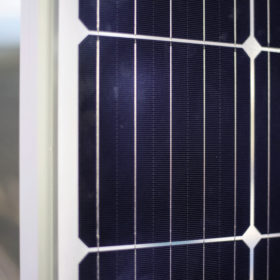
Inverted pyramid-based PERC solar cell with 21.4% efficiency
A Chinese research group has developed a PERC cell on a commercial 180-μm-thick monocrystalline silicon wafer with a standard size of 156 × 156 mm2. The cell has an open-circuit voltage (VOC) of 0.677 V, a short short-circuit current (ISC) of 9.63 A, and a fill factor of 80.30%.

South Korea bets on tandem solar technologies
The South Korean government has released a new roadmap to support R&D activities in the solar sector. The document indicates the country’s solar manufacturing industry may be encouraged to opt for high-efficiency and expensive panels based on tandem solar cells.

Solar, storage-centric approaches to DC coupling
A new white paper by Alencon outlines the differences between PV-centric and battery-centric coupling.

Analysis: Initial results of Portugal’s solar+storage auction
Portugal’s recent PV auction marks a new era of battery storage for the country, says UK consultancy Everoze. It notes that the auction was so competitive that the winners had to cut their expected remuneration in the solar+storage category to negative values. It claims that the real winner is the government, as it is maximizing the value of scarce grid capacity, and argues that the auction could become a benchmark for nations with limited grid space.
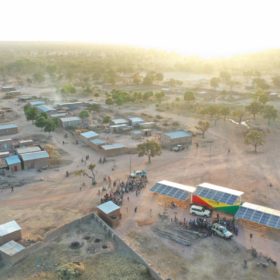
Senegal introduces VAT exemption for off-grid solar products
The Senegalese government is aiming to increase access to solar power in rural areas by reducing VAT on PV panels, inverters, solar thermal collectors and other products in an effort to achieve universal electricity access in the country by 2025.

EBRD may finance ACWA’s 200 MW solar plant in Egypt with $54 million loan
The $155,4 million project was secured by the Saudi energy giant through a tender held in 2019. The facility will sell power at a price of $0.02752/kWh.
