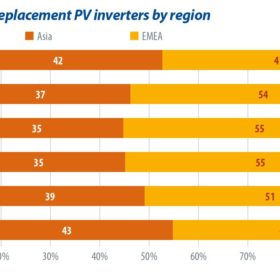
Out with old inverters, in with the new
Global demand for replacement inverters will likely grow by almost 40% to reach 8.7 GW in 2020, as a large and expanding installed base of aging solar PV installations drives deployment, writes Miguel De Jesus of IHS Markit.
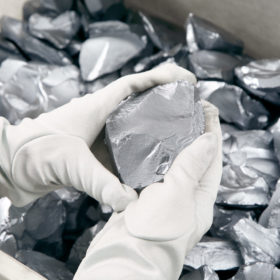
Is this the end for Korean polysilicon?
The nation’s only two poly manufacturers could both shutter factories in their homeland due to downward price pressure. OCI says it will maintain only 6,500 MT of its 52,000 MT annual production capacity in an operational state and Hanwha Chemical says it is ‘examining the situation’. Poly analyst Johannes Bernreuter has discussed the reasons for the crisis with pv magazine.
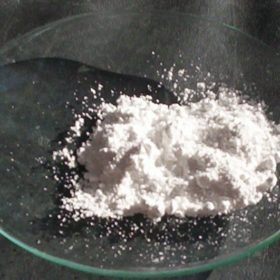
A titanium solar cell with 24% efficiency
The Australian research team which developed the device said the higher efficiency was achieved through a nanowire design which eliminates the interface inside the titanium dioxide band.
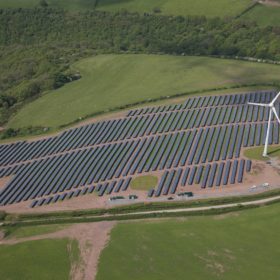
Vattenfall secures 10-year power supply deal for 60 MW of German solar
A Deutsche Telekom subsidiary has agreed to buy solar power from Vattenfall.
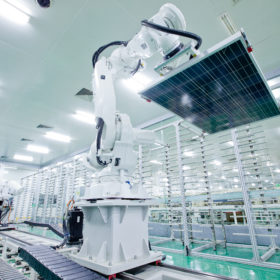
Jinko Solar the world’s biggest module provider again in 2019
The solar giant shipped 14.2 GW of modules last year, up 33% on 2018 for the high-water mark of another year dominated by Chinese manufacturers.

An inverted perovskite cell with 22.3% efficiency
Saudi researchers have developed a cell which is said to exhibit improved structural and optoelectronic properties as well as enhanced carrier mobility and diffusion lengths. The feat was achieved by reducing voltage losses using a new passivation technique.

French Army plans for 246 MW solar plant
Developer Photosol was selected as project developer through a tender launched by the Ministry of the Armed Forces in August. The solar park is scheduled to be commissioned in 2022 and the ministry, which has committed to making 2,000ha available for PV projects, plans a similar tender in February, and more every six months.

Trimming optical losses in tandem perovskite cells
Spanish researchers have unveiled a monolithic nano-structured perovskite silicon tandem device they claim can reduce optical losses by more than a third compared to planar perovskite cells of the same kind.
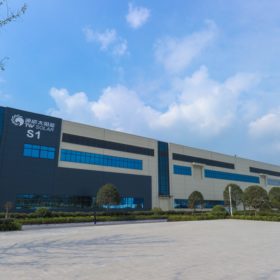
Tongwei to open new 30 GW cell fab in Sichuan
Construction of the $2.87 billion factory is scheduled to start in March and manufacturing activity should be launched in 2021.
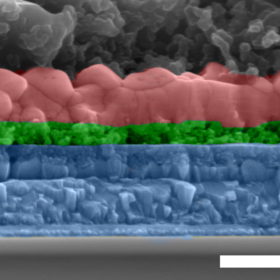
Japanese scientists trial printing on perovskite
Researchers from three Japanese universities have developed a process based on inkjet printing they say could reduce the cost of perovskite solar cell production. The group fabricated small cells with efficiencies as high as 13.19%, a figure they claim is promising enough to offer the possibility of scaling up to commercial production.
