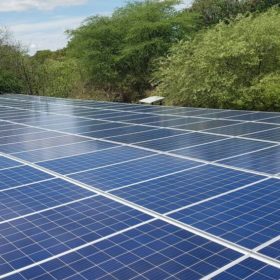
Botswana issues tender for 12 IPP solar projects
Through the tender, the Botswana Power Corporation (BPC) is seeking independent power producers (IPPs) to provide more electricity connections within the African country. It joined the International Solar Alliance at the beginning of November.
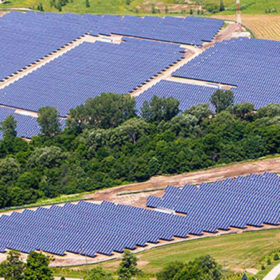
Canada’s regulator identifies profitable solar regions
In a new report, the Canadian National Energy Board has identified the regions with both the highest and lowest solar energy potential. Overall, the future of solar in the country appears bright, as power prices are expected to increase considerably over the next two decades.
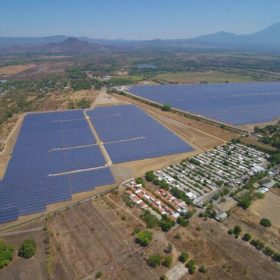
Neoen announces financial close for 140 MW (DC) PV plant in El Salvador
The power plant will be connected to a 3 MW/1.5 MWh lithium-ion battery system. Lenders are the Dutch Development Bank (FMO), the French Development Agency (Proparco) and the Inter-American Development Bank.

Foresight Solar acquires 80 MW project portfolio in UK
The latest acquisition means the solar energy investment company has expanded its portfolio to 869 MW across 54 installations. The company says the increased diversification of its portfolio will improve operational efficiencies.
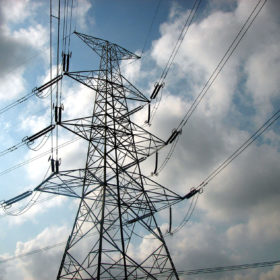
UK: Ofgem proposal means ‘the most profligate energy users will be rewarded’, says STA
Power market regulator favors a flat rate fee for electricity consumers to fund the cost of making the U.K. grid fit for the energy transition. Solar lobbyists say that will unfairly penalize households and businesses who have invested in on-site generation.
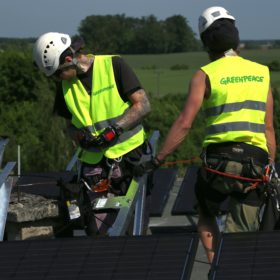
Poland’s wind, solar auction concludes with lowest price of $79.1/MWh
The auction’s final lowest price was higher than that of the two previous auctions of the same kind, which were held in 2017 and 2016, respectively. Overall, 8,169 TWh of power were sold for PLN 2.2 billion (US$579.8 million).
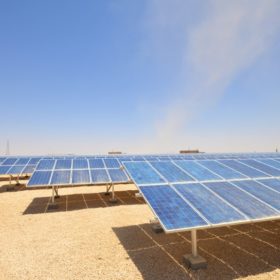
Gamesa secures 400 MW inverter order from Egypt
The Spanish inverter maker will provide Norwegian developer Scatec with 66 PV inverter stations for projects it is building at the Benban complex.
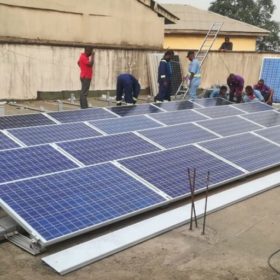
Minigrid development a win-win scenario for Nigeria, says Rocky Mountain Institute
A new report from U.S. based Rocky Mountain Institute outlines the potential for minigrid deployment to provide electricity to underserved communities around the world, to the benefit of utility companies, minigrid developers and communities. The report takes examples from Nigeria to illustrate this potential, but states that many of its findings could be applied to communities with limited or no access to electricity around the world.
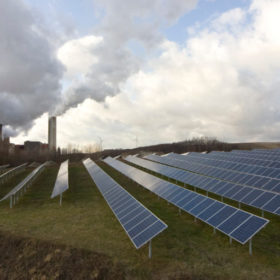
Renewables surpassed fossil fuels capacity in Germany last year
In their annual monitoring report, Germany’s Federal Network Agency and the Federal Cartel Office have analyzed the figures for 2017. At the end of last year, renewables accounted for around 112.5 GW of operational capacity, while conventional sources totalled 105.1 GW.
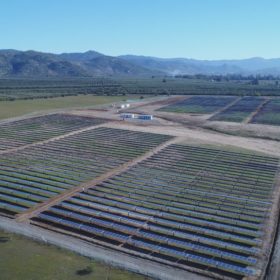
Chile launches call for $193.4 million solar energy research institute
The Technological Institute for Solar Energy, Low Emissions Mining and Advanced Materials of Lithium and other materials, will be set up with a mixture of public funding and 30% private investment.
