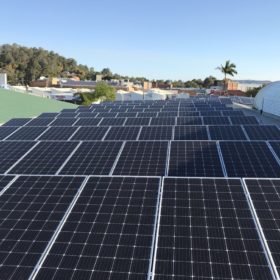
CleanPeak expands solar mall portfolio in Australia with ReNu acquisition
ReNu Energy signed an agreement last week for the sale of its Australian solar assets to CleanPeak Energy, a commercial rooftop solar startup.

PV+storage opportunity looms in Asia-Pacific region: WoodMac
Solar-plus-storage could be competitive against gas peaking power plants in Australia within the next five years, as the average solar-plus-storage LCOE across the Asia-Pacific region is set to fall from $133/MWh this year to $101/MWh by 2023, according to a newly released research report.
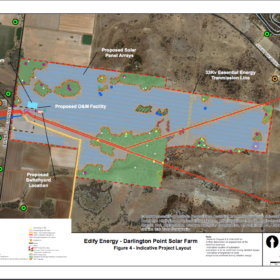
275 MW solar+100 MWh storage at Darlington Point, Australia get regulatory nod
The New South Wales Department of Planning and Environment has given the green light to a massive solar farm coupled with a utility-scale energy storage facility. The Australian project proposed by Edify Energy is valued at AU$407 million.
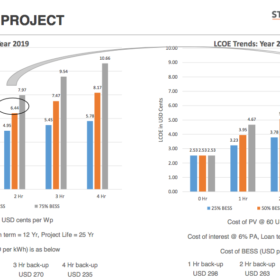
Building bankable utility-scale solar+storage projects
With declining costs, and increasing amounts of solar+storage added to electrical grids across the globe, there is a growing need to understand how to build bankable projects. In a recent pv magazine webinar, we discussed just this.

Lebanon unveils submissions for 300 MW solar+storage tender
The Lebanese Center for Energy Conservation (LCEC) has published a list of the 75 Expressions of Interest (EoIs) for three 100 MW solar PV plus storage projects. A detailed call for project proposals will be circulated to the 75 consortiums by December 2018.

USTDA awards grant for 100 MW solar+storage project in Mozambique
The U.S. Trade and Development Agency (USTDA) has awarded a US$1.2 million grant for a feasibility study assessing the viability of an up to 100 MW solar PV plant, coupled with storage, in Mozambique.
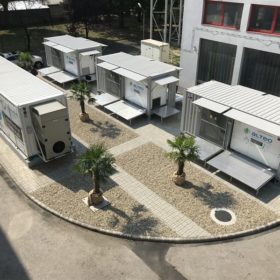
Wärtsilä completes its first European energy storage project
Hungary-based Sinergy Kft is the recipient of Wärtsilä’s first EPC energy storage project in Europe. The Finnish technology group commissioned the engine plus storage hybrid installation, its first globally, on August 22. The VPP can now provide frequency and secondary regulation to the Hungarian national grid.

Indonesia inaugurates its first three solar plus storage mini-grids
Indonesia has reached a milestone, having inaugurated its first three solar+storage mini-grids, thus enabling three remote villages to enjoy uninterrupted, off-grid access to electricity for the entire day.
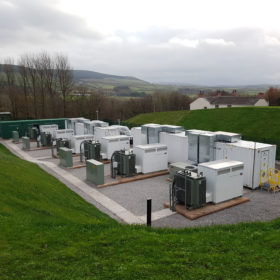
NES’s 50 MW UK energy storage project operational
NEC Energy Solutions (NEC ES) has announced its 50 MW energy storage project in the U.K. with VLC Energy, is fully operational.

CS Energy signs PPA for 60 MW Australian PV+storage+wind hybrid energy park
The AUS$150 million agreement between the government-owned CS Energy and the Kennedy Energy Park marks yet another positive step for Australia as it seeks to tap the potential of all its renewable energy sources.
