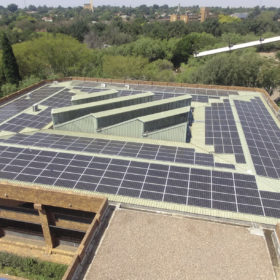
South African government sets requirements for solar rebates
South African individuals and homeowners can now claim rebates of up to 25% of their solar panel costs, up to a maximum of ZAR 15,000 ($800). Recent changes to the solar rebate scheme specify that the panels must have a minimum output of 275 W. They can be installed as part of new or existing systems.
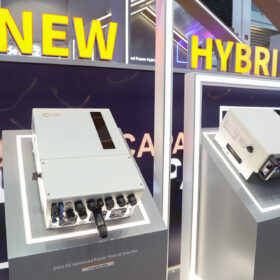
Solis targets South African C&I market with new hybrid inverter
Ginlong has announced the launch of its new Solis S6 Advanced Power Hybrid Inverter, with exclusive availability for South Africa.
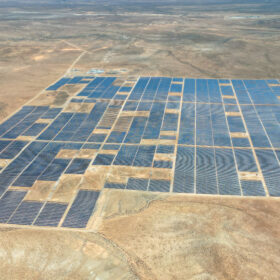
Phelan Energy connects 86 MW PV plant to grid in South Africa
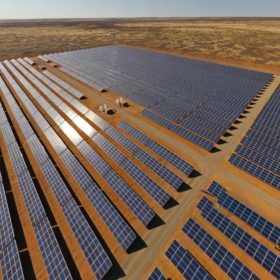
The plant, Solar Capital’s third major project in the country’s Northern Cape, is located in Loeriesfontein. Chinese manufacturer Sungrow supplied its SG3125HV PV inverters for the project.
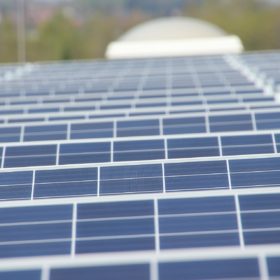
South Africa’s sixth renewables auction concludes with lowest bid of $0.02689/kWh
South Africa selected five solar projects with a combined capacity of 860 MW in its latest auction. However, the authorities did not select any wind projects from the 4.1 GW of bids that were submitted. The final average price for PV was ZAR 0.490 ($0.02808)/kWh.
The Hydrogen Stream: Ultra-stable platinum-lanthanum for more efficient fuel cells
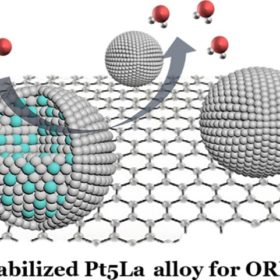
Tsinghua University researchers have developed a way to combine high-cost platinum and a rare earth element, lanthanum, to serve as a catalyst in fuel cells. Meanwhile, SSAB, LKAB, and Vattenfall have revealed plans to launch industrial production of hydrogen direct reduced sponge iron (H-DRI) by the end of this decade.
Financial close for 200 MW of solar in South Africa
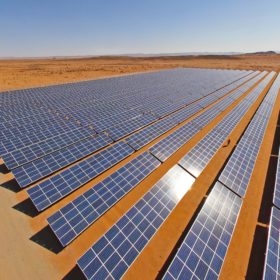
Sola Group and Tronox have finally reached financial close on two 100 MW solar projects in South Africa, roughly six months after signing power purchase agreements.
South Africa increases capacity of sixth renewables procurement round, leaves solar quota unchanged
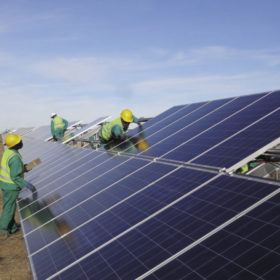
The South African authorities have increased the total capacity of the next round of the Renewable Energy Independent Power Producer Procurement Program (REIPPPP) from 3.6 GW to 4.2 GW.
South Africa to introduce feed-in tariffs for rooftop PV
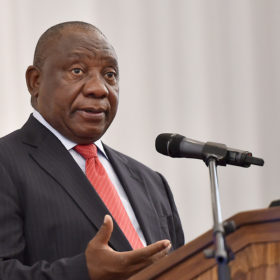
The country’s troubled power utility Eskom is currently developing the new incentive scheme. President Cyril Rampahosa said the program may also include some unspecified tax incentives.
South Africa approves 200 MW of PV under new distributed-generation rules
Sola Group plans to build two 100 MW siolar projects in South Africa’s North West province. It will sell the electricity under power purchase agreements to US-based titanium products provider Tronox, which operates several mines and smelters in the region.
South Africa postpones commercial close timelines for projects selected in fifth REIPPPP round
The fifth round of South Africa’s REIPPPP scheme was launched in March 2021. The authorities allocated 2.6 GW of renewable energy capacity across 25 projects ranging in size from 75 MW to 140 MW.
