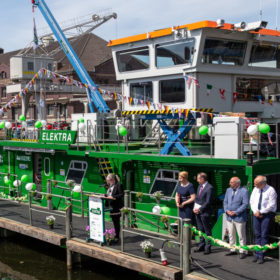
The Hydrogen Stream: World’s first hydrogen-powered towboat
Shipbuilder Hermann Barthel has developed the world’s first push boat to combine battery-electric propulsion with hydrogen and fuel cell technology. Iberdrola and Fertiberia, meanwhile, have commissioned Europe’s largest green hydrogen production plant.

Storing hydropower via regenerative braking in electric trucks
An international research team has proposed the use of water from high-altitude rivers and regenerative braking in electric trucks to store electricity for reuse in power networks, or for transport purposes.
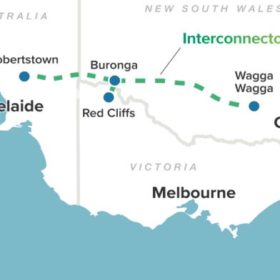
Transgrid builds high-voltage interconnector to link Australian states
Transgrid, the transmission network owner in the Australian state of New South Wales, has started building its section of the AUD 2.3 billion ($1.64 billion) Project EnergyConnect. The high-voltage electricity transmission interconnector will link power grids across three states, unlocking gigawatts of planned renewables.
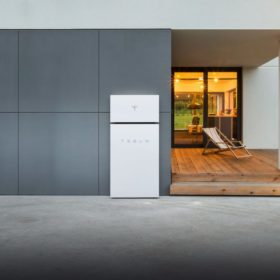
Tesla rallies Powerwall owners to show how they can help Texas grid
In Texas, where batteries cannot send power to the grid, Tesla has filed a request for a rule change and has called on Powerwall owners to form a virtual power plant.
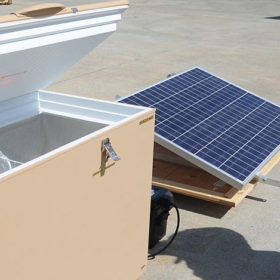
Photovoltaics for refrigeration
Scientists in Saudi Arabia looked at the potential of different solar technologies to meet energy demand for cooling systems. They found that PV is the best cost-effective option, especially for compression refrigeration cycles in hot climates.

China’s first salt cavern for compressed air energy storage goes online
Huaneng Group has finished building a 300 MWh storage project in Changzhou, in China’s Jiangsu province. The state-owned company has already started operating the facility, which is situated in a salt cavern.
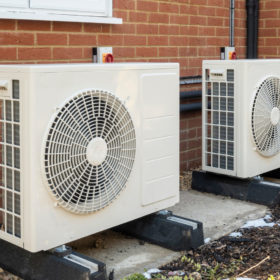
What are upfront and lifetime costs of heat pumps in the US?
The “all electric” movement is shining new light on heat pumps. A recent survey looks at their costs in terms of replacements for heating and air conditioning systems.

Australian startup develops mine shaft gravity storage
Green Gravity, a startup proposing to use old mine shafts for gravitational energy storage, has secured AUD 1.4 million ($990,000) in its first formal capital raise.
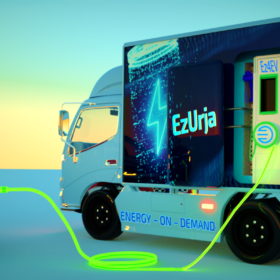
Solar-powered EV charger with integrated battery storage
Energy management startup Ez4EV has introduced an electric-vehicle charging solution with integrated battery storage. The complete unit-in-a-box can be charged using electricity produced from solar, compressed biogas, and compressed natural gas.

Siemens, ABB invests in Norwegian battery company
Startup Morrow Batteries has raised €100 million ($105.9 million) in a funding round led by Siemens and ABB. It will use the money to build its first battery cell factory in Norway, its home market.
