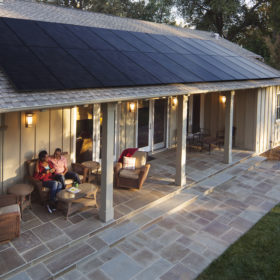
SunPower to decide fate of commercial-industrial solar business this year
A quarterly update top-loaded with promising business growth in the company’s residential segment revealed commercial and industrial operations supplied an $8 million loss to the three-month figures, with supply chain issues and project timetables blamed.

Faster permitting crucial to help Italy add 70 GW of renewables this decade
In a chat with pv magazine at the Key Energy event in Rimini, Roberta Valenziani, of Italian trade body Elettricità Futura, explained the factors preventing Italy’s PV market from having a renaissance. She said the country has Europe’s longest delays and highest costs for obtaining permits for large scale solar.
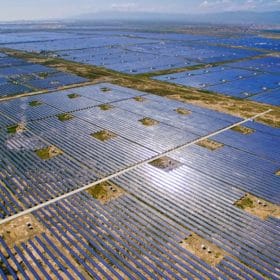
China PV Industry Brief: Installations slow, deals continue despite rising prices
This week saw prices in the polysilicon segment, and further downstream, rise again, with no end in sign. National Energy Agency statistics show a slowdown in installations for the second consecutive month in September. Manufacturers, however, continue to purchase components and materials in the expectation that prices will rise even further.

A lightweight plastic to replace aluminum module frames
South Korean company LG Chem has developed a new plastic material that it says could replace the metal frame of a PV module, making it much lighter. The company says it has already secured mass production capability for the material and begun selling products at full scale.
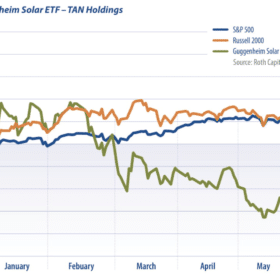
Guggenheim Solar Index: Supply chain cost increases see underperforming solar stocks
In May, cost increases across the supply chain left solar stocks underperforming in the market, writes Jesse Pichel of ROTH Capital Partners. For the U.S., higher prices for shipping and steel have hit particularly hard.

ESMC criticises lack of solar manufacturing in Euro recovery plans
The trade body has highlighted a lack of explicit PV industry support in EU member states which already host domestic manufacturers, such as Germany, France, Austria, Belgium and Lithuania, and says the focus on green hydrogen could exacerbate the solar trade deficit with Asia.
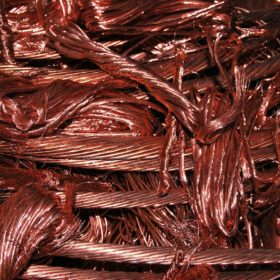
IEA highlights solar’s dependence on Chinese copper processing
The sheer volume of new power lines which will be required to accommodate the rising tide of solar installations ensures copper has been included by the International Energy Agency on its list of minerals which must keep flowing if the energy transition is to stay on course. And it’s not production that’s the potential bottleneck.
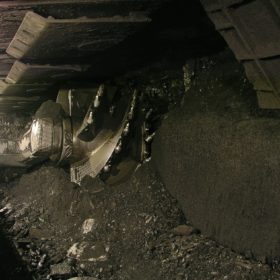
China’s ‘quasi-monopolistic’ stranglehold on solar noted by EU body
The bloc should accelerate investment into mining and processing within its shores, as well as ramping up recycling, according to European employers and trades unions, with coal workers already equipped with the necessary transferable skills.

The Weekend Read: Polysilicon and wafer manufacturer ranking
Polysilicon and wafer manufacturer ranking: PV demand reached record levels in 2017, with global installations surpassing 100 GW for the first time ever. Few in the industry expected deployments to hit this level, piling the pressure on to the supply chain. Armed with polysilicon and wafer manufacturer ranking data supplied by IHS Markit, pv magazine delves into the past year’s upstream landscape.
