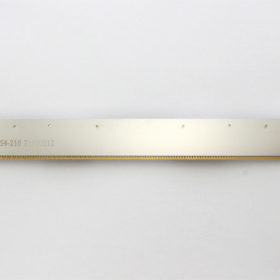
Pin-probe bar for busbar-free solar cell production
Japan’s Kopel has developed a device with a thickness of just 1.2 mm, with contacts on all of the finger electrodes of busbar-less solar cells.
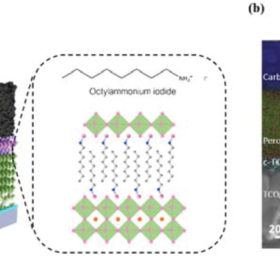
Electron blocking for 18.5%-efficient carbon-electrode perovskite solar cell
Scientists in Germany and Switzerland have developed a perovskite solar cell with a carbon electrode that achieved 18.5% efficiency. It also retained 82% of this after 500 hours of continuous illumination. While a long way behind what has been achieved with other perovskite solar devices, the cell is produced via all low-temperature processes that could likely be scaled into low-cost, large-scale manufacturing – making the approach one worth pursuing further.

France defines standards for agrivoltaics
France’s environmental agency Ademe has released a set of new guidelines that clearly define “agrivoltaics.”
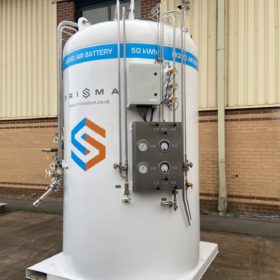
UK group develops liquid air energy storage tech
A UK consortium has developed the Prisma system, which stores thermal energy in liquid air form to provide onsite compressed air, via a latent energy cold storage tank filled with a phase-change material. It is expected to have a levelized cost of storage of GBP 114 ($143.10)/MWh.

Photovoltaics vs. nuclear power on Mars
Solar might be more efficient than nuclear energy to supply power for a six-person extended mission to Mars that will involve a 480-day stay on the planet’s surface before returning to Earth, according to new US research.
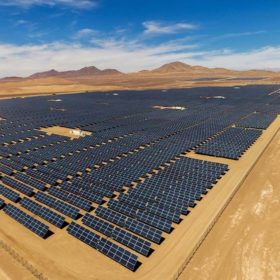
Chile wants to build up second-life solar module industry
Chile is launching a new initiative to reuse PV modules via a public-private partnership involving Enel Green Power.
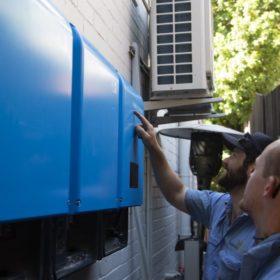
More than half of Australian PV installers moving into storage
The number of solar installers in Australia offering storage solutions grew considerably in 2021 and promises to surge again this year, according to a survey by EUPD Research.
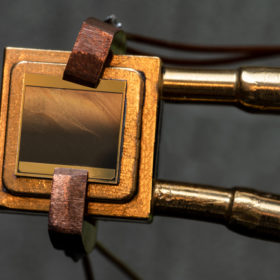
MIT, NREL researchers develop 40%-efficient thermophotovoltaic cell for grid-scale thermal batteries
The device is described as a heat engine with no moving parts that is able to produce power from a heat source of between 1,900 to 2,400 C. This concept is known as thermal energy grid storage (TEGS) and consists of a low-cost, grid-scale storage technology that uses thermophotovoltaic cells to convert heat to electricity above 2,000 C.
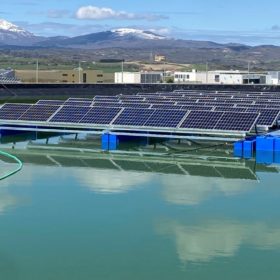
Trimaran-shaped floating PV system design from Spain
The proposed system architecture is claimed to offer more stability compared to conventional floating structures and reduces by up to 93% the contact area of the system with the water. The first system prototype was recently developed on a water reservoir in Alava, in the northeastern territory of the Basque Country.
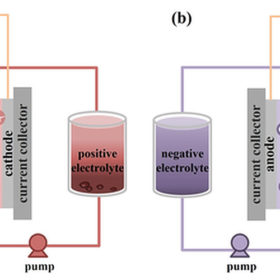
Bromine-based flow batteries for renewables storage
Bromine-based flow batteries have the potential for high energy density in renewable energy storage. Their commercial adoption, however, remains challenging due to the cathode materials used for their construction. New research from China seeks to shed light on how to overcome these hurdles.
