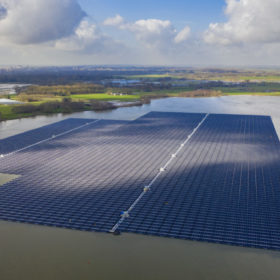
Baywa’s plans for floating PV
Over the past two years, German renewables business Baywa re has developed in-house floating solar technology and installed nearly 50 MW of projects in the Netherlands. Benoît Roux, director of solar activities at Baywa re in France, said the ramp-up in project size has enabled the company to achieve dramatic cost reductions.
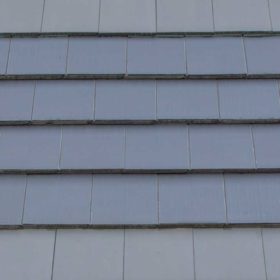
A 17.5%-efficient dark grey solar tile
U.K. business Roof Tiles Technology Ltd has developed a solar tile with a claimed efficiency of 17.5% and power output of 175 W per square meter. The company’s founder, Antonio Lanzoni, said a PV system featuring the product would cost 25-30% more than a standard solar rooftop.

France embraces solar with viticulture, arboriculture and market gardening
The French government has selected seven agrivoltaic projects with a total generation capacity of 12 MW in its latest tender for innovative PV technology.

Innovation promises cheaper solar cell glass manufacturing
Scientists have developed a hybrid production method combining metal mesh and a metal-oxide layer over a glass substrate which they say brings down production cost by 80% compared to the tin-doped, indium oxide-based technology currently in use.
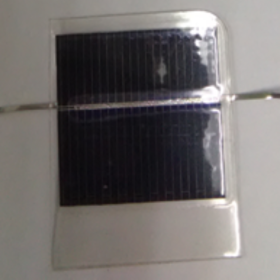
Pouch lamination technique for solar cell encapsulation
Scientists in India have used a pouch laminator to encapsulate a polycrystalline solar cell. The resulting device, the researchers claim, showed better UV photon absorption than solar cells treated with a polymer surface coating.
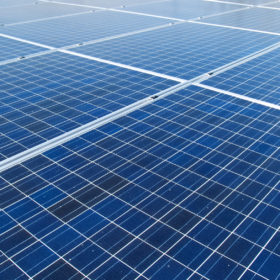
New method to measure cell voltages in operational PV modules
Scientists in Japan have proposed a new model to estimate cell voltages in solar modules by irradiating the cells with a weak modulated laser light. The method could be used to detect hot spots and other panel-degradation issues, such as potential induced degradation (PID) peeling, cracking, and poor contacts.
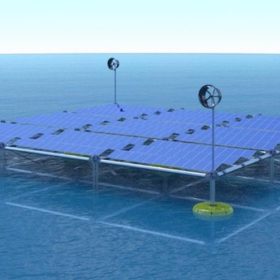
Solar arrays on wave energy generators, along with wind turbines
German startup Sinn Power has combined wave, wind and solar power to create what it claims is the world’s “first floating ocean hybrid platform.”
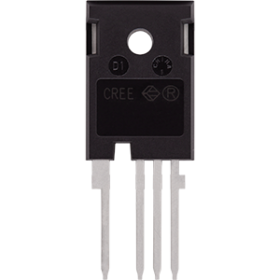
New 650 V MOSFET for silicon carbide inverters
CREE has developed a new MOSFET that could be suitable for silicon-carbide-based string inverters above 10 kW in size. The U.S. manufacturer says switching losses are 20% lower with the new transistor than with common silicon carbide MOSFETs, and claims that the product reduces conduction losses by 50%, to offer potential power-density growth of 300%.
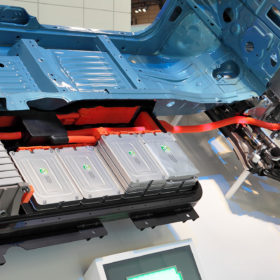
Used EV batteries for large scale solar energy storage
MIT scientists have suggested used electric vehicle batteries could offer a more viable business case than purpose-built systems for the storage of grid scale solar power in California. Such ‘second life’ EV batteries, may cost only 60% of their original purchase price to deploy and can be effectively aggregated for industrial scale storage even if they have declined to 80% of their original capacity.
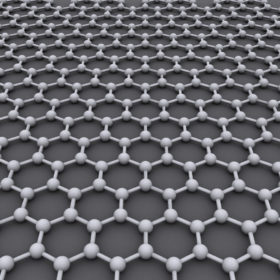
Investors bet $27.5 million that Nanotech Energy’s graphene battery breakthrough is the real thing
The startup claims to be “the world’s top supplier of graphene” and plans to release a non-flammable, environmentally friendly lithium battery that can charge “18 times faster than anything that is currently available on the market” — within the next year.
