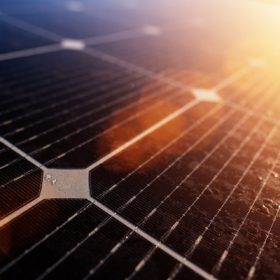
Lowering costs for PV cooling assessments
Researchers in Malaysia have developed a new, cheaper method to assess PV cooling techniques. Designers and manufacturers of PV cooling systems could follow the parameters of the new approach to evaluate the performance and bankability of their own devices, the scientists claimed.
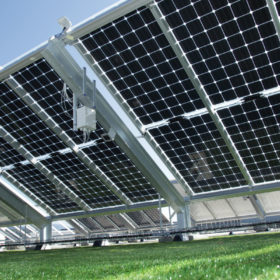
French bifacial standards measure up
A global assessment of bifacial testing methods conducted in Singapore has endorsed the approach taken by France’s Institut National de l’Énergie Solaire.
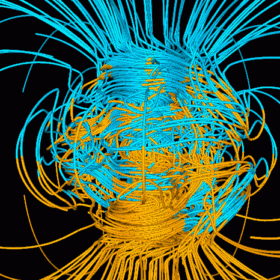
Earth’s magnetic field affecting PV panel performance
Researchers in Kenya say the geomagnetic field could reduce solar panel conversion efficiency 0.21% between the equator and a 50-degree latitude. Their analysis showed the complex magnetic field can determine increases in module fill factor and falls in maximum power.
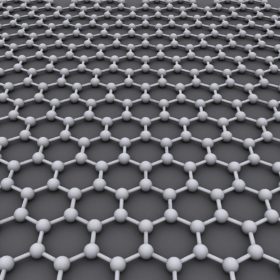
Improving organic PV with graphene
Researchers at the Massachusetts Institute of Technology have developed a new approach to improve the electrical properties of monolayer graphene grown by CVD that could be used in the production of more efficient and stable ultra-light organic cells. They used parylene to develop transparent graphene electrodes through a roll‐to‐roll transfer technique.
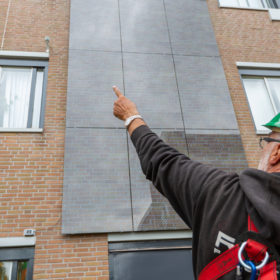
Facade solar panels with ‘mimic design’
Dutch startup Solar Visuals and the Netherlands Organisation for Applied Scientific Research (TNO) have developed new “mimic design” facade modules that reproduce the features of building surfaces. Lenneke Slooff-Hoek, a senior scientist for TNO, told pv magazine that the panels can be made in any size or color at 13% efficiency, adding that they have a partly transparent colored layer made of small dots.
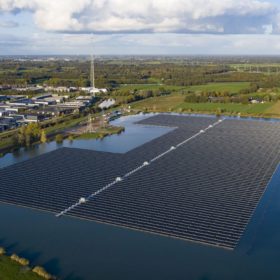
Implementing standards in floating PV
Norwegian consultancy DNV GL has gathered together big energy players, floating PV specialists and project developers into a consortium that will aim to define recommended practices for the floating solar business. Among the 14 participants are some big players in the field including EDP, EDF and Equinor, as well as French floating technology provider Ciel & Terre.
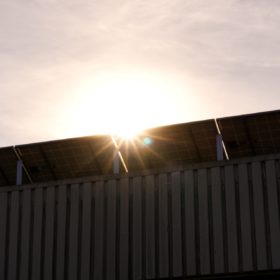
Cooling PV modules with passive technique based on finned heat sink
A Pakistani research team has assessed the performance of a passive heat sink cooling technique in two different configurations: one using rectangular fins and one based on circular fins. The rectangular configuration was the best in terms of heat rejection. Modules mounted with this solution had a 6 C lower temperature than modules without cooling systems.
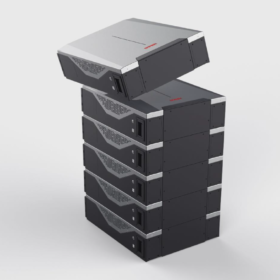
Lithium battery for low- and high-voltage storage
Dubai-based Weco has unveiled a new lithium battery solution that can operate in parallel as a low-voltage storage system or in series as a high-voltage battery with no hardware changes. The batteries can be mounted on walls or set up in a stack configuration.

Agrivoltaics works better with leafy greens, root crops
U.S. researchers have created a new model to assess the overlap between solar potential and underlying land use. The areas with the largest potential are the western United States, southern Africa, and the Middle East. The researchers concluded that croplands, grasslands, and wetlands are the top three land classes for PV projects linked to agricultural activities, while barren terrain, traditionally prioritized for solar PV system installation, ranked fifth.
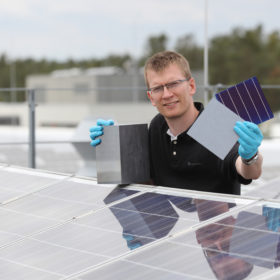
German scientists study causes of LeTID
Researchers at Germany’s Fraunhofer Institute for Integrated Systems and Device Technology IISB are trying to understand the causes of light and elevated temperature induced degradation (LeTID) in PERC solar cells. Initial investigations should provide a comprehensive understanding of the process and material dependency of LeTID and related degradation effects in monocrystalline and multicrystalline PERC solar cells.
