
Hybrid tandem quantum dot solar cell with 12.8% efficiency
South Korean scientists have produced an organic, hybrid-series tandem PV device that combines quantum dots and organic bulk heterojunction photoactive materials. They claim that the cell has the highest efficiency among all reported colloidal quantum dot cells, including single-junction devices and tandem devices.
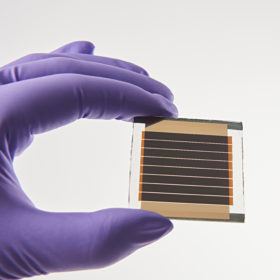
Research institute claims 20.3% efficiency for mini perovskite module
France’s Liten organization said it raised efficiency more than 20% with improved thickness homogeneity of the perovskite and optimized composition of the n-type interfacial layer. The previous record of 16.9% was attained by the same research group early last year.

Casting light on backsheet degradation
A U.S. research team has discovered that backsheets are most affected by cracking and degradation on inner layers, as such areas tend to become more rigid. The scientists have also discovered that degradation is accelerated by chemicals descending from the solar cells’ EVA encapsulant to the backsheets themselves.
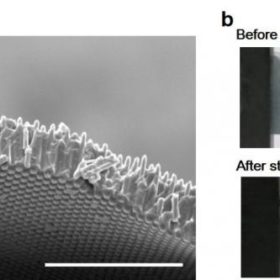
A stretchable, transparent solar cell with 8% efficiency
Korean scientists have unveiled a colorless device made of silicon microwire composites. The enhanced light absorption of the cell, the researchers claim, is due to the re-absorption of light by the microwires, which also benefit from an enhanced electric field.

A perovksite-silicon tandem cell with 25.7% efficiency
The device exhibited a small performance loss after a 400-hour thermal stability test at 85 degrees Celsius and after the same period under maximum power point tracking at 40 degrees Celsius, according to its developer. The cell was made by combining solution-processed, micrometer-thick perovskite top cells with fully-textured silicon heterojunction bottom cells.
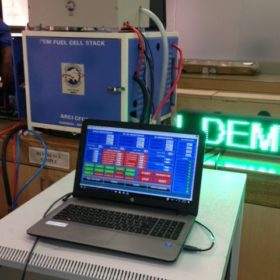
Fuel cell technology to power disaster management systems
Fuel cell systems provide sustainable electricity using hydrogen gas, without the need for grid power, which makes them highly useful in medical centers, as such facilities need to respond immediately in emergencies with state-of-the-art communication platforms.
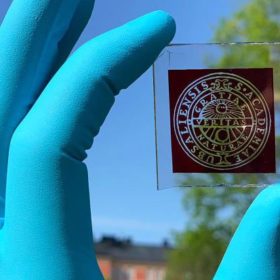
A 34% efficient dye-sensitized device for indoor PV
A European research team has developed a dye-sensitized PV cell based on a copper iodide complex. The device was conceived for use in self-powered and internet of things devices.

The ambiguous impact of battery storage on emissions
U.S. researchers have investigated whether energy storage deployment could actually drive up greenhouse gas emissions in the short term in some energy markets. The fact the existing literature considers only the dispatch of energy from storage facilities in the current fossil fuel-renewables energy mix, though, could understate the long-term emissions reduction benefits of such facilities.
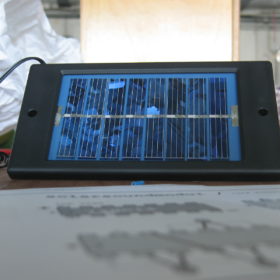
A heterojunction organic solar cell with 14.2% efficiency
Researchers in China have developed an organic solar cell using a sequential solution treatment technique in which the donor and acceptor mixture blends are sequentially spin-coated. With this technique, the researchers say they are better able to modulate the morphology of the active layer.

A new manufacturing process for 19.5% efficient perovskite solar cells
Researchers in China have proposed manufacturing perovskite cells using a pre-nucleation technique. Compared to traditional solvent dripping methods, the approach enables the creation of smaller crystallites in the perovskite films as uncontrolled crystallite growth affects the efficiency and durability of cells.
