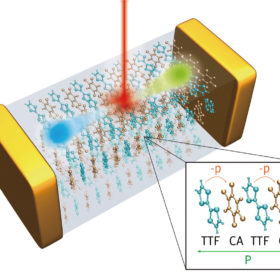
Japanese scientists use organic ferroelectric to extract more current from solar cells
The new technology uses a quantum-mechanical process, which can extract current from solar cells in a much quicker, less wasteful way, the research team claims.
EPFL-led research group seeks to stabilize perovskite solar cells with guanidinium
The group of scientists is adopting organic cations, instead of inorganic cations like cesium or rubidium, to stabilize the crystal structures of perovskites with solar applications.
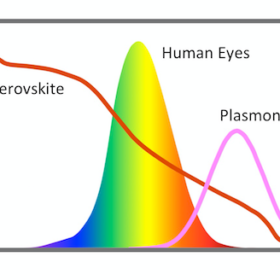
Japan research team develops new semi-transparent solar cell
The new cell, based on perovskite and silver nanocubes, is being developed for solar window applications.
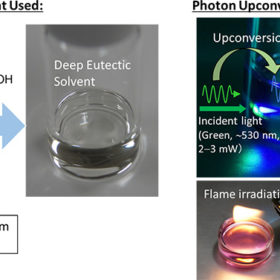
Japanese scientists develop new solvent-based photon upconversion platform
For the new kind of photon upconversion, the research team used deep eutectic solvents as an alternative to ionic fluids.
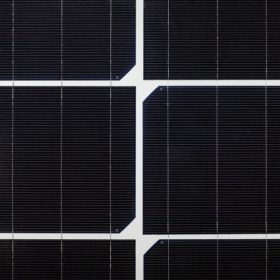
The weekend read: Every last watt
PERC power: As PERC settles into its position as a mainstream technology, leading module manufacturers are searching for ways to push ever more watts out of their module, and eliminate lingering degradation issues. So far this has included ramping up production capacities for half-cell modules and developing innovative new connection strategies. pv magazine looks into the latest technologies leading to gains in power output and quality at module level.

Manufacturing innovations on show at European Solar Technology Forum
This week, pv magazine attended the European Solar Technology Forum, where researchers unveiled new innovations from across the manufacturing spectrum, prompting plenty of discussion over how the future will look for solar in terms of the technology available and its applications. Bold claims of the potential for a further 20% cost reduction in manufacturing were made.

NASA develops new tool to measure total solar irradiance
NASA is on course to more accurately monitor the level of solar irradiance that reaches the earth, with the launch of a instrument for the International Space Station.
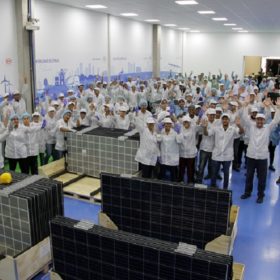
UN report shows China is becoming major PV technology stakeholder
The report describes how knowledge assets are shaping the current structure of the PV supply chain, and how China was able to catch up technologically by acquiring the necessary assets to enter at different stages of the value chain.

imec, Panasonic develop highly conductive solid nanocomposite electrolyte
The Belgian research institute and the Japanese electronics group say they have developed a solid nanocomposite electrolyte with a lithium ion conductivity several times greater than in its liquid equivalent.

“Smart” greenhouses can grow plants while generating electricity
A new type of greenhouse with special PV modules installed, which absorbs some light, while allowing some to pass through to allow photosynthesis has been tested by researchers at the university of California with very positive results.
