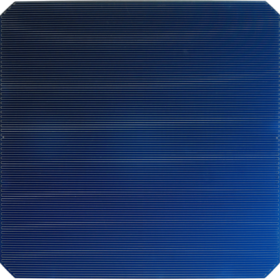
Laser-enhanced contact optimization improves TOPCon solar cell performance by 0.6%
Scientists in Germany have improved the efficiency of an industrial TOPCon solar cell from 23.8% to 24.1% by using laser-enhanced contact optimization as a post-firing treatment.
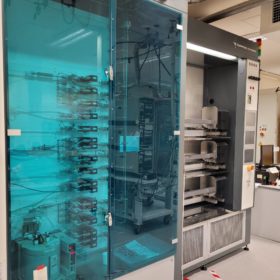
Improving gettering tech for TOPCon solar cells
Scientists in Australia have looked at how gettering technologies could improve passivating contacts based on polysilicon and silicon monoxide (SiOx) for tunnel oxide passivated contact (TOPCon) solar cells. They found that the gettering strength of the P-doped poly mainly depends on the doping concentration.
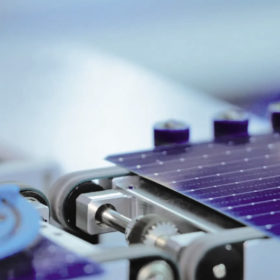
Perovskite-silicon tandem solar cell with TOPCon structure hits 27.6% efficiency
A research group led by Chinese manufacturer JinkoSolar has developed a tandem perovskite-silicon cell with a subcell based on TOPCon tech. The group succeeded in reducing voltage losses in the silicon sub-cell by minimizing the shunting probability during device fabrication.

Bifacial TOPCon solar cell with 23.84% efficiency, 90% lower silver consumption
Developed by Germany’s Fraunhofer ISE, the cell is manufactured with metallization based on a plating process. The device was built with galvanic nickel/copper/silver contacts instead of common silver contacts.
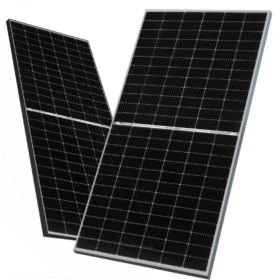
TOPCon solar modules in MENA
In a short chat with pv magazine, Mohamed Saady Dweik, the head of technical services and product management for the MENA region at JinkoSolar, spoke about the potential of TOPCon tech in the Middle East and North Africa region. According to him, the global demand for TOPCon products may exceed that of PERC panels within three years.
TOPCon vs PERC – a battle between fast learning curves
TOPCon solar modules will gain more market share if their average efficiency, already higher than that of PERC panels, continues to improve, according to Stefan Glunz, PV research chief at Germany’s Fraunhofer Institute for Solar Energy Systems ISE. In an upcoming pv magazine webinar on the potential of TOPCon tech, Glunz will show how to reduce costs and increase efficiency.
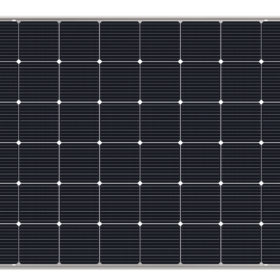
TOPCon vs PERC
TOPCon solar cells are on their way to fully compete with PERC solar products, according to recent research from Germany’s Fraunhofer ISE. Efficiency gains for the TOPCon concept, however, are necessary to help it capture more market share, as production costs remain higher than those for PERC tech. A series of cost-driven strategies to make TOPCon modules advance were outlined in the study.
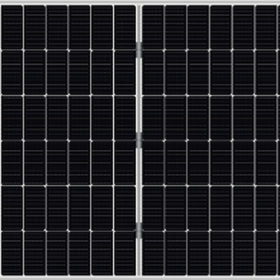
Jolywood launches 615W TOPCon solar module and all-black panel for residential segment
The Chinese manufacturer has launched two new bifacial products based on its n-type TOPCon 2.0 cell technology. The JW-HD156N panel has a power output of 615W, a front side efficiency of 22% and is intended for utility scale projects. The second product, called JW-HD108N, is an all-black panel with a power rating of 425W, for the residential segment.

Jolywood switches on 1.5 GW TOPCon solar cell factory in China
The Chinese bifacial module maker has commissioned a 1.5 GW TOPCon cell factory in China’s Zhejiang province, which raised its total TOPCon cell capacity to 3.6 GW. Another 16 GW facility is being planned for the Shanxi province.
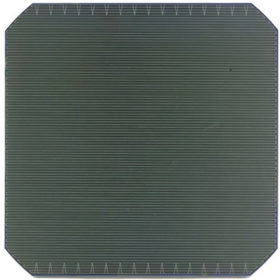
Large-area bifacial TOPCon solar cell with 23.01% efficiency
The n-type cell was built with phosphorus-doped LPCVD poly-Si passivating contacts and achieved a remarkable open-circuit voltage of 691.7 mV. According to its creators, with some adjustments the cell may be suitable for commercial production.
