TOPCon vs PERC

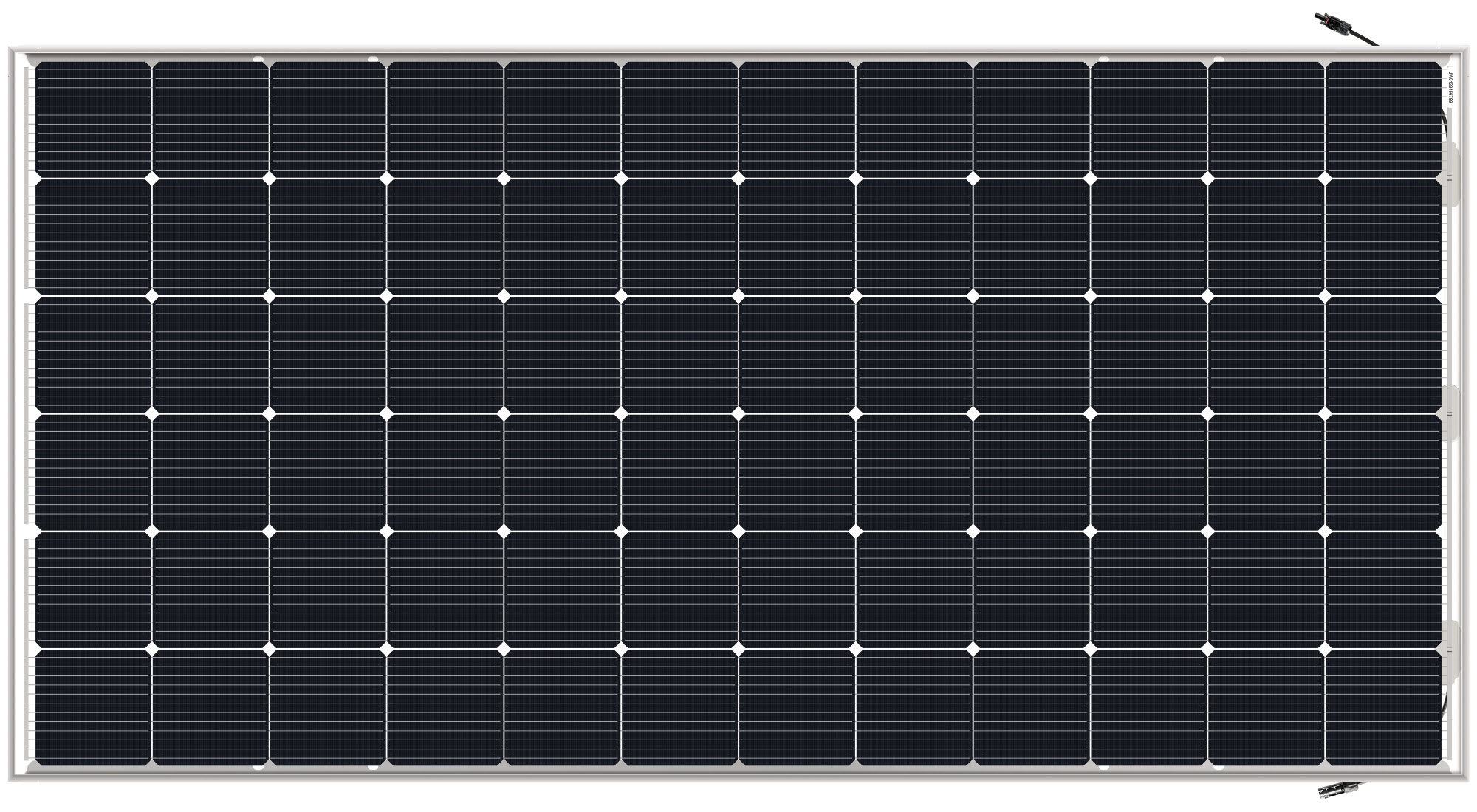
Researchers from Germany’s Fraunhofer Institute for Solar Energy Systems ISE have outlined a series of cost-driven strategies to accelerate the industrial upscale of tunnel oxide passivated contacts (TOPCon) solar products.
“Maintaining a high conversion efficiency in mass production is a key aspect to compete with the state-of-the-art PERC cell in terms of system cost and levelized cost of electricity,” the research’s corresponding author, Bishal Kafle, told pv magazine. “Recent developments in device research have led to an increasing gap between the conversion efficiencies of TOPCon and PERC cells. Nevertheless, a standard process flow for industrial TOPCon cells is not yet established.”
According to him, although a reduction in production costs is important, the economic viability of TOPCon requires a stable 24/7 production with equivalent uptime and utilization rates to current passivated emitter rear contact (PERC) cell manufacturing facilities. “Additionally, a TOPCon cells on an n-type substrate requires silver (Ag) contacts on both sides, reduction of Ag usage remains an important aspect as well for this concept, at least in the middle and long term,” he further explained.
Easily adaptable
In the paper, TOPCon – Technology options for cost efficient industrial manufacturing, published in Solar Energy Materials and Solar Cells, the German research team explained that the processes and existing equipment that are commonly used in the manufacturing of PERC cells may be easily adapted to TOPCon cell production by adding two process steps: the formation of tunnel oxide and the deposition of intrinsic/doped polysilicon.
“The properties of these layers are vital towards designing the subsequent cell processing steps, aiming to achieve high open-circuit voltage (VOC) and a low series resistance promised by the TOPCon-concept,” explained the researchers, noting that n-type substrates are more expensive to integrate than their p-type counterparts, due to the higher costs of the boron emitter diffusion process compared the phosphorous diffusion process typically used in PERC cell manufacturing.
The study provides a technical route to improve the low pressure chemical vapour deposition (LPCVD) process, which is currently the standard in the industry for TOPCon products, and evaluates possible alternatives to this technique, based on industrial tool availability, process compatibility, availability of all process parameters required for a cost of ownership (COO) modeling, lean process flow, and successful demonstration of the process functionality.
The LPCVD technique is still considered a valid approach by the research team as it ensures good thickness distribution along the wafer, pin-hole free layers with good step coverage, the use of relatively low deposition temperatures close to 600 degrees Celsius, a large number of wafers per batch, and the option of in-situ doping with constant doping profile. However, the LPCVD tool also has a reduced throughput due to a significantly longer process duration compared to that used in PERC cell manufacturing, which inevitably leads to higher production costs.
“Nevertheless, for the process route featuring in-situ deposited LPCVD a-Si/poly-Si layers, we identify a possibility of combining the high temperature annealing and oxidation of boron emitter in a single step, which makes this approach economically competitive in comparison to the process route featuring ex-situ LPCVD a-Si/poly-Si layers,” they continued.
Alternatives
Plasma-enhanced chemical vapor deposition (PECVD) and Atmospheric pressure chemical vapor deposition (APCVD) were considered as alternatives to LPCVD and the analysis showed that no clear winner can be identified between the three technologies. “It is observed that COO of a-Si deposition step scales down significantly with the thickness of the a-Si layer, although interestingly the cost reduction is largely dependent upon the used deposition technology,” the Fraunhofer ISE researchers said. “A much stronger reduction in COO for thinner layers is observed for PECVD and APCVD-deposition technologies, which is mainly related to their significantly higher a-Si deposition rates in comparison to LPCVD.”
The scientists also compared the levelized cost of energy (LCOE) for 5MW ground-mounted PV plants relying on bifacial PERC technology and TOPCon products featuring LPCVD, PECVD and APCVD. Their analysis showed that the TOPCon techs have 13.5–18.6% higher All-in Cell costs and 3.6–5.5% higher All-in Module costs in comparison to PERC benchmark.
“The additional cost for TOPCon module is mainly related to a higher CAPEX and facility-related costs for the cell production facility, a significantly higher process consumable costs in the cell processing due to the additional process steps required compared to a PERC cell, and the higher price of n-type as to the PERC p-type wafer substrate,” they emphasized. “At LCOE level, all the evaluated TOPCon concepts under monofacial illumination show slightly lower LCOE values to the bifacial p-PERC technology, assuming a TOPCon cell efficiency advantage of 0.5% over PERC at 23.5% and 23.0% respectively.”
According to them, in order to outperform PERC in economical terms, the most conservative TOPCon concept should achieve a minimum efficiency gain of 0.55%. “For the best-case TOPCon concept, a cell efficiency gain >0.40% to bifacial p-PERC already allows cost-effective high-volume manufacturing of TOPCon solar cells,” they concluded.
This content is protected by copyright and may not be reused. If you want to cooperate with us and would like to reuse some of our content, please contact: [email protected].

Please login to comment

[…] production capacity is expected to increase by about 402GW, exceeding 800GW. However, in reality, TOPCON and HJT battery production capacity accounts for about 500GW, and most of the rest are old PERC […]
[…] Bezogen auf pv internationales Magazin. […]
[…] In Übereinstimmung mit pv internationale Zeitschrift. […]
[…] PV Magazine مؤتمر تقنيات الطاقة الكهروضوئية في الشرق الأوسط وشمال […]
[…] to the cells but only in incremental amounts. Recent improvements have been made in cutting cells, PERC (photovoltaic energy conversion), and bifacial solar […]
[…] solares construidos con células basadas en tecnología de contacto bilateral, como los paneles TOPCon, podrían ser reemplazados por módulos fotovoltaicos basados en diseños interdigitados de […]
[…] Bezogen auf pv internationales Magazin. […]
[…] solares construidos con células basadas en tecnología de contacto bilateral, como los paneles TOPCon, podrían ser reemplazados por módulos fotovoltaicos basados en diseños interdigitados de […]
[…] modules consist of cells based on double-sided contact technology, e.g TOPCon panels, can potentially be replaced by PV modules based on interdigitated back-contact design by […]
[…] modules built with cells based on bilateral contact technology, such as TOPCon panels, could be replaced by photovoltaic modules based on interdigitated back contact designs at […]
[…] modules built with cells based on both-sided contacted technology, such as TOPCon panels, could potentially be replaced by PV modules based on interdigitated back-contacted designs […]
[…] modules built with cells based on both-sided contacted technology, such as TOPCon panels, could potentially be replaced by PV modules based on interdigitated back-contacted designs […]
[…] solares construídos com células baseadas em tecnologia de contato em ambos os lados, como Topcon Painéis, podem ser substituídos por módulos fotovoltaicos baseados em contato traseiro […]
[…] modules built with cells based on both-sided contacted technology, such as TOPCon panels, could potentially be replaced by PV modules based on interdigitated back-contacted designs […]
[…] modules built with cells based on both-sided contacted technology, such as TOPCon panels, could potentially be replaced by PV modules based on interdigitated back-contacted designs […]
[…] modules built with cells based on both-sided contacted technology, such as TOPCon panels, could potentially be replaced by PV modules based on interdigitated back-contacted designs […]
[…] modules constructed with cells primarily based on both-sided contacted know-how, reminiscent of TOPCon panels, may probably get replaced by PV modules primarily based on interdigitated back-contacted […]
[…] In Übereinstimmung mit Internationale Zeitschrift für PV. […]
[…] 613 W TOPCon module.Image: Nantong UniversityAn international research team has fabricated a tunnel oxide passivated contacts (TOPCon) solar cell through a new technique enabling the control of tunnel oxide deposition at the […]
[…] international research team has fabricated a tunnel oxide passivated contacts (TOPCon) solar cell through a new technique enabling the control of tunnel oxide deposition at the […]
[…] international research team has fabricated a tunnel oxide passivated contacts (TOPCon) solar cell through a new technique enabling the control of tunnel oxide deposition at the […]
[…] at Germany’s Fraunhofer Institute for Solar Energy Systems ISE have been seeking for several years to reduce silver usage — a main concern for the PV industry […]
[…] TOPCon photovoltaic technology is constantly gaining new market share across all segments and is the most serious candidate to challenge the primacy of PERC solar panels. However, success will depend on several variables that are still difficult to decipher. […]

It is great achievement for great achievement for world
[…] corresponding author, Anyao Liu, told pv magazine. “Gettering is also embedded in TOPCon solar cells, although its effectiveness varies a lot, and in silicon heterojunction cells it can be […]
[…] Link: https://www.pv-magazine.com/2022/01/20/topcon-vs-perc/ […]
[…] https://www.pv-magazine.com/2022/01/20/topcon-vs-perc/ […]