Historic shipment figures cannot mask huge profit hit for Jinko
With China’s latest pandemic clampdown exacerbating existing costs for raw materials and shipping, big annual rises in solar cell and module shipments added up to a more than 91% fall in income from operations in just three months.
‘The major solar players will shift from PERC to TOPCon’
US analyst Clean Energy Associates made some notable predictions in its Q4 survey of the world solar manufacturing market, including echoing predictions made elsewhere that the new polysilicon production capacity coming online now will help arrest the spike in solar panel prices.

Bifacial TOPCon solar cell with 23.84% efficiency, 90% lower silver consumption
Developed by Germany’s Fraunhofer ISE, the cell is manufactured with metallization based on a plating process. The device was built with galvanic nickel/copper/silver contacts instead of common silver contacts.
TOPCon solar modules in MENA
In a short chat with pv magazine, Mohamed Saady Dweik, the head of technical services and product management for the MENA region at JinkoSolar, spoke about the potential of TOPCon tech in the Middle East and North Africa region. According to him, the global demand for TOPCon products may exceed that of PERC panels within three years.
TOPCon vs PERC – a battle between fast learning curves
TOPCon solar modules will gain more market share if their average efficiency, already higher than that of PERC panels, continues to improve, according to Stefan Glunz, PV research chief at Germany’s Fraunhofer Institute for Solar Energy Systems ISE. In an upcoming pv magazine webinar on the potential of TOPCon tech, Glunz will show how to reduce costs and increase efficiency.
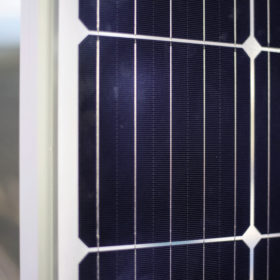
Powering up PERC-perovskite tandem cells
Perovskite-silicon tandem cells offer one of the surest pathways to much higher solar efficiencies, one that has moved close to commercialization in the past few years. Much of the work getting to this stage has naturally focused on developing a viable perovskite top cell. Optimizations to the silicon layer underneath, however, will also be important to the overall device function and efficiency. Scientists in Germany examined five different silicon cell concepts similar to those in mass production today, finding that with a few optimizations these could reach efficiencies up to 30.4%.
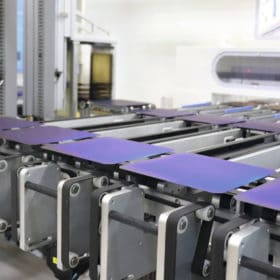
A year in PV: Technology trends in 2021
The PV industry in 2021 has largely been defined by disruption: Price increases from raw materials to final shipping have led to shortages in PV module supply and project delays the world over. Despite these upsets, innovation has continued at pace, and the year has seen plenty of technological twists and turns that are sure to spell good news for solar in the long run. Read on for a look back at some of the biggest developments.
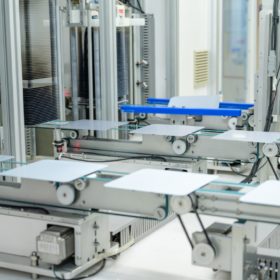
Jolywood switches on 1.5 GW TOPCon solar cell factory in China
The Chinese bifacial module maker has commissioned a 1.5 GW TOPCon cell factory in China’s Zhejiang province, which raised its total TOPCon cell capacity to 3.6 GW. Another 16 GW facility is being planned for the Shanxi province.
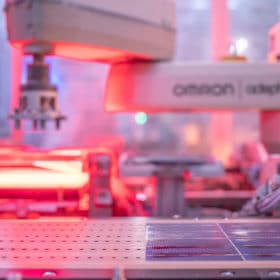
JinkoSolar on its PV capacity expansion plans and the challenges facing solar
Dany Qian, Vice President of Chinese PV manufacturer JinkoSolar speaks to pv magazine about the 2021 solar market and what’s in store for 2022, including capacity ramp-ups, the replacement of aluminum PV module frames, and a focus on n-type technology, despite continued supply chain challenges.
Illustrating the n-type advantage
In a new white paper, Chinese PV manufacturer JinkoSolar demonstrates how its latest ‘Tiger Neo’ module, featuring the 182mm n-type TOPCon cells, achieves lower energy costs. Based on total project costs for various scenarios in China, the Middle East and Europe, Jinko calculates advantages arising from both the cell technology and its chosen wafer format.
