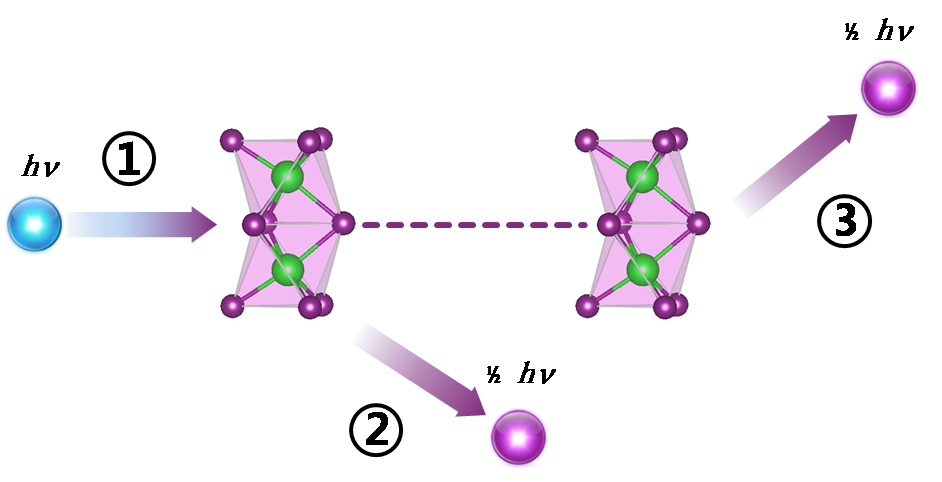





A team of Scientists from St. Andrews University demonstrated the cutting of a high energy photon with nanoclusters in bismuth halide, a crystalline organic/inorganic material which could be used in solar cell production.
The discovery could open up a path to exceeding the theoretical efficiency limit for a single junction solar cell, which stands at 33.7%. Cutting a high energy photon into two will increase the number of charge carriers and allow more efficient use of the solar spectrum.
“It is expected that this study will stimulate the study on materials with nanoclusters or low-dimensional organic-inorganic hybrid materials for photonic devices,” says lead researcher John Irvine. “This atomic precise subunit in crystalline materials could ease the preparation and processing of nano-sized particles, as they are controlled by the intrinsic crystal structure of the material.”
This content is protected by copyright and may not be reused. If you want to cooperate with us and would like to reuse some of our content, please contact: editors@pv-magazine.com.


1 comment
By submitting this form you agree to pv magazine using your data for the purposes of publishing your comment.
Your personal data will only be disclosed or otherwise transmitted to third parties for the purposes of spam filtering or if this is necessary for technical maintenance of the website. Any other transfer to third parties will not take place unless this is justified on the basis of applicable data protection regulations or if pv magazine is legally obliged to do so.
You may revoke this consent at any time with effect for the future, in which case your personal data will be deleted immediately. Otherwise, your data will be deleted if pv magazine has processed your request or the purpose of data storage is fulfilled.
Further information on data privacy can be found in our Data Protection Policy.