Solar-plus-storage will start to make big inroads in the year ahead
By this time next year we may be able to wave goodbye to that old chestnut about renewables endangering security of supply. Elsewhere, the price of lithium – and the products it goes into – could go either way after tanking this year.

12 GW bifacial demand in 2020
Back in June, the Office of the U.S. Trade Representative (USTR) granted Section 201 tariff exemptions to bifacial cells and modules, but reversed the decision on Oct. 28. Two weeks after the reversal, the U.S. Court of International Trade issued a temporary order against the withdrawal of the bifacial exemption. An investigation is now underway, with the first hearing taking place on Dec. 5.

BIPV: More than the module
Building integrated PV has been described as a place where uncompetitive PV products attempt to go to market. But this may be unfair, says Björn Rau, the technology manager and deputy director of PVcomB at the Helmholtz-Zentrum Berlin. Rau argues that the missing link to BIPV deployment lies at the intersection of the architectural community, construction industry, and PV manufacturers.
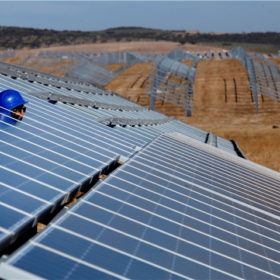
Iberdrola finishes building 500 MW solar park in Spain
The Spanish utility said it is now ready to connect the Nunez de Balboa project to the grid. The facility is expected to start generating electricity at some point in the first quarter of 2020.
Indian PV to take off after gloomy 2019
India’s annual solar installations are set to exceed 10 GW in 2020, following a year marked by political uncertainty, module price increases associated with safeguard duties, and a lower number of awarded tenders. The outlook for battery energy storage installations for solar projects is particularly bleak, however, as such combinations in India can cost three to five times more than standalone renewable projects.
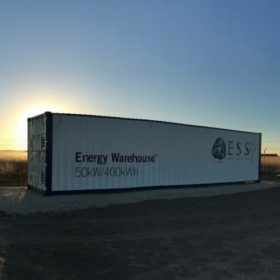
U.S. research teams aim for long-duration storage at $0.05/kWh
To get long-duration storage costs down to $0.05/kWh, research teams funded by ARPA-E are pursuing breakthroughs in flow batteries, hydrogen storage and other technologies – even thermovoltaics.

The year in solar, part IV: More storage and hydrogen advances as solar just kept getting cheaper
Battery innovations started to come thick and fast this quarter as the hunt for alternatives to lithium-ion intensified and the latest slew of solar tenders indicated the relentless pressure on solar power generation costs was showing no sign of abating.
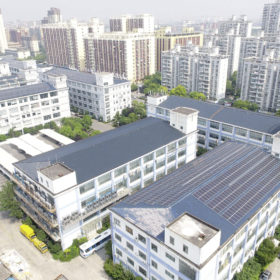
Is China’s market heading toward a cliff edge?
Even when taken in the context of the growing pessimism that has gripped China’s PV industry regarding 2019 demand since the middle of the year, the latest figures from the China Photovoltaic Industry Association (CPIA) are astonishing. More optimistic forecasts from earlier in the year have been downwardly revised, with installations headed for a “cliff edge” decline that could see demand fall by as much as 50% year on year. So, what exactly has taken place?

China’s market in transition
By the end of 2018, China was home to around one third of global cumulative PV capacity, with around 175 GW of operational PV systems. In the context of China’s power sector, writes Frank Haugwitz of Asia Europe Clean Energy Advisory, the cumulative installed capacity makes up 9% of the total existing power generation capacity and contributed approximately 2.7% to total electricity generation.
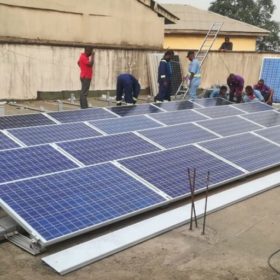
Nigeria to install new PV mini-grids as domestic off-grid sector surges
Developer PowerGen has installed a new mini-grid in the country and plans to develop nine more projects with the support of the World Bank.
