
Hot charge extraction to push perovskite efficiency
With the absorption of ‘hot’ charges, which lose their energy faster than it can be absorbed by any convention technology, solar cells could become massively more efficient. An international group of scientists has developed a method to examine the bond between a perovskite and charge extraction layer, and determine the most suitable materials for hot charge extraction in a solar cell.

Teaming up for 20% efficient CIGS
Manufacturers and research institutes from across Europe have announced plans to collaborate on creating improved processes for CIGS module production. Optimistically named SUCCESS, the project targets production line efficiencies of better than 20% for 30x30cm modules.

France’s Ombrea develops solar blinds with sliding PV panels
The company said its technology, which is managed by an AI-based system, can be used in agrivoltaic projects.
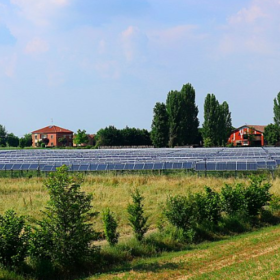
A2A to acquire 1 GW solar pipeline from China’s Talesun
The Italian utility has agreed to buy the PV development pipeline for an undisclosed sum via a subsidiary, and vowed to start building its first large-scale, subsidy-free PV plant in the early months of 2020.
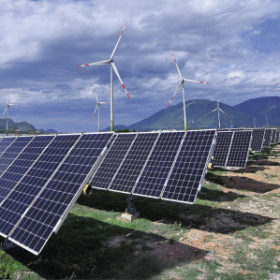
Vietnam introduces auction scheme for large-scale PV
With the publication of Notification No. 402/TB-VPCP on Nov. 22, the Vietnamese government has cemented its transition from feed-in tariffs to auctions, in a clear step away from earlier promises to revive the FIT scheme.
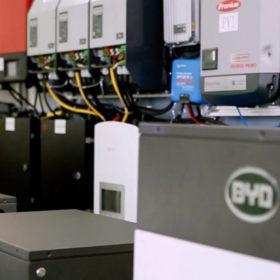
BYD to introduce next-generation Battery-Box in 2020
The Chinese manufacturer has also announced plans for a tenfold production capacity increase, as it wants to cater to all project sizes with two versions of its high-voltage storage system.

South Sudan to get 20 MW/35 MWh solar-plus-storage plant
Egyptian manufacturer El Sewedy Electric has secured a contract from the authorities in Juba to build the $45 million project in Nesitu county. The African Export-Import Bank is financing the facility.

Coupling pumped hydro with renewables and other storage technologies
The combination of pumped hydro with other storage technologies can increase renewables penetration, improve operational safety and reduce maintenance costs at large-scale hydropower plants, according to new research. The study also focuses on techniques to determine the optimal size of renewables-based pumped hydro storage systems. Costs for hybrid solar-pumped hydro projects currently range from $0.098/kWh to $1.36/kWh.

The sustainability game changers
As part of the UP sustainability initiative, pv magazine has, for the first time, introduced an annual sustainability award. After much deliberation, our esteemed jurors reached their final decision. Read on to see who has been crowned 2019’s green champion.
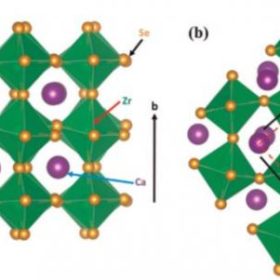
Chalcogenide perovksites for PV energy and waste heat recovery
According to new research, metal chalcogenide perovskites can be used as a thermoelectric material than can convert thermal energy from the sun to usable electric power. These materials, which can also be used to develop perovskite PV cells, are known for their high thermal and aqueous stability, along with their nontoxic elemental composition.
