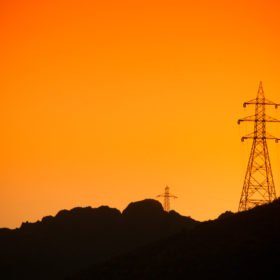
Turkey to hold 1 GW solar tender in April
The Turkish government is planning to assign 100 solar projects with a capacity of 10 MW each across 39 different provinces via a new procurement exercise. The tender will be held on April 20, 2020.
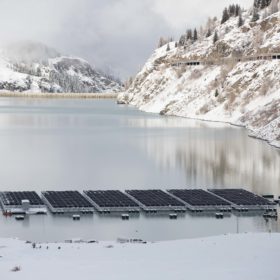
Floating in the Alps
Romande Energie is deploying a 448 kW floating array on the surface of Lac des Toules, a reservoir located at an altitude of 1,810 meters in the Swiss Alps. The installation will likely operate under heavy weather conditions, but it is also expected to produce 50% more power than similar projects built in the plain.
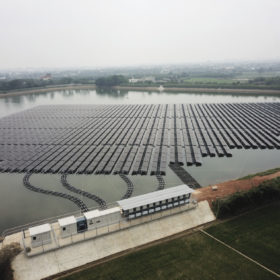
Downstream up: Taiwan’s multi-GW ambitions
Once the world’s second-largest PV cell manufacturer, Taiwan’s upstream industry was crippled under its inability to compete with mainland China’s bullish global takeover in PV manufacturing. The island’s government has put forth efforts to keep Taiwan’s PV supply chain intact – and ambitious goals and initiatives are driving demand from the downstream up.

Powering the investment case for battery storage
The U.K. government was the first major economy in the world to pass laws to end its contribution to global warming by 2050. But to achieve this ambition is going to take some major changes – not least of which to the U.K.’s power network.
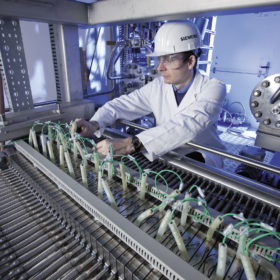
Engie and Air Liquide join forces to develop green hydrogen
A cooperation agreement was signed by the French corporations to launch the HyGreen Provence project, which is expected to produce annually 1300 GWh of solar electricity and 10,440 tons of green hydrogen by 2027.
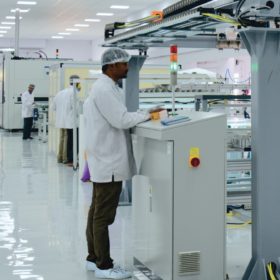
Indian manufacturing-linked solar tender now reportedly oversubscribed
A new series of tweaks by Solar Energy Corp. of India appear to have paid off, as the organization’s ambitious, manufacturing-linked 7 GW solar tender has been oversubscribed by 1 GW.

Power Ledger enables consumer participation in energy markets
Australian startup Power Ledger wants to scale up its offerings for much larger communities, as it has already verified its technologies in projects around the world. The Australian Energy Market Commission last week proposed a similar agenda.
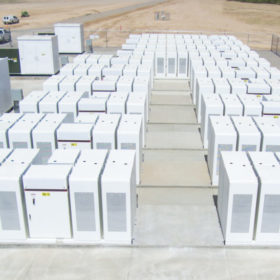
Salt River Project joins big boys of battery storage
The Salt River Project has announced a 250 MW, 1,000 MWh battery project in Little Rainbow Valley, Arizona. The installation will be the largest in the state and among the largest in the United States.
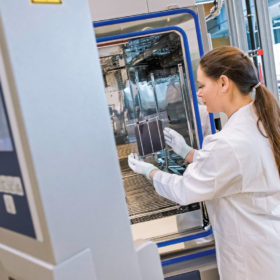
The weekend read: A responsible compromise?
Toxicologists are struggling to follow the pace at which perovskite solar cells race from laboratory test benches to factory production lines. While researchers continue to assess the health and safety risks stemming from the lead used at the core of these new materials, the startups commercializing them argue that established encapsulation techniques and sound recycling schemes are enough to safety-proof their potentially disruptive technology and offset broader environmental threats.

Jordan renews solar rebates for residential PV
The Kingdom of Jordan’s government has signed an agreement with Jordan Islamic Bank to facilitate the financing of residential projects under the scheme. Selected projects will be entitled to a 30% rebate for installations up to 3.5 kW.
