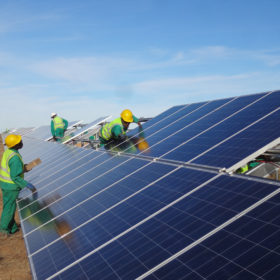
Scatec Solar swung from profit to loss last year
The Norwegian solar developer has gone from a $15.5 million profit at the end of 2018 to a $4.33 million loss just as its project co-financiers banked $21.5 million.
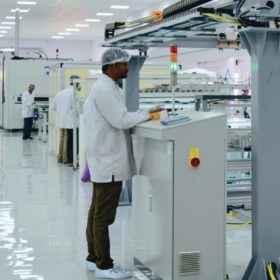
India’s solar cell and module exports grow 157% in eight months
Following a dip in the last fiscal year, the value of cell exports saw a massive surge to an estimated INR13.3 billion from April to November. Exports to the U.S. tripled during the eight-month period as shipments to Turkey and Belgium rebounded to become the next two biggest export markets.

Renewables deals dwarfed by oil and gas at UK-Africa Investment Summit
The scale of fossil fuel deals signed between African governments and U.K. oil and gas interests reportedly amounted to more than 11 times the volume of renewable energy commitments as Britain scrambles for post-Brexit financial opportunities.

Zimbabwe set for real solar growth
The government has decided to implement a proper independent power producer development plan for large scale PV, with the help of the World Bank.
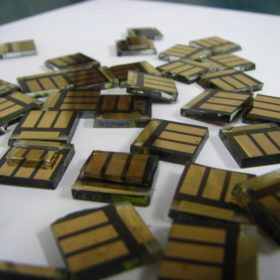
Watch how to improve perovskite solar cells in 2D!
Saudi researchers claim to have improved the thermal stability and moisture resistance of such devices by replacing 3D hybrid perovskite with two-dimensional compounds. They used organic compound ethanolamine, which is said to provide better results in slowing down the hot-carrier cooling process.
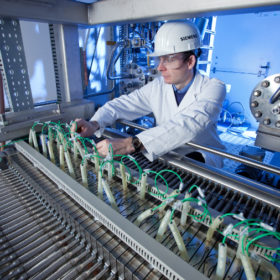
Integrated energy system could see 110 GW of electrolyzers in Germany and Netherlands
A report from Dutch grid operator TenneT and gas business Gasunie suggests the companies should jointly develop infrastructure after 2030. With hydrogen and synthetic methane in demand, electricity and gas will become increasingly inter-linked. Only seamless integration of the two networks would enable the EU to achieve its net-zero-carbon 2050 plan.

Israel launches 300 MW solar-plus-storage tender
The government wants a 300 MW solar plant linked to large scale storage in the Negev desert. Construction is planned for late 2021 and completion in 2023.
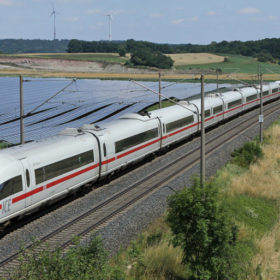
Railway-connected large scale PV project announced in Germany
A 42 MW solar park will be built in eastern Germany to generate power for the 16.7 Hz network of German rail operator, Deutsche Bahn. Construction is expected to start once final approvals are received from local authorities.
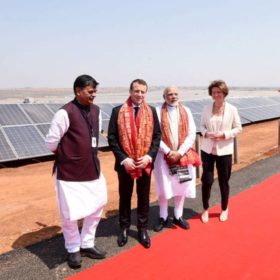
Engie sells controlling stake in 813 MW Indian solar portfolio
This transaction is part of Engie’s develop, build, share and operate strategy which involves selling part of its stake in renewables assets while carrying out operations and maintenance.
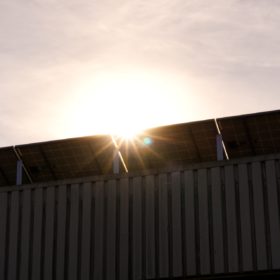
New process could yield 26.6% efficient IBC cells
Researchers in Germany are trialing a host of new processes and materials to develop interdigitated back contact solar cells. A deposition technology named ‘hot-wire’ chemical vapor deposition, is said to provide excellent passivation without the need for treatments such as recrystallization or hydrogenation.
