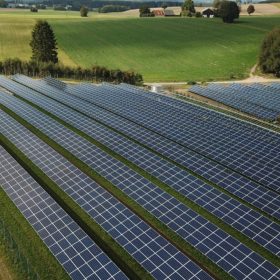
Best-worst method applied to select solar project locations
Scientists at the Beijing Institute of Technology have identified the most suitable areas for solar parks in the Chinese capital using a geographical information system and a new multi-criteria decision-making technique: the ‘best-worst’ method. They claim the approach can help establish technically and economically viable projects.
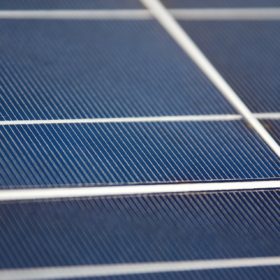
UK researchers confirm correlation between micro-cracks and hot spots in polycrystalline cells
A research team from the University of Huddersfield used electron microscopy to analyze micro-cracks in 4,000 polycrystalline silicon solar cell samples. The results showed power losses may vary from 0.9-42.8%, and increased temperatures due to micro-cracking may favor the formation of permanent hot spots in the cells.
New lithium-sulfur battery unveiled by Aussie scientists
Scientists at Monash University claim to have developed the world’s most efficient lithium-sulfur battery. They say the new device could enable an electric vehicle to drive more than 1,000km on a single charge.
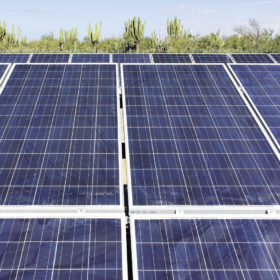
Repowering solar plants for need – or bigger returns
Alencon’s silicon carbide-based String Power Optimizers and Transmitters enable the repowering of solar plants which need to replace 600 V inverters with newer 1,000 V or 1,500 V gear, or for project owners who wish to maximize electricity generation at aging and imperfect facilities with creative engineering techniques.
Suzuki-led JV to invest $517m in second phase of Indian lithium-ion factory
A joint venture with Japanese peers Toshiba and Denso will make the investment in the Gujarat plant over the 2021-25 period, having pumped $174 million into the first phase of development.
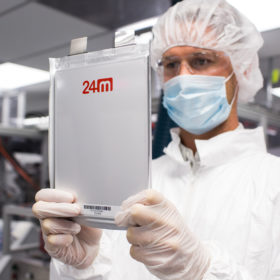
Kyocera to launch world first SemiSolid lithium-ion battery
The Japanese electronics giant is offering a new cell architecture developed by battery start-up 24M, in the U.S., which significantly improves battery economics. Kyocera will be the first company to bring the technology to market.
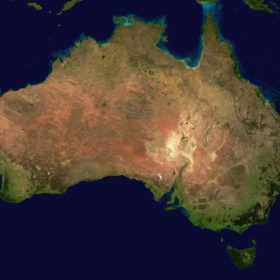
A Green New Deal for Australia?
The cataclysmic bushfire season ravaging the nation is a reminder of the risk climate change poses to Australia’s economic and social prosperity. An international roadmap to freedom from fossil fuels by 2050 produced by the U.S.’ Stanford University says Australia needs another 280 GW of solar and tens of billions of dollars of investment to turn down the heat.
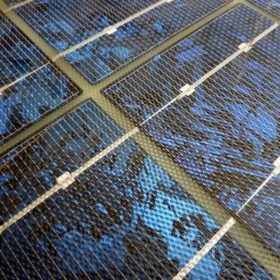
US scientists claim clear-sky irradiance model provides better results for module testing
Researchers at the American Institute of Physics have used the clear-sky irradiance model developed by the National Renewable Energy Laboratory to measure the degradation rates of solar panels at a testing field in Germany over five years. The scientists say the model, when combined with real-world data, offers an efficient tool to evaluate the aging of PV technology.

What to expect for solar from the US-Iran crisis?
Three days after the drone attack ordered by the U.S. which killed Iranian power broker Qassem Suleimani, energy forecasting service AleaSoft said the price of Brent was rising again today. The potential shake out of rising oil costs for the solar industry is difficult to predict.

Bolsonaro scraps solar tax planned by Brazilian regulator
The Brazilian president said the potential introduction of a grid fee for net metered solar systems will be eliminated thanks to an urgent ad-hoc decree expected to be approved soon by parliament. The proposed ‘solar tax’ would have affected all new PV installations with a generation capacity of no larger than 5 MW under Brazil’s net metering regime.
