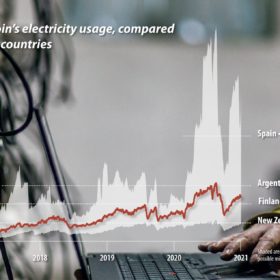
The weekend read: Crypto’s energy conundrum
In a financial world of stocks, bonds, foreign exchange, and credit cards, trillions of dollars are traded daily, with money flows handled by a bevy of databanks. In the world of cryptocurrency, billions of dollars worth of Bitcoin are traded through as many as 400,000 transactions per day, consuming the energy supply of a modernized country. The quirk is a “proof of work” feature that provides decentralized security. Is Bitcoin’s energy usage all for nothing, or is it a game-changer for renewable assets and generators? Tristan Rayner explores.
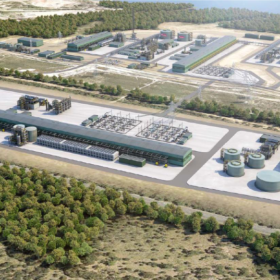
The Hydrogen Stream: Australia takes the spotlight with 1.7 GW project in Tasmania and new tech to produce hydrogen from rooftop PV
Elsewhere, Portugal’s EDP has unveiled plans to deploy 1.5 GW of green hydrogen capacity and, in Spain, several projects have been announced by Fotowatio Renewable Ventures (FRV), Iberdrola, Solaria Energía and Enagás.

Greece’s policy reform fever: Storage, net metering and sub-500 kW solar
Greece’s energy sector has been experiencing an ongoing policy reform fever in the last two years that is now extending to energy storage, net metering and small solar farms. The reforms will boost the country’s energy transition.

Chinese PV Industry Brief: Longi considers overseas factory, GCL-Poly switches on 20,000 MT polysilicon fab
Furthermore, DaSolar has unveiled a plan to build a 5 GW module factory in Fujian and Maxwell Technology said it will provide a 500 MW heterojunction solar cell production line to Anhui Huasun New Energy.

System design for greenhouses relying on PV and ground source heat pump
Proposed by Turkish scientists, the system design consists of combining rooftop PV with a ground source heat pump in a greenhouse used for tomato, cucumber and lettuce cultivation. The solar array operates under net metering and grid electricity is used when PV generation is unable to cover demand. According to their findings, the system payback time ranges from 2.6 to 7 years.

RWE reportedly considering sale of Belectric
According to media reports, the separation from the photovoltaic project developer is said to be part of the energy company’s plans to streamline its renewables business.
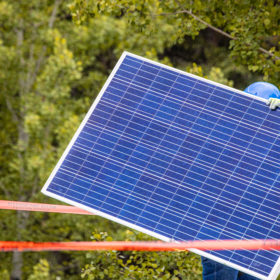
Reuse or replace? IEA PVPS analysis considers all options for underperfoming PV modules
In a new report, experts from the International Energy Agency Photovoltaic Power System Programme (IEA-PVPS) have assessed the economical and environmental benefits of repairing and reusing or replacing solar modules that are not complying with a 30-year expected lifetime. They found that reusing offers the best environmental impact in all cases, while the profitability of this option is currently guaranteed only by rooftop PV under certain conditions. As for large-scale solar, module replacement remains the most competitive option.
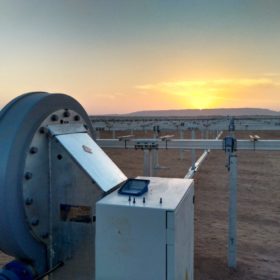
Array Technologies acquires STI Norland for €570 million
The merging of both manufacturers could create a new world market leader. The transaction is expected to be finalized in the first quarter of 2022.
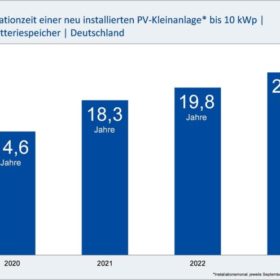
High PV system prices, falling FITs make small solar unviable in Germany
The payback time in Germany for new solar systems below 10 kW is increasing. According to EUPD Research, it could be almost 22 years by as early as 2023.
European electricity price hikes supercharge solar
As the continent struggles through this latest seasonal electricity price crisis, the power of solar has been brought to the fore. Households and industry alike have been affected by the challenges in electricity costs in recent weeks, as global economic recovery and supply chain issues have driven high gas prices. Consumers at every level are searching for energy alternatives.
