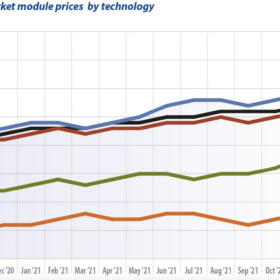
PV module price index: The price spiral winds up
The title of Martin Schachinger’s October market commentary was “Module prices set to rocket back to 2019 levels.” This month, he writes that prices have already reached December 2018 levels and notes that there is no reversal in sight. Prices for all module technologies have once again risen by an average of 3 percentage points since last month.
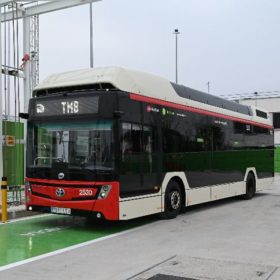
The Hydrogen Stream: Chile plans 6 green hydrogen projects by 2025
Spain also launched its hydrogen mobility program for commercial use for the first time in the country, and TSO Transgaz has called for an extraordinary meeting to endorse the company’s plans to make investments in hydrogen, including joining the European Hydrogen Backbone group. Kawasaki Heavy Industries, meanwhile, announced that its liquefied hydrogen carrier, Suiso Frontier, has departed from Kobe for Australia. It is set to return in February with what is expected to be the world’s first international liquefied hydrogen delivery.
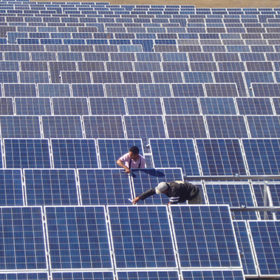
Risen Energy plans integrated PV factory run on clean energy
The Chinese PV manufacturer has unveiled ambitious plans to build a vertically integrated factory in China’s Inner Mongolia region, which will be powered by a mix of solar and wind coupled with on-site energy storage.
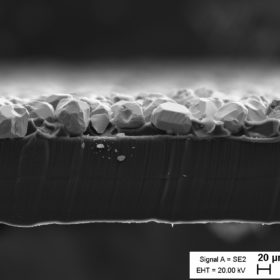
A solar cell you could make on the moon
As part of a project headed by the European Space Agency investigating materials for long-term missions, scientists in Estonia are investigating a tiny iron-based crystal as a potential solar cell material. So far, the material has not achieved the sort of efficiency that would spark a lot of interest. These researchers, however, are interested in it for a different reason: Beyond planet Earth, the material is abundant enough that it could eventually be manufactured on the Moon or even Mars.
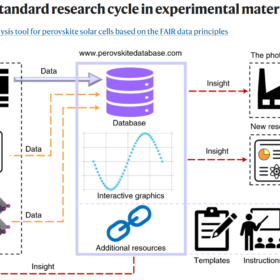
The Wikipedia of perovskite solar cell research
An international team of researchers has collected data on metal halide perovskite solar cells from more than 15,000 specialist publications and made them available in an open-access database. The Perovskite Database Project is based on the FAIR data principles that data should be findable, accessible, interoperable, and reusable and aims to capture the rapid development occurring in this increasingly relevant research field.
Stepping UP in 2021: #2 Solar workers’ rights and leading by positive example
There is increasing pressure, globally, for companies to be held more accountable, particularly when it comes to sustainability and just working conditions, and this topic is only growing in importance. With this in mind, pv magazine’s UP Initiative spent Q2 2021 looking at what solar and energy storage companies could do to lead by positive example when it comes to the workers, often far removed, involved in the production of their products and services.
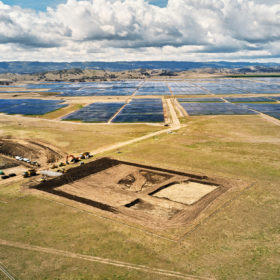
PV and energy storage expected to comprise 62% of US capacity additions 2022-23
The US is expected to add 78GW generating capacity over the next two years, 49GW of which is expected to be large-scale solar and energy storage.

What COP26 means for solar
COP26 was either a great success or an abject failure, depending on who you talk to. What matters for the solar industry is the extent to which decisions agreed in the Glasgow Climate Pact are going to change the direction of the energy and financial sectors.
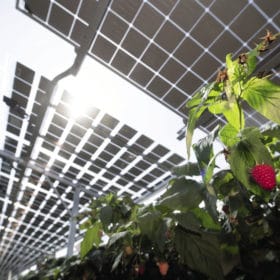
Bangladesh’s first agri-PV plant set to get green light
Bangladesh’s first agrivoltaic solar power plant is set to receive government approval on Wednesday, Dec. 29.
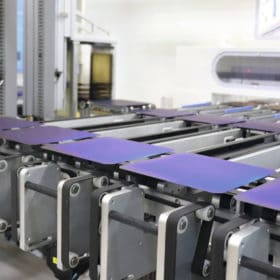
A year in PV: Technology trends in 2021
The PV industry in 2021 has largely been defined by disruption: Price increases from raw materials to final shipping have led to shortages in PV module supply and project delays the world over. Despite these upsets, innovation has continued at pace, and the year has seen plenty of technological twists and turns that are sure to spell good news for solar in the long run. Read on for a look back at some of the biggest developments.
