Ukrainian solar plant partly resumes operations after bombing
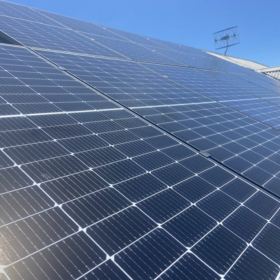
A Russian missile attack hit a 3.9 MW solar plant last week, damaging 416 solar panels and four string inverters.
India installed 456 MW of rooftop solar in Q1
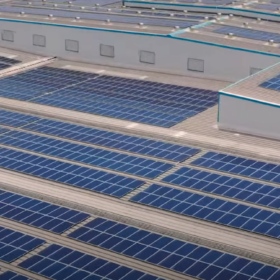
India’s rooftop solar installations increased by 34% year on year in the January-March period, despite a 17% increase in system costs.
Semitransparent dye-sensitized solar module for BIPV applications
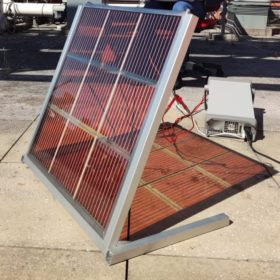
Scientists in Italy have developed a module with an area of 0.2 sm and an efficiency of 2.7% in outdoor conditions, with a tilt angle of 60 C. They designed it by considering the trade-off between low losses and device sturdiness.

Downsizing gallium nitride inverters
A German consortium led by Fraunhofer IEE aims to bring gallium nitride inverters closer to commercial viability. The primary goal of the research project is the optimization and miniaturization of inverters, including passive components such as cooling systems, casings, and mounting structures.
Investors are flocking back to natural gas, but renewables remain attractive
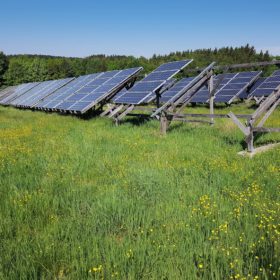
A new EY report shows that renewables remain an attractive investment in the US market.

Redflow announces integration with US inverter company
Australian redox-flow battery specialist Redflow has upped the ante on its plans to expand into the US market, announcing that it has completed testing to pave the way for its battery energy storage system to be used in conjunction with hybrid inverters manufactured by US solar engineering company Sol-Ark.
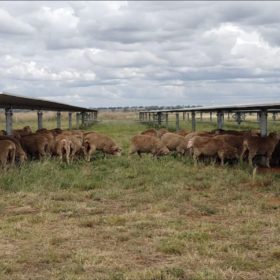
Solar panels and sheep grazing
Two Australian farmers say their solar panels increased grazing quality during droughts over a four-year period, aligning with research suggesting that solar panel microclimates might increase water retention and grass production.

The Hydrogen Stream: World’s first hydrogen-powered towboat
Shipbuilder Hermann Barthel has developed the world’s first push boat to combine battery-electric propulsion with hydrogen and fuel cell technology. Iberdrola and Fertiberia, meanwhile, have commissioned Europe’s largest green hydrogen production plant.
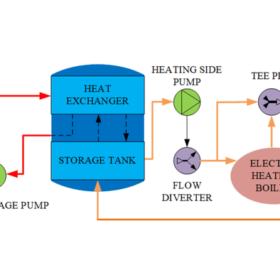
PVT-biomass system for space heating in small homes
A US-Chinese research group has developed a hybrid system proposal based on photovoltaic-thermal (PVT) modules, a heat pump, a backup electric boiler, and biomass generating units. They say it could be used as space heating in a single-floor home.

Storing hydropower via regenerative braking in electric trucks
An international research team has proposed the use of water from high-altitude rivers and regenerative braking in electric trucks to store electricity for reuse in power networks, or for transport purposes.
