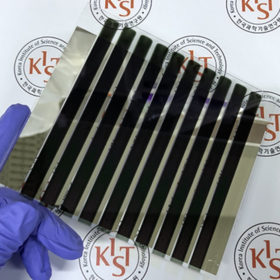
Large-area organic solar cell with 14.7% efficiency
Scientists in Korea built an organic solar cell that is reportedly able to prevent aggregation in photoactive layers. The device could be used for applications in buildings, vehicles, and the Internet of Things.

Intersect Power places order for 2.4 GW of First Solar modules
A long-time customer of First Solar, Intersect Power is expected to be one of the largest buyers and operators of First Solar technology by 2027.
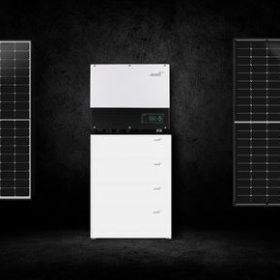
JinkoSolar unveils battery system for Australian residential market
Having established a strong foothold in the Australian market with its solar PV panels, Chinese manufacturer JinkoSolar is now seeking to expand its influence in the energy storage space with the launch of its modular Suntank home battery storage system.
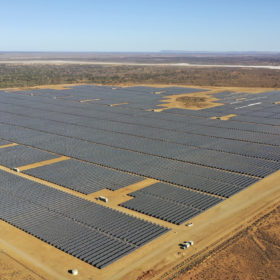
Enel looks to sell major stake in Australian wind, solar portfolio
Italian utility Enel is reportedly looking to sell a substantial share in its renewable energy platform, Enel Green Power, to help fund an estimated 3.6 GW development pipeline in the country.
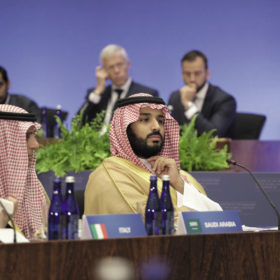
Saudi crown prince bears green energy gifts to Greece, but little action seen
Saudi Arabia’s crown prince traveled to the Greek capital of Athens this week, representing his first official trip to Europe since the 2018 killing of Saudi journalist Jamal Khashoggi. His visit was marked by the signing of several agreements between the two countries and some big statements issued by the Saudi leader regarding green energies and hydrogen.
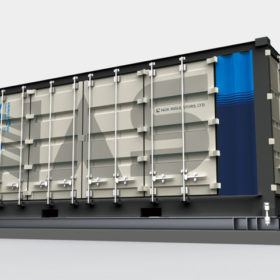
NGK Insulators links 200 kW/1,200 kWh NAS battery to 2.6 MW rooftop solar array at Japanese factory
Both the battery and the PV system are due to begin commercial operations in 2024.
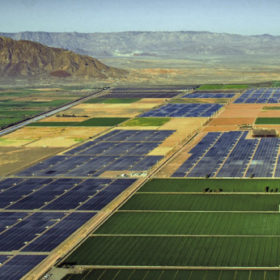
US to extend Investment Tax Credit for solar at 30% to 2032
As written in the Inflation Reduction Act of 2022, the tax credit will begin at 30% and step down to 26% in 2033 and 22% in 2034.
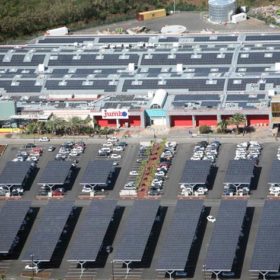
Ardian acquires majority stake in GreenYellow
Ardian said that GreenYellow’s value is estimated at around €1.4 billion ($1.42 billion).
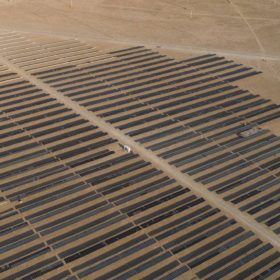
Uzbekistan is steaming ahead in the race to carbon neutrality
The war in Ukraine continues to disrupt the global energy sector and, combined with the recent heatwaves affecting Europe, the need to restructure economies is starker than ever. Luckily, there are some countries that have kept working on their energy transition reforms and taking tangible actions towards tackling climate change. Uzbekistan is one of them.
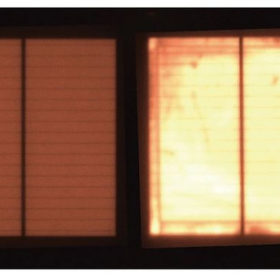
Graphene/silicon heterojunction solar cell with 18.8% efficiency
A Chinese-German research group developed the cell with an ink of graphene oxide (GO) mixed with Nafion that can be spin-coated on an n-type silicon wafer to form a high-quality passivating contact scheme. The GO:Nafion layer simultaneously creates a p–n junction with silicon and passivates the surface defects at the GO:silicon interface.
