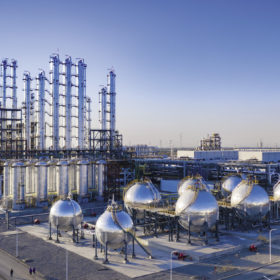
Chinese PV Industry Brief: Daqo secures 46,200 MT polysilicon order
Daqo has secured another big polysilicon order and GCL Technology said it expects a profit of CNY 12.7 billion ($1.76 billion) from its solar materials business in the third quarter. Wafer manufacturer Wuxi Shangji Automation, meanwhile, has secured an order from TOPCon panel maker Da-Solar.

Solar, wind compensate for decline of hydro, nuclear in EU electricity output
E3G and Ember said in a new study that solar and wind have helped to mitigate the impacts of drought across the European Union, amid a 21% decline in hydropower generation and a 19% reduction of available nuclear capacity. Wind and solar generated a record 24% of the bloc’s electricity from March to September.
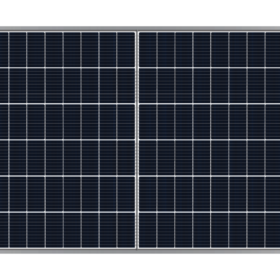
RenewSys unveils 590 W bifacial solar module
India’s RenewSys has released its DESERV Extreme series of bifacial PV modules, with front-side power outputs ranging from 565 W to 590 W. The modules are built with half-cut, monocrystalline PERC cells.
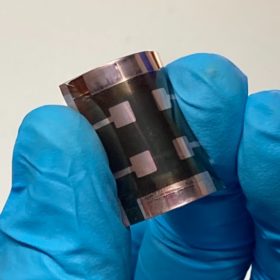
Flexible all-perovskite tandem solar cell with 23.8% efficiency, improved voltage
A Chinese-Swiss research group claims to have overcome two major challenges for the development of flexible all-perovskite tandem solar cells – voltage losses and the deposition process for the cell’s functional layers. They built a device with a high open-circuit voltage of 2.1 V.

Ireland’s first PPA for large-scale solar
Allied Irish Banks will buy electricity from two solar parks that NTR is now developing. The power purchase agreement has a duration of 15 years.
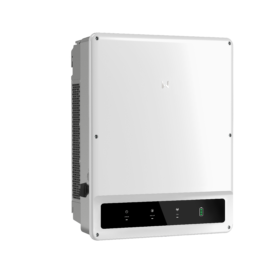
GoodWe unveils high-voltage hybrid inverter for C&I applications
GoodWe’s new hybrid inverters have efficiency ratings of 98.0% and European efficiency ratings of 97.5 %. They are available in five versions, with power outputs ranging from 15 kW to 30 kW.

Longi eyes green hydrogen market in India
Longi is entering the green hydrogen market in India with new alkaline electrolyzer offerings. It also plans to roll out a next-generation Hi-MO solar module later this year.

African utility secures cash for floating solar studies
Electricidade de Moçambique (EDM) will obtain $2.5 million from the African Development Bank (AfDB) to fund studies into floating solar and battery systems.
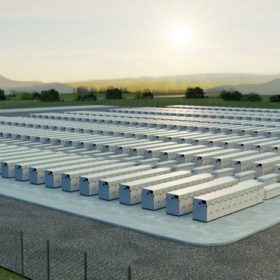
BlackRock wins contract for big battery in Australia
BlackRock has won a contract to deliver one of the world’s most powerful batteries – the New South Wales Waratah Super Battery in Australia, with an expected total capacity of 850 MW/1,680 MWh.
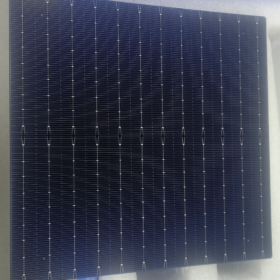
TOPCon solar cell achieves 24.2% efficiency via new plasma-assisted atomic layer deposition tech
A team of international researchers has simplified the deposition of thin film layers in the commercial production of TOPCon solar cells. Via a tube-type industrial plasma-assisted atomic layer deposition (PEALD) technique, they were able to achieve a power conversion efficiency of 22.8% in a 60-cell, 613 W TOPCon module.
