
Weekend read: High time for solar
Cannabis prohibition drove a culture of clandestine production in the past and solar helped growers to cultivate it at remote, off-grid sites. Now, as a global commercial cannabis market emerges, solar has an even bigger role to play.
Miner provides shot in the arm for Sun Cable mega project
Sun Cable’s troubled AUD 30 billion ($20 billion) mega solar and storage project has received a welcome boost, with resources company Tivan announcing that it has signed a deal with the developer for the potential offtake of up to 300 MW of renewable electricity.
How to combine offgrid PV, heat pumps, and fuel cells in residential complex
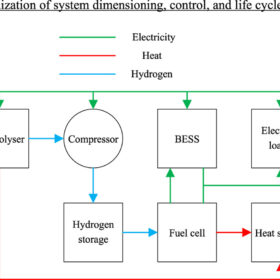
Finnish researchers have studied different scenarios to convert a Nordic oil-heated townhouse into a carbon-neutral building. They dimensioned an off-grid PV-powered heat pump system using waste heat recovery from a hydrogen storage system and calculated its life-cycle cost. They concluded that the solution is less profitable than grid-connected systems.
Summit Ridge Energy procures 1.2 GW of US-made Qcells panels
Summit Ridge Energy’s latest order marks the largest domestic community solar purchase of PV modules in US history. It includes 20 MWh of Qcells Geli energy storage systems.
Grew Energy wins 2 GW of wafer-to-module capacity in India
India’s Grew Energy will secure $69.3 million of incentives for 2 GW of integrated wafer-cell-module production.

Netherlands may hit 180 GW of installed solar power by 2050, say grid operators
A new report from the association of Dutch grid operators predicts strong growth for the Dutch PV sector, regardless of potential international scenarios.
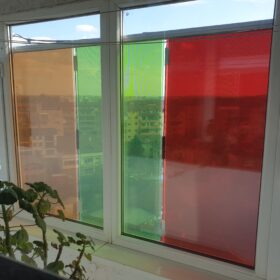
Cadmium telluride PV windows for domestic hot water production
Romania-based startup Photovoltaic Windows has developed an off-grid domestic hot water system powered by cadmium telluride (CdTe) photovoltaic semi-transparent glasses. It claims a 0.7 kW pilot installation on an apartment balcony in Bucharest resulted in annual savings of €1,100 ($1,202).

Taiwanese scientists develop high-concentration PV system
Taiwanese researchers have developed a system featuring a 2 × 2 Fresnel lens array and a solar panel made of III-V materials and polycrystalline solar cells, with low light leakage.
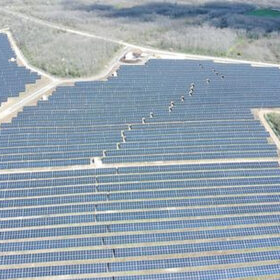
Serbia’s largest solar plant goes online
The 9.9 MW DeLasol PV project is located in the municipality of Lapovo, central Serbia.
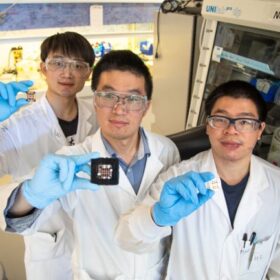
Triple junction perovskite solar cell hits 24.3% efficiency
An international research group created a triple-junction perovskite solar cell with an efficiency of 24.3% and a quasi-steady-state efficiency of 23.3%. The prototype cell, which has been independently certified by the US National Renewable Energy Laboratory (NREL), features rubidium/cesium mixed-cation inorganic perovskites with a bandgap of around 2.0 eV to suppress light-induced phase segregation.
