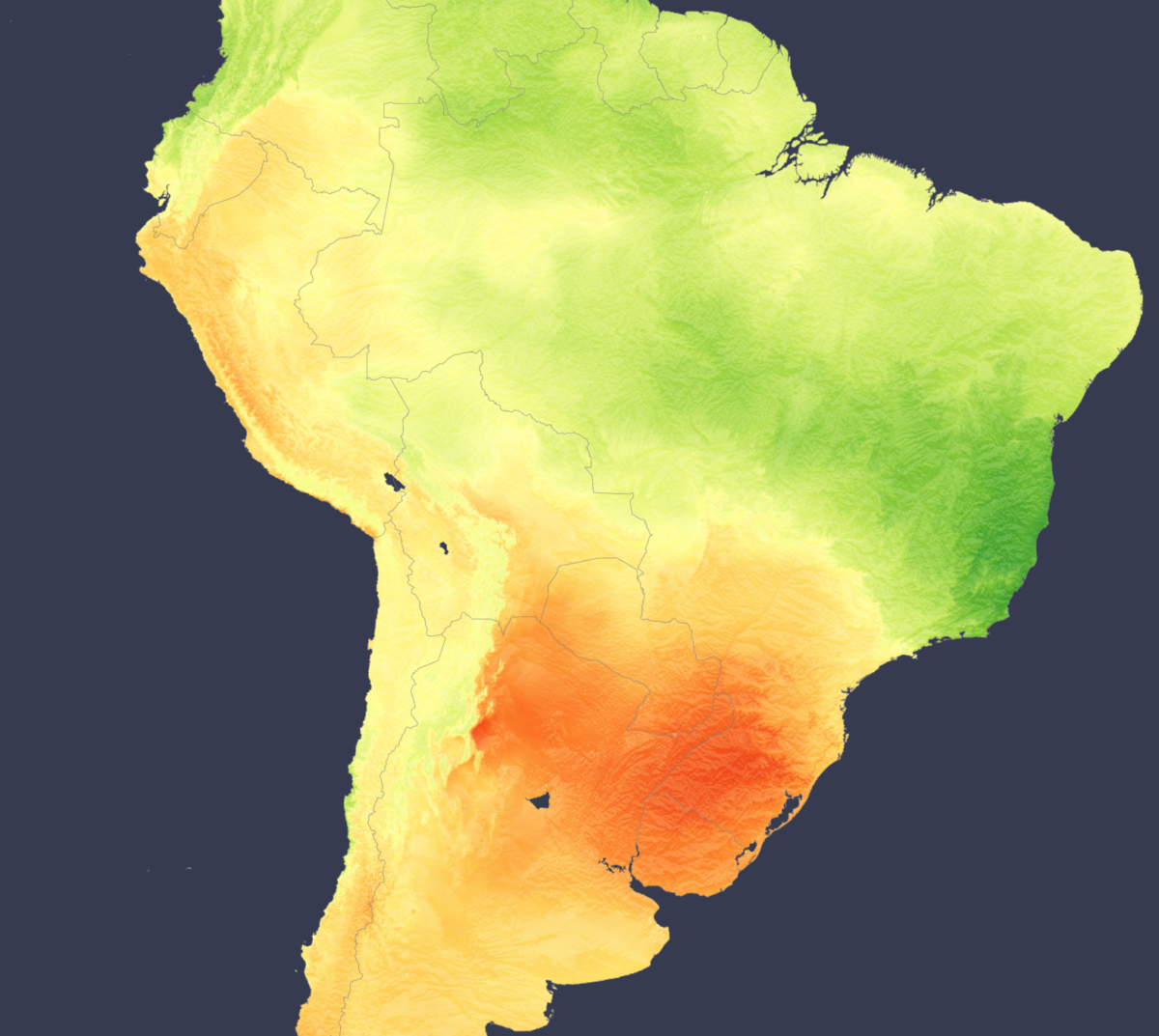





Higher than usual irradiance across much of South America in September 2025 is set to continue into the final quarter of the year, according to analysis using the Solcast API. The emergence of a weak La Niña in the tropical Pacific is expected to reinforce sunny conditions over the southern parts of the continent, including Chile, Argentina, and southern Brazil. While La Niña typically brings cloudier weather to the tropics, seasonal forecasts suggest continued elevated irradiance for much of Brazil. This divergence from historical norms reflects longer-term regional climate change, particularly as observed recently in the Amazon basin.
La Niña conditions, characterised by cooler-than-normal sea surface temperatures in the tropical Pacific, are currently developing and are forecast to progress into a weak event by the end of 2025. This pattern typically reduces cloud formation over the southern half of South America and along the west coast, particularly due to increased cold water upwelling off the west coast and a more stable, subsiding air mass.
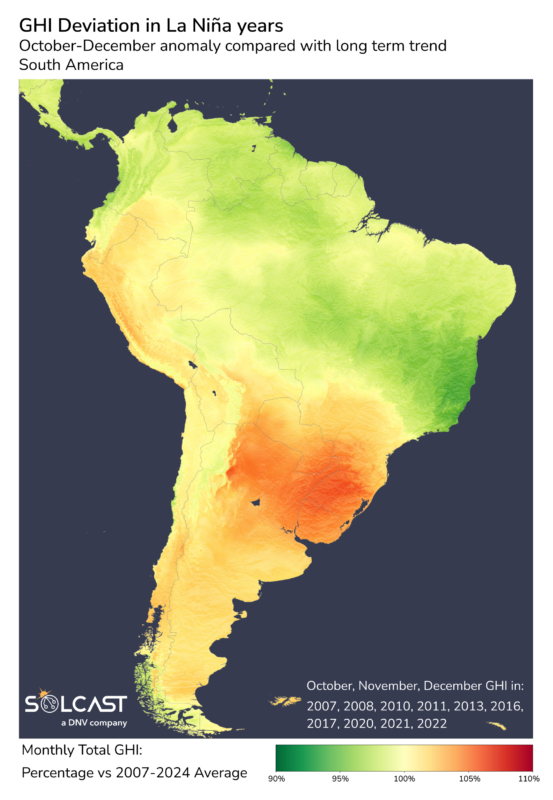
Solcast analysis of previous La Niña years shows that October to December irradiance in Argentina, Chile, Peru and southern Brazil tends to be up to 5% above climatological averages. This outlook aligns with current seasonal guidance from dynamic models such as the ECMWF, which projects above-average irradiance across southern South America for November and December.

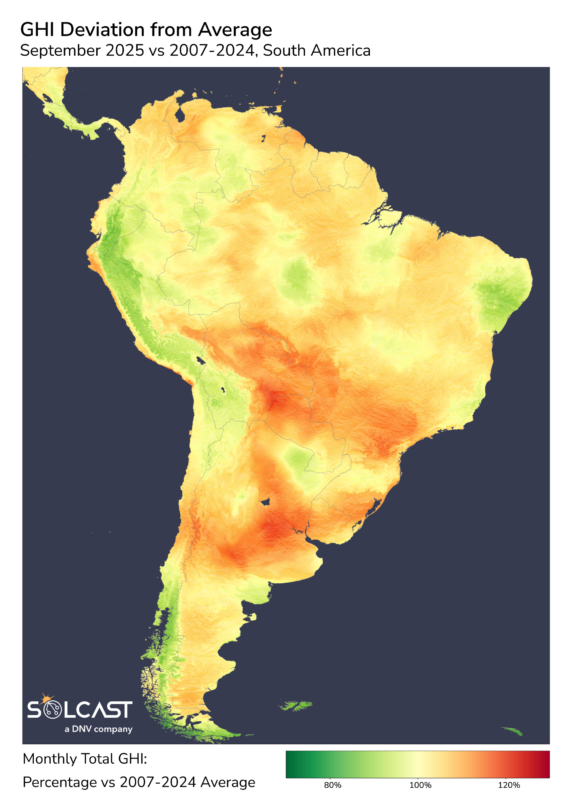
This forecast continues the trend observed in September 2025, when irradiance anomalies exceeded 15% in some parts of Argentina and Paraguay. These sunny conditions supported strong PV performance and are expected to extend into the southern hemisphere summer, offering favorable conditions for solar operators across the region.
Defying typical La Niña expectations, the seasonal forecasts for Brazil indicate continued elevated irradiance through the end of the year. Dynamical models project sunnier than average conditions for November and December, following a September that saw irradiance up to 5% above normal. This anomaly is thought to be linked not only to La Niña but also to long-term drying trends influenced by Amazon deforestation and broader climate change. Historically, La Niña has brought increased cloudiness to Brazil in the final quarter of the year. The present divergence from that pattern shows how historical trends can diverge from future behaviour in a changing climate.
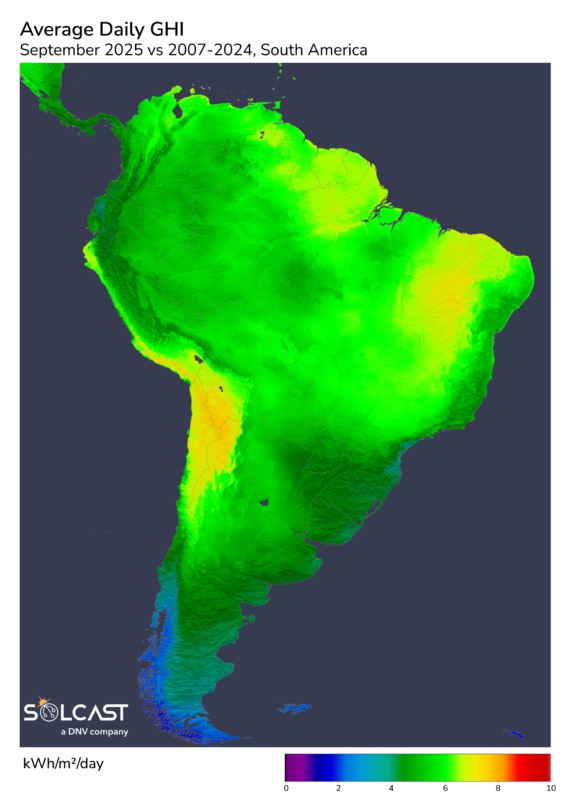
Meanwhile, Peru saw below-average irradiance in September and is expected to experience continued cloudier-than-usual conditions through December. This contrasts with the typical La Niña influence and may point to a more complex interplay of regional weather drivers in the Andes and Pacific coastal zones.
Solcast produces these figures by tracking clouds and aerosols at 1-2km resolution globally, using satellite data and proprietary AI/ML algorithms. This data is used to drive irradiance models, enabling Solcast to calculate irradiance at high resolution, with typical bias of less than 2%, and also cloud-tracking forecasts. This data is used by more than 350 companies managing over 300 GW of solar assets globally.
The views and opinions expressed in this article are the author’s own, and do not necessarily reflect those held by pv magazine.
This content is protected by copyright and may not be reused. If you want to cooperate with us and would like to reuse some of our content, please contact: editors@pv-magazine.com.


By submitting this form you agree to pv magazine using your data for the purposes of publishing your comment.
Your personal data will only be disclosed or otherwise transmitted to third parties for the purposes of spam filtering or if this is necessary for technical maintenance of the website. Any other transfer to third parties will not take place unless this is justified on the basis of applicable data protection regulations or if pv magazine is legally obliged to do so.
You may revoke this consent at any time with effect for the future, in which case your personal data will be deleted immediately. Otherwise, your data will be deleted if pv magazine has processed your request or the purpose of data storage is fulfilled.
Further information on data privacy can be found in our Data Protection Policy.