




From pv magazine France
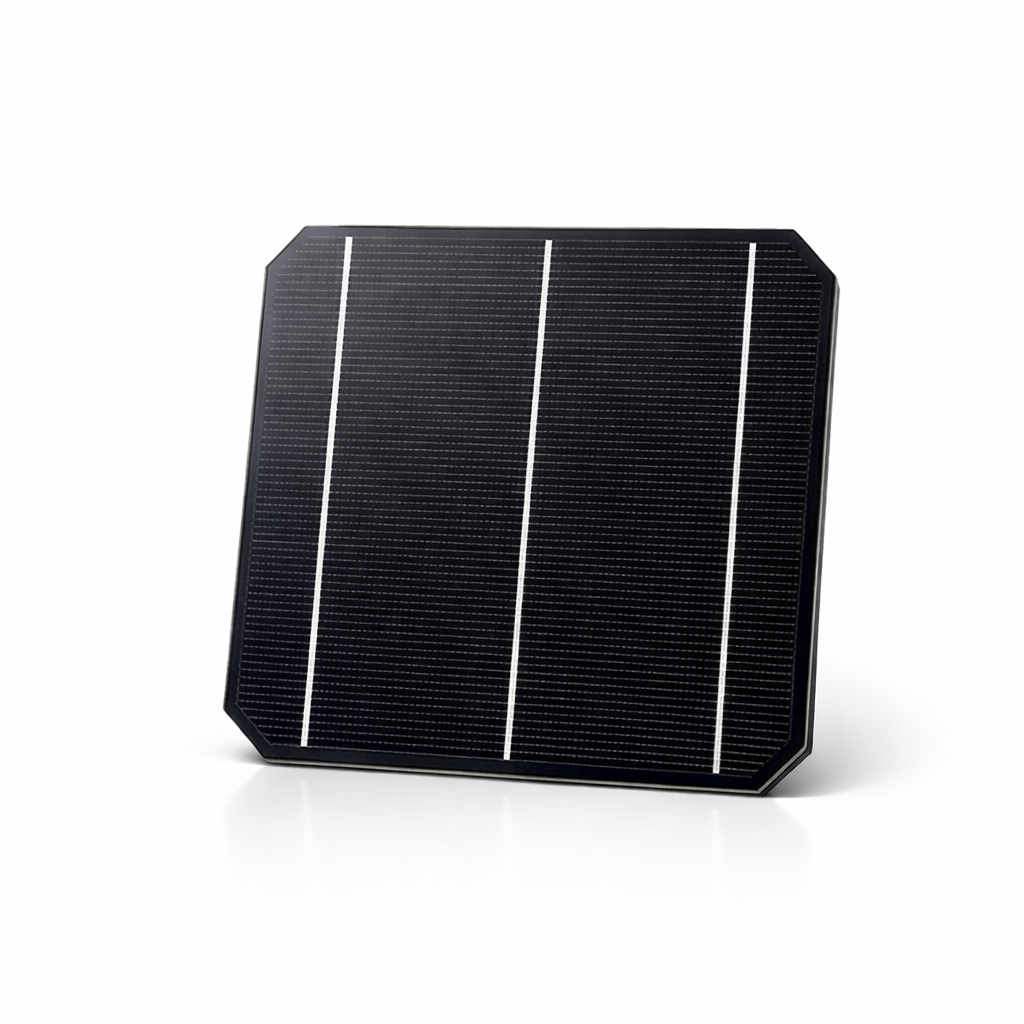
French testing and certification laboratory Certisolis has released initial results from accelerated degradation testing conducted under its Optisol program, highlighting performance gaps TOPCon solar modules.
The Optisol campaign applies stress conditions beyond those required under International Electrotechnical Commission standards IEC 61215 and IEC 61730, according to Certisolis.
“The goal is to go beyond the requirements of IEC 61215 and IEC 61730,” said Stéphane Gresset, technical director at Certisolis. “Some modules that formally meet the standard show only average performance over time in real-world conditions.”
Sample coverage emerged as a central concern. Manufacturers typically qualify only a subset of module variants and bill-of-material components, despite extensive supplier diversity across encapsulants, glass, interconnections, and backsheets. Certisolis said this gap can leave material and design risks untested under existing certification protocols, including increased sensitivity to humidity in modules deployed in floating photovoltaic applications.
Limited field data on newer cell architectures and interconnection designs further complicates long-term reliability assessments, the laboratory said, as cell spacing continues to narrow and material stacks evolve rapidly.
Certisolis conducted a six-month testing campaign under the Optisol program, with analysis performed by the National Solar Energy Institute (INES), part of the French Alternative Energies and Atomic Energy Commission (CEA). Three power plant operators – TotalEnergies, Technique Solaire, and Neoen –selected TOPCon modules from undisclosed Tier 1 Asian manufacturers identical to those used in their operating portfolios.
The test set included three double-glass module models with 72 half-cells and one with 54 half-cells, all using 2 mm glass.
“This first edition is based on IEC 63209, but the analysis goes far beyond Pmax alone and covers a wide range of parameters,” Gresset said. The final technical report exceeds 100 pages.
Thermal cycling tests conducted between minus 40 degrees Celsius and 85 degrees Celsius showed overall compliance, with the weakest-performing module losing 2.2% of maximum power. Certisolis observed a sharper performance drop after 400 cycles, exceeding standard requirements and pointing to accelerated fatigue in solder joints, particularly on cell fingers.
Damp heat testing at 85 C and 85% relative humidity for 2,000 hours revealed divergence among samples. Two double-glass modules maintained acceptable performance, while one experienced a 30% power loss linked to progressive moisture ingress at module edges.
Mechanical load and combined thermal stress testing at 2,400 pascals showed all models met load requirements. The 54-half-cell module demonstrated the highest stability, with power loss limited to 2.1%. Finger breaks appeared in some samples after additional stress testing, though no initial voltage cracks were detected.
All modules passed hail testing using a 35-millimeter projectile, but none of the 72-half-cell designs withstood impacts from 45 mm hailstones.
Potential-induced degradation testing showed sensitivity to positive polarization across all models. Degradation remained limited in most cases, and ultraviolet exposure reversed performance losses in all but one module, which retained an 18% reduction in output.
Certisolis said the findings could help independent power producers refine procurement strategies, identify latent risks in operating fleets, and encourage manufacturers to reinforce design margins beyond minimum certification thresholds.
A second Optisol campaign is planned for the first quarter of 2026, with expanded participation from developers, independent power producers, distributors, and engineering firms. The next phase may include additional technologies such as heterojunction with back contact and other emerging PV architectures.
“We have observed that TOPCon technology is not only sensitive to humidity but also reacts strongly to ultraviolet exposure,” Gresset said. “The integration of UVID testing could therefore be considered in the next phase.”
This content is protected by copyright and may not be reused. If you want to cooperate with us and would like to reuse some of our content, please contact: editors@pv-magazine.com.


By submitting this form you agree to pv magazine using your data for the purposes of publishing your comment.
Your personal data will only be disclosed or otherwise transmitted to third parties for the purposes of spam filtering or if this is necessary for technical maintenance of the website. Any other transfer to third parties will not take place unless this is justified on the basis of applicable data protection regulations or if pv magazine is legally obliged to do so.
You may revoke this consent at any time with effect for the future, in which case your personal data will be deleted immediately. Otherwise, your data will be deleted if pv magazine has processed your request or the purpose of data storage is fulfilled.
Further information on data privacy can be found in our Data Protection Policy.