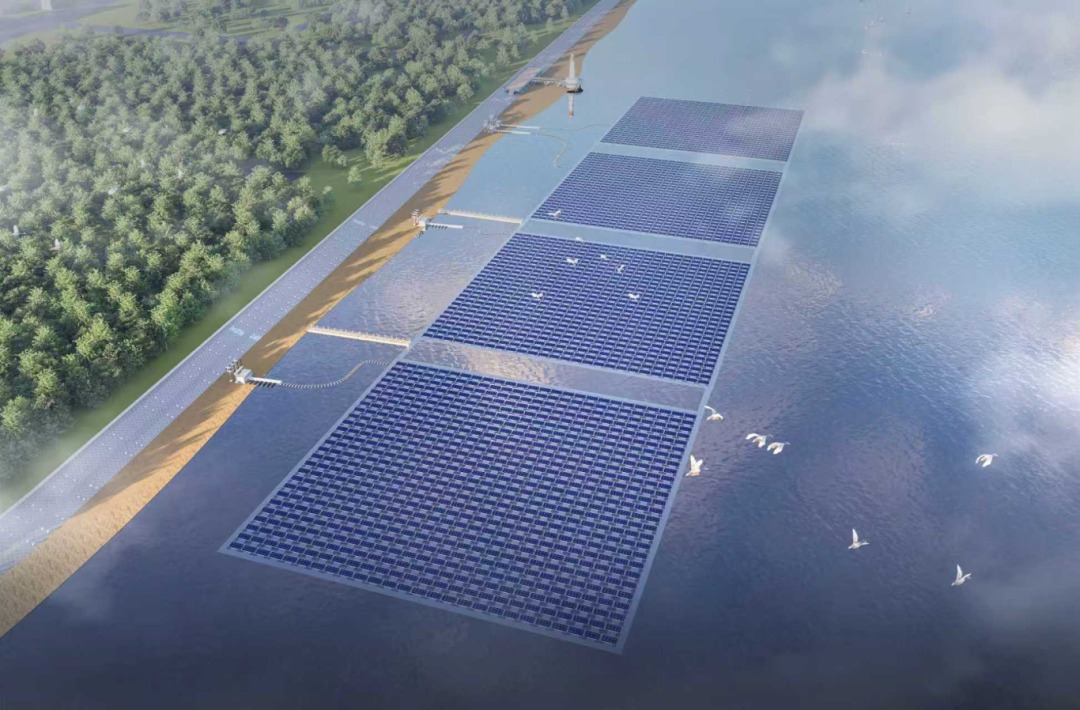





The Rural Electrification Agency of Nigeria has awarded a contract for a project billed as the country’s first floating solar array.
The Nigerian arm of China Civil Engineering Construction Corporation (CCECC) won the contract to build the 7 MW floating PV project, to be located on lagoon waters surrounding the University of Lagos.
A social media post published by CCECC Nigeria explains the project will deliver the electricity generated to the academic institution. Further project details, including project costs and timescales, have not been disclosed publicly.
There are relatively few operational floating PV plants across Africa despite research identifying significant potential in deploying solar on the continent’s inland bodies of water. A 2023 study found Africa could generate 100 GW of solar by installing on 1% of its 100,000 sqm of reservoirs. A separate study, also published in 2023, ranked Nigeria fifteenth globally, and second in Africa, for floating solar potential, with the possibility to generate up to 93 TWh annually.
The largest floating solar project under development in Africa is a 600 MW project on Lake Kariba, the world's largest artificial lake and reservoir by volume, on Zimbabwe’s northern border with Zambia. In December, government officials in Zimbabwe said work would begin on the site this year, beginning with an initial 150 MW phase.
The Africa Solar Industry Association (AFSIA) has identified over 4.8 GW of operational solar capacity in Nigeria to date, including 1.4 GW added in 2025.
This content is protected by copyright and may not be reused. If you want to cooperate with us and would like to reuse some of our content, please contact: editors@pv-magazine.com.



By submitting this form you agree to pv magazine using your data for the purposes of publishing your comment.
Your personal data will only be disclosed or otherwise transmitted to third parties for the purposes of spam filtering or if this is necessary for technical maintenance of the website. Any other transfer to third parties will not take place unless this is justified on the basis of applicable data protection regulations or if pv magazine is legally obliged to do so.
You may revoke this consent at any time with effect for the future, in which case your personal data will be deleted immediately. Otherwise, your data will be deleted if pv magazine has processed your request or the purpose of data storage is fulfilled.
Further information on data privacy can be found in our Data Protection Policy.