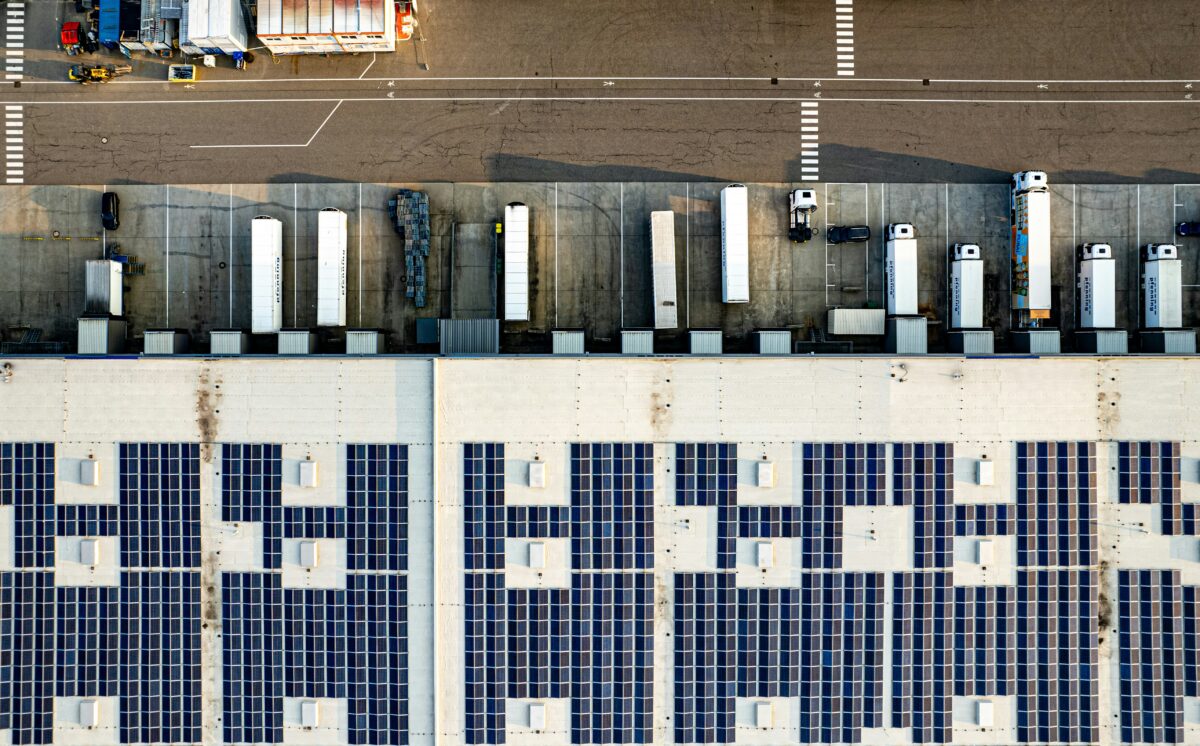





Researchers from the Brandenburg University of Technology Cottbus-Senftenberg (BTU) have analyzed 16 years of data from over 1 million solar installations totaling 34 GW in Germany and have found that the vast majority of the arrays outperform lifespan expectations.
“Solar is growing fast and aging better than many people thought,” the research's corresponding author, Diego Prieto Melo, told pv magazine. “Looking at more than a million real-world PV systems, we found that output declines by about 0.59% per year on average, which is lower than many previous assumptions.”
“What makes our study different is its scale, earlier work looked at thousands of panels, but here we are able to track 1.25 million systems across a whole country, for up to 16 consecutive years. That allows both a more accurate assessment, and lets us understand what environmental factors contribute to aging,” he went on to say. “This is a positive result for the solar industry, from households who have bought systems up to investors in megaprojects. Lower degradation means greater output and revenue over a project's lifetime.”
Peitro Melo also explained that the data showed that degradation is not just about age. Extreme heat, frost and air pollution all have a measurable effect on performance. In particular, falling air pollution over Germany has allowed PV systems to have higher energy yields in recent years, which we can separate from climate variability and age-related effects.
“We found that the changing climate will matter for solar PV systems,” he added. “As extreme heatwaves become more frequent, this new understanding on how hot and frost days affect long-term solar performance becomes increasingly important for system design.”
“We also found that larger installations tend to gradient faster than smaller ones. That is important because it suggests that utility-scale PV cannot simply be treated as a scaled-up version of rooftop solar. Reliability and maintenance strategies have a measurably different impact on outcomes,” he stressed.
The dataset included detailed information on energy production, installed capacity, tilt, azimuth, and location. System efficiency over time was measured using performance ratios (PR) calculated according to IEC standards. Specific yield was derived from energy output divided by nominal capacity, while reference yield was based on incident solar radiation.
Annual production data were obtained from German Transmission System Operators and cleaned for reliability. Only single-unit installations were included to avoid complications from capacity changes in multi-unit systems. Solar irradiance data came from the Copernicus Atmosphere Monitoring Service with hourly resolution for each ZIP code. PR values were calculated using minimum, mean, and maximum tilt angles, and normalized performance ratios were established using the first year of operation as a benchmark.
Degradation rates were estimated using fixed-effects panel regression on the normalized PR, capturing average annual efficiency loss. The analysis focused on four key variables: hot days, frost days, precipitation, and air pollution. Hot days, defined as days exceeding 30 C, can reduce PV efficiency, whereas frost days, defined as days below 0 C, can cause mechanical stress or delamination under extreme conditions. Precipitation has mixed effects: it can cool panels and clean dust but may also scatter light and reduce efficiency depending on incidence angles. Air pollution affects performance through the accumulation of particulate matter and dust on solar panels.
The survey found annual degradation of 0.52–0.61%, roughly half the average reported in prior studies, with older panels showing slower incremental decline. Lower degradation improves project profitability, reducing the levelized cost of electricity (LCOE) by 4.8% compared to previous assumptions. Environmental factors such as heat, frost, and air pollution had the strongest impacts, while precipitation had minimal effect. Interactions between age and environment suggest heat stress worsens with age, whereas frost and pollution impacts diminish over time. Smaller installations were also found to degrade less than larger systems, consistent with higher failure risks in central inverters and complex setups.
“Overall, our findings support the reliability, profitability, and long-term viability of PV systems, reinforcing confidence in solar-driven energy transitions,” Pietro Melo concluded.
The research's findings can be found in “From shine to decline: Degradation of over 1 million solar photovoltaic systems in Germany,” published in Energy Economics.
This content is protected by copyright and may not be reused. If you want to cooperate with us and would like to reuse some of our content, please contact: editors@pv-magazine.com.


By submitting this form you agree to pv magazine using your data for the purposes of publishing your comment.
Your personal data will only be disclosed or otherwise transmitted to third parties for the purposes of spam filtering or if this is necessary for technical maintenance of the website. Any other transfer to third parties will not take place unless this is justified on the basis of applicable data protection regulations or if pv magazine is legally obliged to do so.
You may revoke this consent at any time with effect for the future, in which case your personal data will be deleted immediately. Otherwise, your data will be deleted if pv magazine has processed your request or the purpose of data storage is fulfilled.
Further information on data privacy can be found in our Data Protection Policy.