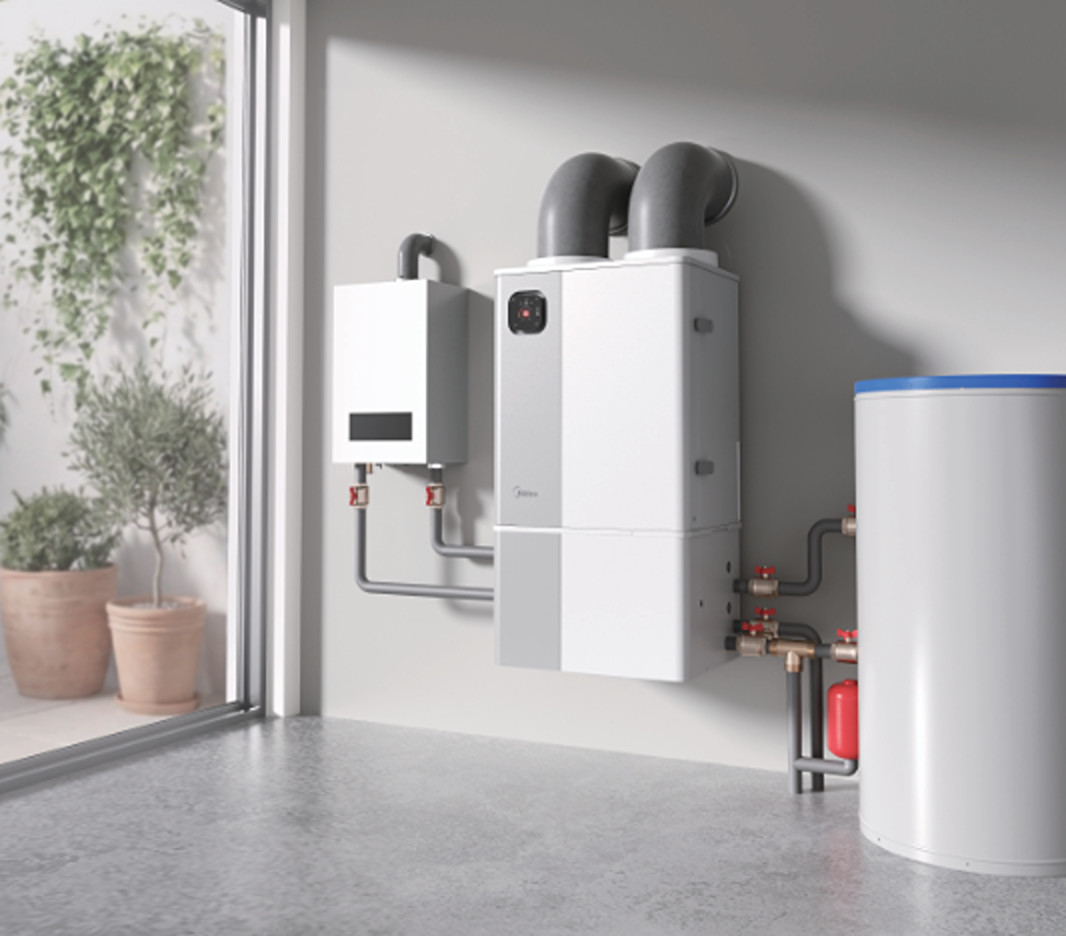





China-based electrical appliance manufacturer Midea has introduced a new compact air-source heat pump designed for indoor installation, targeting space-constrained residential applications and retrofit projects across Europe.
The new product departs from conventional split heat pump designs by eliminating the need for an outdoor unit. Instead, it operates entirely indoors, using two air ducts for air intake and exhaust that can be routed through a wall or roof. This configuration is designed for apartment buildings, terraced houses, and dense urban environments where installing outdoor units is difficult or restricted.
The unit is also designed to integrate with existing hydronic heating systems without requiring major modifications to piping or radiators. Installation is structured in a six-step process, including mounting a bracket system, aligning the unit via guide rails, and connecting to a hydrobox and existing heating loop.
The H-Pack system measures 837 mm × 662 mm × 489 mm and weighs 78.3 kg. It offers a nominal heating capacity of 3.5 kW, with maximum output reaching 4.45 kW. It can achieve a coefficient of performance (COP) of 4.5 and is rated A+++ for energy efficiency in average climate conditions at 35 C flow temperature.
The unit operates across a wide ambient temperature range from -20 C to 35 C and uses propane (R290) as a natural refrigerant, aligning with European decarbonization and F-gas reduction goals, the company said. Airflow ranges between 750 and 1,300 m³/h, while sound pressure levels are specified at 34 dB(A) indoors at 1 meter distance.
The system includes an integrated energy management platform with a full-color touchscreen interface. It can automatically switch between heating sources in hybrid configurations to optimize for either cost or CO₂ emissions.
The heat pump also comes equipped with a range of smart features, including over-the-air (OTA) updates, seamless integration with smart home platforms, and compatibility with photovoltaic systems and smart grid signals. In addition, it supports multi-zone heating control, allowing for greater flexibility and efficiency across different areas of a building.
Beyond space heating, the unit is capable of providing domestic hot water and cooling, with flow temperatures reaching up to 75 C depending on the system configuration.
The manufacturer positions the product as particularly suitable for hybrid configurations, allowing integration with fossil fuel boilers or electric backup heaters.
This content is protected by copyright and may not be reused. If you want to cooperate with us and would like to reuse some of our content, please contact: editors@pv-magazine.com.



By submitting this form you agree to pv magazine using your data for the purposes of publishing your comment.
Your personal data will only be disclosed or otherwise transmitted to third parties for the purposes of spam filtering or if this is necessary for technical maintenance of the website. Any other transfer to third parties will not take place unless this is justified on the basis of applicable data protection regulations or if pv magazine is legally obliged to do so.
You may revoke this consent at any time with effect for the future, in which case your personal data will be deleted immediately. Otherwise, your data will be deleted if pv magazine has processed your request or the purpose of data storage is fulfilled.
Further information on data privacy can be found in our Data Protection Policy.