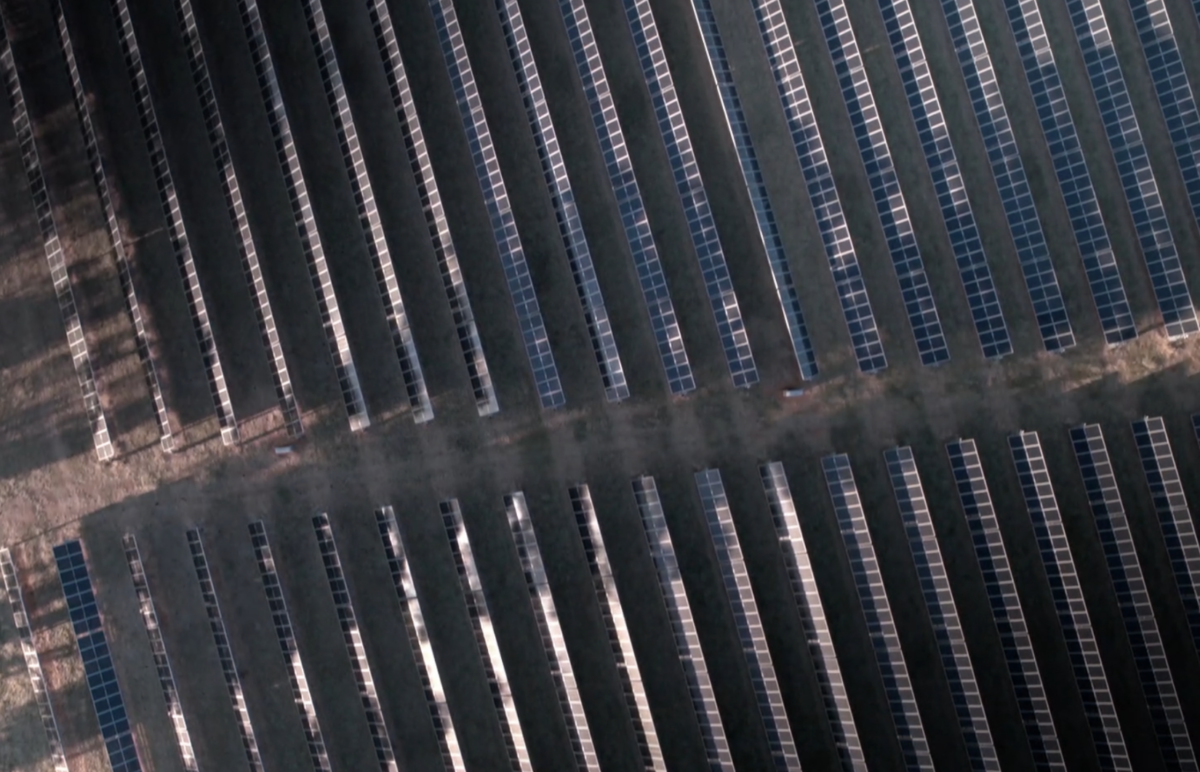





The New South Wales (NSW) Independent Planning Commission (IPC) has granted approval for the Dinawan Solar Farm and battery project being developed by Spark Renewables near Coleambally in the state’s southwest.
Spark Renewables, owned by Malaysian electricity giant Tenaga Nasional Bhd (TNB), said the Dinawan project combines an 800 MW solar installation comprising about two million solar panels with a 356 MW/1,574 MWh battery energy storage system.
The developer said the hybrid project, which sits within the South West Renewable Energy Zone (REZ), will deliver large-scale dispatchable renewable power to Australia’s grid, contributing to “improving grid stability and energy security, while reducing reliance on fossil fuel-based generation.”
The AUD 1.35 billion ($930 million) solar farm and battery project was recommended for approval by the Department of Planning, Housing and Infrastructure in December but referred to the IPC for determination after more than 50 public objections were made during its assessment period.
The IPC has now approved the project after considering concerns raised relating to cumulative impacts, traffic and roads, noise, contamination, social impacts, emergency planning, local infrastructure, and insurances.
In its statement of reasons, the commission said the project would assist in “improving grid stability and energy security” and aligns with NSW government commitments to transition to renewable energy.
The project is also expected to create approximately 400 full-time jobs during construction and once operational will generate enough renewable energy to power approximately 142,000 homes.
The IPC has imposed some conditions of consent to minimize the potential adverse impacts from the project, including requiring Spark Renewables to implement a traffic management plan, noise management protocols, and fire safety study and emergency plan.
Spark Renewables Chief Executive Officer Anthony Marriner said the approval of the solar and battery is a major step forward for the planned Dinawan Energy Hub, a complex that is to also include a 1.2 GW wind farm.
“With the solar farm now approved, we look forward to the upcoming determination of the Dinawan Wind Farm and progressing the full Dinawan Energy Hub toward delivery,” said Marriner.
The approval of the solar and battery project comes as new research suggests Spark is set to become an increasingly important lever for TNB’s renewable energy expansion outside Malaysia, while also serving as a critical learning platform to support that country’s net-zero 2050 ambitions.
Malaysia-based Hong Leong Investment Bank Research (HLIB Research) said Spark’s current contribution to TNB’s overall operation is minimal, as its only operational asset is the 100 MW Bomen Solar Farm, but noted that the growth pipeline is substantial.
Spark, acquired by TNB in 2023, is currently developing more than 3 GW of solar, wind, and battery storage projects across the National Electricity Market, including the Mallee solar, wind and battery energy hub, and the 615 MW Wattle Creek solar and battery project, both in NSW.
HLIB Research said beyond asset expansion, Spark also offers TNB exposure to more advanced electricity market structures, adding that insights gained in Australia could be applied to Malaysia’s own energy transition.
“The platform allows TNB to understand renewable energy implementation and power sector structures in more advanced countries,” it said.
The research house said TNB is also leveraging Spark for talent development and knowledge transfer, with staff secondments supporting capability building in renewable energy technologies, financing structures, and regulatory frameworks.
TNB, the largest listed energy utility company in Southeast Asia with a market capitalization of about $28 billion, is targeting the installation of 14.3 GW of renewable energy capacity globally by 2050.
This content is protected by copyright and may not be reused. If you want to cooperate with us and would like to reuse some of our content, please contact: editors@pv-magazine.com.



By submitting this form you agree to pv magazine using your data for the purposes of publishing your comment.
Your personal data will only be disclosed or otherwise transmitted to third parties for the purposes of spam filtering or if this is necessary for technical maintenance of the website. Any other transfer to third parties will not take place unless this is justified on the basis of applicable data protection regulations or if pv magazine is legally obliged to do so.
You may revoke this consent at any time with effect for the future, in which case your personal data will be deleted immediately. Otherwise, your data will be deleted if pv magazine has processed your request or the purpose of data storage is fulfilled.
Further information on data privacy can be found in our Data Protection Policy.