





Wasps are known to build nests in a wide variety of sheltered, dry, and protected environments. Common nesting sites include outdoor locations such as under roof eaves and overhangs, in attics or loft spaces, inside wall cavities accessed through small gaps or vents, as well as in sheds, garages, or storage boxes.
They may also establish nests inside bird boxes, hollow trees, beneath decking or patio structures, or within dense bushes and hedges. In addition to natural and semi-natural settings, wasps frequently occupy man-made structures, including spaces behind cladding or siding on buildings and ventilation openings or chimneys. They can also be found in unused machinery or vehicles, where undisturbed and enclosed conditions provide suitable nesting opportunities.
Occasionally, nests are discovered in more unusual or unexpected locations, highlighting the adaptability of wasps in exploiting a wide range of concealed spaces, including PV module junction boxes, as recently observed by Gernot Oreski, head of the Research Group Aging Behavior of Polymers at the Austrian research center Polymer Competence Center Leoben GmbH.
“We made the discovery in a module that was part of a rooftop system installed in Graz, Austria, in late 1998,” Oreski told pv magazine. “My former PhD supervisor at the Technical University of Leoben, Reinhold Lang, contacted me because he was interested in the condition and aging state of the modules, and I agreed to carry out the investigation.”
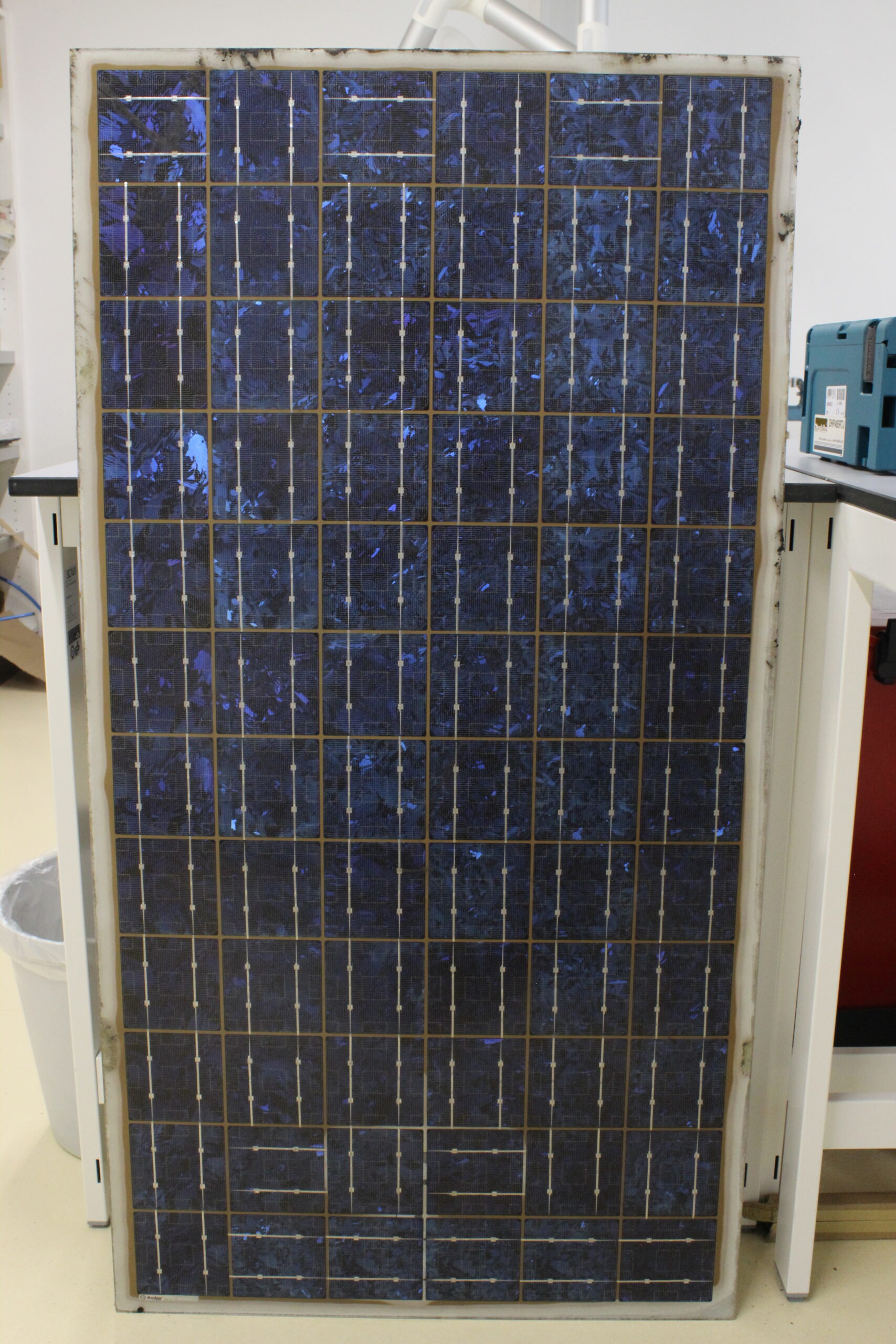
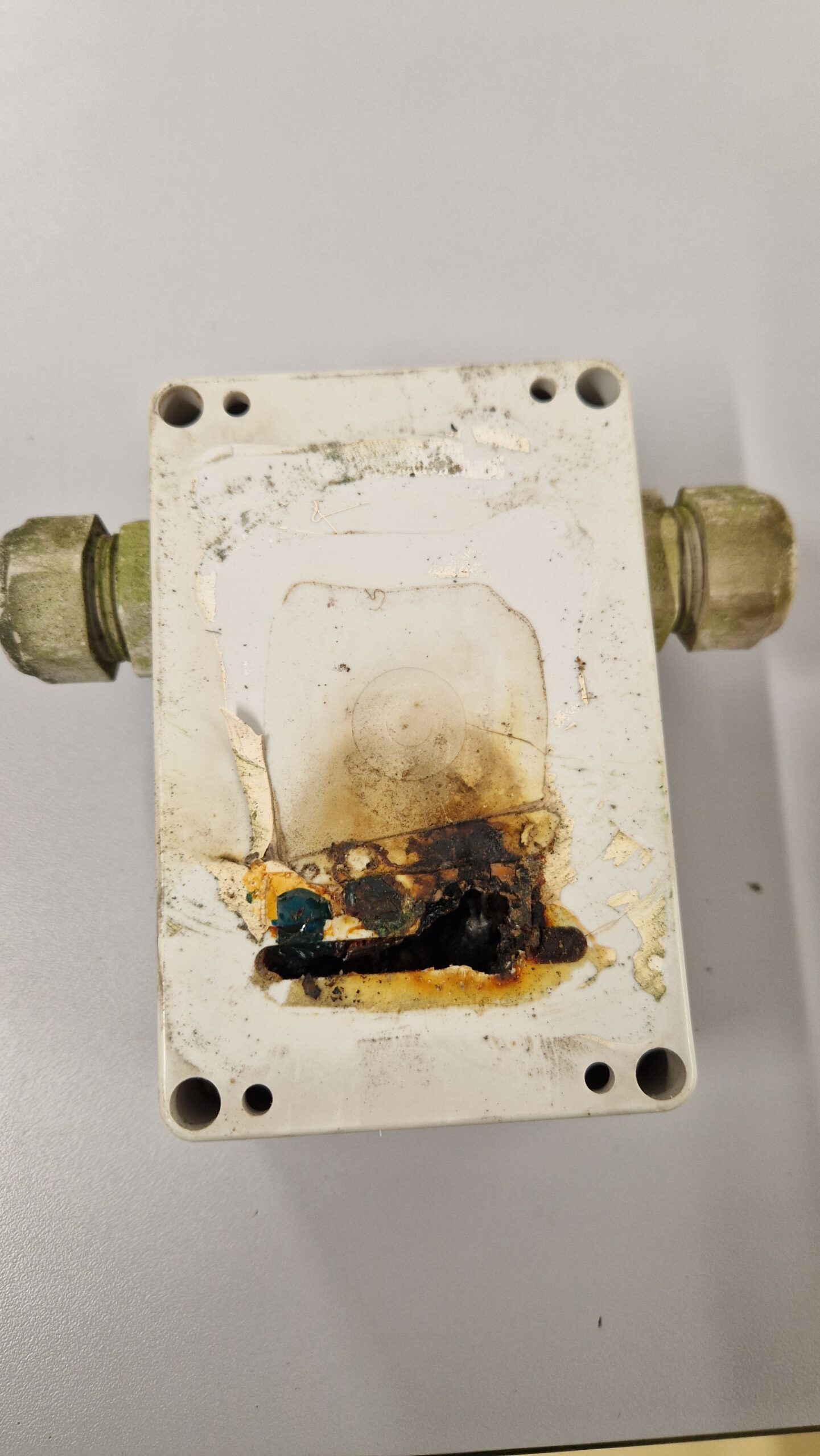
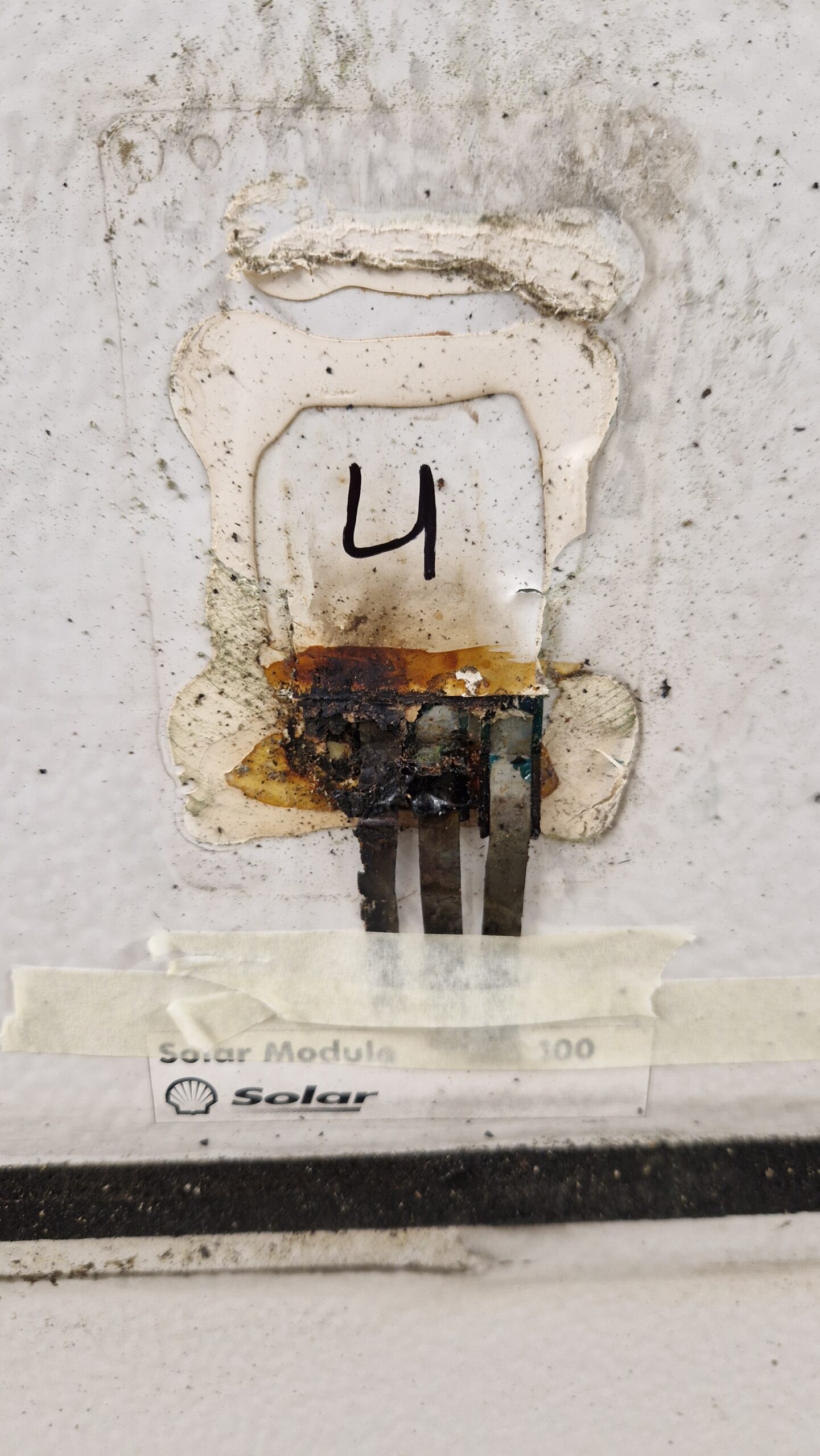
The frameless 100 W modules were manufactured by Shell Solar, a company that is no longer in operation, and consist of 72 polycrystalline silicon cells, EVA encapsulant, and an aluminum–Tedlar backsheet. A range of degradation features and failures was observed, predominantly backsheet discoloration and localized burn marks associated with hotspot formation. Only one module exhibited severe corrosion.
“Last week, we went to perform module characterization at 2nd Cycle, a start-up company in Austria developing an automated PV module test line,” Oreski continued. “There we can measure IV curves, electroluminescence (EL) and ultraviolet (UV) fluorescence imaging, and high-resolution images of the module in less than two minutes. For preparation, we dismantled the junction boxes of all modules and found this old wasp nest inside, along with burn marks on the casing and backsheet.”
“It is likely that the junction box remained partially operational,” Oreski went on to say. “One string of the module was probably still functioning, while the other, where the copper ribbon and contacts were completely destroyed, was no longer conducting properly and was instead operating through the bypass diode.”
The researcher believes that a similar phenomenon could be hardly observed in PV systems deployed in recent years. “I would assume it is less likely as the junction boxes got smaller and thinner, and most of them are sealed with a pottant,” he said. “I have seen spider webs and bird nests attached to modules, but never something like a wasp nest inside the junction box. On the other hand, how many people really open the junction box?”
He also observed that the copper ribbons were encapsulated in a polymer film, which was also burned. “I assume that due to moisture ingress, the copper ribbon corroded. Consequently, we could no longer contact the cells in this module, and therefore we have no power data or EL images,” he added.
The other modules tested showed between 10% and 20% power loss, with some cell breakage detected. “This is another confirmation that PV modules from that time were more robust in their design and more tolerant toward degradation effects and failure modes. Now that we have completed testing, we will proceed with destructive material-level characterization. We plan to publish the results in a paper and present them at conferences next year,” Oreski said.
This content is protected by copyright and may not be reused. If you want to cooperate with us and would like to reuse some of our content, please contact: editors@pv-magazine.com.


By submitting this form you agree to pv magazine using your data for the purposes of publishing your comment.
Your personal data will only be disclosed or otherwise transmitted to third parties for the purposes of spam filtering or if this is necessary for technical maintenance of the website. Any other transfer to third parties will not take place unless this is justified on the basis of applicable data protection regulations or if pv magazine is legally obliged to do so.
You may revoke this consent at any time with effect for the future, in which case your personal data will be deleted immediately. Otherwise, your data will be deleted if pv magazine has processed your request or the purpose of data storage is fulfilled.
Further information on data privacy can be found in our Data Protection Policy.